Updated July 10, 2025 02:27PM
Triathlon Doesn’t Have To Be Super Expensive
Sure, there are $10k bikes and $1k race entry fees, but you have more options with far less sticker shock. Check out our expert guide to racing triathlon on a budget.
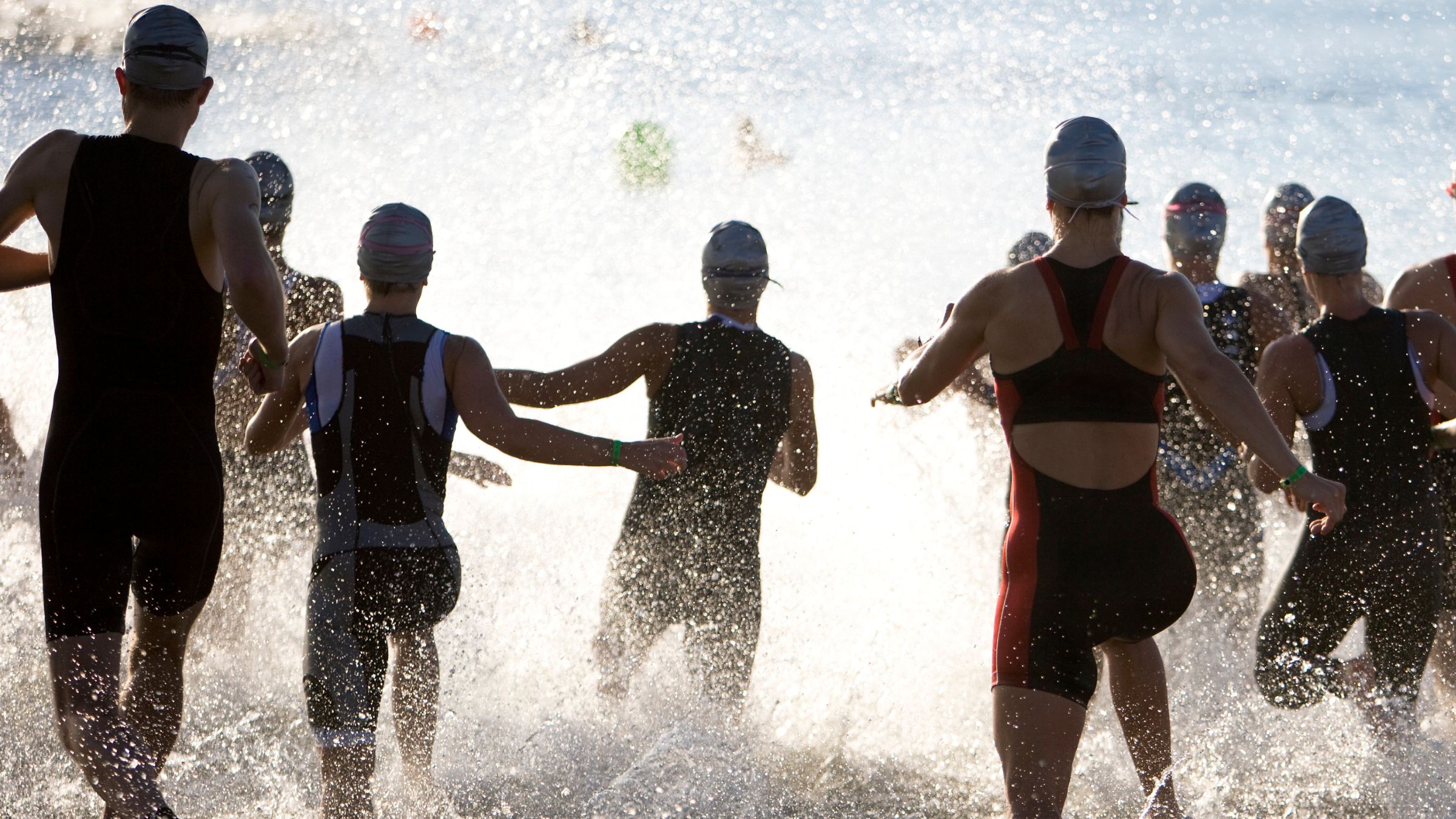
(Photo: Getty Images)
As a former bike shop salesman—who became a bike mechanic, who became a pro triathlete, who became a gear editor—one of the top excuses for not getting into triathlon is that it’s too expensive. Sure, it’s more expensive than running—get a pair of shoes and go—but triathlon doesn’t have to cost an arm and a leg either. You may get to the point where you want that $5,000 piece of carbon-fiber artwork, but do you need it right away? Not really. You don’t need great triathlon gear to get started; in fact you don’t need tri-specific gear to do a triathlon at all. Read on for tips on how to do your first (or ninth) tri on the cheap.
RELATED: Triathlete’s Guide To Your First Triathlon
Save money on race entries
Just like shopping for clothes or food at the grocery store, the big name brands are always going to be more expensive, but they’re not always better. The same goes for triathlon events (which we’ll admit, can be pricey). Yes, Ironman puts on an incredible event with an announcer and cool branded swag, and of course you get to say “I did an Ironman” without the whole awkward conversation that goes something like: “Well, it wasn’t the Ironman brand, but it was the same distance, and…”. But that name does cost much, much more than most non-”Ironman” events of the same distance. Take, for example, Ironman 70.3 Michigan: Prices for that event start at $370, depending on when you sign up. Meanwhile two hours south at The Michigan Titanium in Plainfield, MI, you’d pay between $275 to do the same distance!
Does that mean your experience in a small, ”off-brand” event will be worse? Probably not. Most race directors are not in events for the money, so they usually put their best foot forward and have pride in their race. A couple of other great examples with pricing as of this writing:
- Clash Daytona, December 1-3, 2023, Daytona, FL
- 70.3 – $300
- Alpha Win Hudson Valley, July 12, 2023, Kingston, NY
- 140.6 – $600
- 70.3 – $300
- Olympic – $210
- Great Floridian Triathlon, October 21-22, 2023, Clermont, FL
- 140.6 – $550
- 70.3 – $225
- Cal Tri Events, Nationwide
- “2 for 2” bundle: 2 sprint or Olympic distance triathlon, SwimBike, SwimRun, or open-water swim races
- Spirit of 78 Triathlon, Portugal
- 140.6 – Free, by lottery only
Most races offer discounts for registering early. For example, the Padden Triathlon, a locally-owned race in Bellingham, WA, charges only $65 to enter its sprint or Olympic distance races from December to February; the entry fee rises to $100 as the June 24 race day approaches. If you already know which race you plan to do this year, get that early-bird pricing to save some cash!
Additionally, some races will offer slots to people who volunteer at their events or who raise a certain amount of money for charity. It’s more work, of course, but it’ll save you even more cash (and help those who need it).
ADVERTISEMENT
Buy used triathlon gear
Certainly gear can be one of the most expensive necessities for triathlon, but it doesn’t always have to be. If this is your first triathlon, it’s a good idea to use what you already have and borrow what you don’t. Once you’ve done your first race and have a better feel for the gear you want and need to upgrade for future races (and there will be future races – this sport is addictive!), then you can go about shopping for gear. Even then, you don’t always need to purchase brand-new. Buying used can save triathletes a lot of money.
But buyer beware! Sure, there’s Craigslist for absolute rock-bottom (and potentially stolen) bikes and other gear. But there are better options for the budget triathlete. OfferUp, for example, has a more secure system for purchases that connect sellers to more verified profiles that’ll help reduce—but not eliminate—the potential for dodgy gear.
Better yet, find a triathlon forum or sport-specific online classified where you know the gear is legit—try BeginnerTriathlete’s classifieds or Slowtwitch’s classified section. For an even more vetted experience, check out The Pro’s Closet for used bikes that have actually been certified with a “141-point inspection and service” and have an 18-month buyback guarantee, according to the company. Just know that that confidence will come at a premium, and that peace of mind will cost much more than classifieds, OfferUp, or (certainly) Craigslist—but not as much as something new.
RELATED: Reviewed: The Pro’s Closet
ADVERTISEMENT
You can get cheap new triathlon gear (yes, really)
Not interested in the whole used ordeal? Or maybe you want to buy clothing or other products that you should for sure not get secondhand (used tri suit? No thanks). There are sites and brands that are known for super-low prices and still pretty decent quality. And don’t forget: You don’t really need triathlon-specific gear to do a triathlon. Particularly if you’re a beginner who’s light on knowledge and unsure if you’re going to race more than a few times, we recommend the following for cheap gear that’ll get you to the finish line:
- BikesDirect.com – These bikes are literally the cheapest you can find—aside from a Walmart special. The website looks like it’s from the ’90s; the specs are sometimes contradictory; they’re often out of stock. And just be aware that these bikes ship unassembled, but they’re not particularly difficult to put together. If you’re not mechanically inclined, call your local bike shop and make sure the price of assembly still offsets buying a built bike from someone else.
- Decathlon – European readers will be familiar with this brand of sporting goods that makes everything from boxing gloves to bike tires, in house. We’ve personally tested their sub-$50 tri suits, and they’re comparable to garments that cost three times as much. The only trick? Their inventory is hit-or-miss, so check back often.
- Synergy Wetsuits – This is another sleeper brand that has great neoprene for low cash. You can find them on Amazon (read: fast shipping), and suits like their Endorphin (~$250 depending on deals) have had super high marks from reviewers in our big Wetsuit Roundup for both quality and range of sizes.
Save money on pool access
Sure, you can join a fancy gym with tons of classes, lots of facilities, and amenities for days, but spoiler alert: You’re going to do a triathlon, you’ll be pretty busy just swimming, biking, and running. While biking and running are ostensibly “free” activities in terms of access, swimming isn’t always. Our top tips for getting in your swim for less:
- Skip the fancy gym membership. Yes, you’re paying for the privilege to swim in a decent pool, but be super careful when you sign up that the pool isn’t used by aqua aerobics or some sort of new-age floating treatment for the times you need to swim laps. In fact, many gyms have very very limited lap swim hours and can get very crowded, due to their size. City pools, on the other hand, may still have limited hours for lap swimming, but often have bigger pools with more lanes available (and are often quieter). Plus, you’re not locked into a membership, as most city-run pools have you pay as you go.
- Remember: Open water is free. While not everyone is comfortable in the open water, it’s better to get over that fear sometime before race day—also swimming in the open water often will make you WAY better when it’s time to compete. Not only that, but many open-water swimming spots are either free or low-cost (often just parking, but you’re a triathlete, park in a free spot far away and run). You can also check with your local triathlon clubs – many offer free open-water swim workouts with anyone who wishes to join in on the fun.
Get a triathlon training plan for less
Certainly you don’t need a coach to do a triathlon, but it’ll save you a lot of time and unnecessary pain. One-on-one coaching can be expensive (think $100+/mo.), but there are other options like online training plans:
- Today’s Plan – Like the other options below, Today’s Plan is best known as a training log, but it also has a host of training plans for all distances.
- Training Peaks – Similar to Today’s Plan, Training Peaks has a training log and training plans for purchase. They can also link you up with a live coach for a bit more cash.
Triathlete also offers non-interactive training plans for readers that are…drumroll…free! Check out just a few of our popular plans for each distance:
- 8-Week Sprint Triathlon Training Plan For Beginners by Lance Watson
- Rock Your First Olympic Triathlon with This 16-Week Training Plan by Matt Fitzgerald
- Super Simple Ironman 70.3 Triathlon Training Plan by Matt Fitzgerald
- The 10-Hour Week Ironman Training Plan by Lance Watson
Don’t believe it’s possible to do a triathlon on a budget? We put it to the test, recruiting one new triathlete to purchase everything he needed for his first race – bike, race fees, wetsuit, everything – for $600. And you know what? He pulled it off (you can read his story here). The best part? With some borrowed gear and a few hours of volunteering for his local race, those costs could be halved (or more). It just goes to show that a little savvy can mean big savings on triathlon expenses.
RELATED: Why Is Triathlon So Expensive?