Updated October 9, 2025 06:36PM
What is the Kona Underpants Run?
What started as a protest against triathletes wearing Speedos in public has turned into a charity fundraiser and beloved race-week tradition at the Ironman World Championship in Kona.
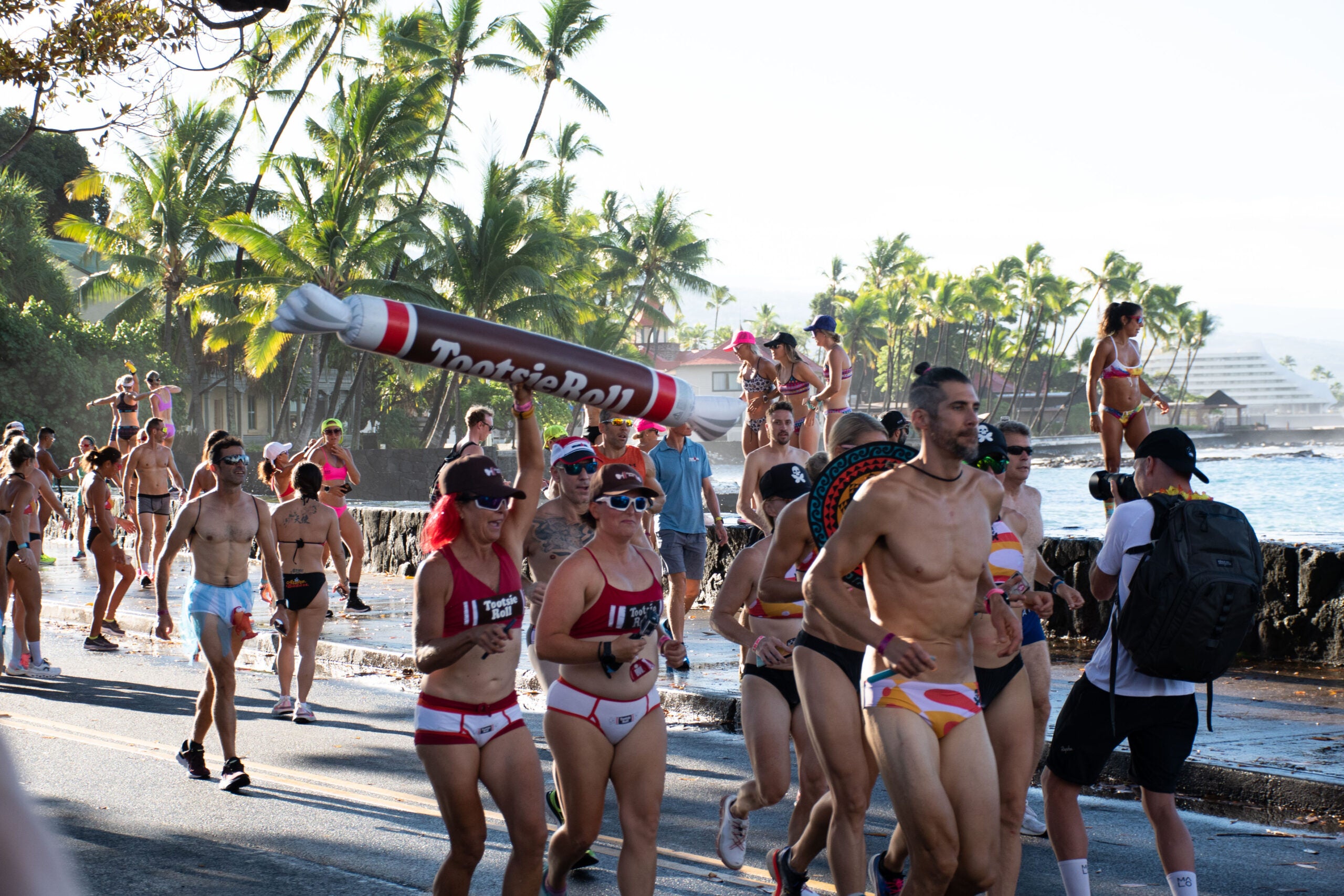
How did the Kona Underpants Run get started? Believe it or not, it was a protest against triathletes. (Photo: Hannah DeWitt/Triathlete)
Though Kona will always be known as the breathtaking location of the Ironman World Championships, there’s another race in town that’s almost as iconic: The Kona Underpants Run, where triathletes scamper through the roads of the island wearing nothing more than a pair of underwear and a smile on the Thursday before the big race.
Depending on who you ask, the tradition is either a fun way to shake off the taper crazies or an exercise in vanity. What they don’t realize is that it’s neither – in fact, the origin of the Underpants Run is rooted in protest, against triathletes, of all things.
How the Kona Underpants Run came to be
Paul Huddle, one of the event’s founders, says the run originated from a growing concern about triathletes’ attire in public places.
ADVERTISEMENT
“We had been racing in Kona since the mid-80s and, after a couple of years, it dawned on us that a lot of the athletes would stroll around town, in restaurants, line at the post office, grocery stores, bank, in their Speedos,” Huddle says. “We just thought it was funny but we also started to witness firsthand how it offended the locals. Remember, this is Hawaii. There’s much more of a surf culture than there is a Mediterranean, San Tropez culture so it was far from normal.”
What started as a humorous observation among friends – playing “Who can spot the first Speedo between the airport and town?” – soon became a cliche as the race grew and the number of offenders increased.
“Frankly, it was a problem. Here we were, guests in this great little community on the Big Island, and not only were we creating traffic jams by riding six-abreast, but offending the sensibilities of the locals in their day-to-day lives,” Huddle says. “So as a way of showing everyone how silly it looks and, therefore, hoping to decrease the number of offenders, we decided to do a little protest jog.”
ADVERTISEMENT
In 1998, Huddle and two friends, Chris Danahy and Tim Morris, donned basic tighty-whitey underpants and ran from the King Kam hotel lobby down Ali’i Drive to Lava Java and back. They greeted people in foreign languages, because many of the “main offenders” were from other cultures (though Huddle notes some Americans also sported Speedos in inappropriate settings at that time).
The initial run was mildly unnerving for the trio, but garnered many laughs. “We realized that most people ‘got it,’” he says.
Undies for a cause
Around the third year of the Underpants Run, the founders realized they had a platform to raise money for the local community that graciously hosted the Ironman event, despite the inconveniences it caused. By charging an entry fee for the now-growing event, the race founders aimed to give back directly to the community that plays a significant role in defining the pinnacle of their sport.
ADVERTISEMENT
In its early years, all proceeds went to West Hawaii Special Olympics. Later, as the race (and funds) grew, beneficiaries were added: namely, the Visitor Aloha Society (VASH) of Hawaii and Ahu’ena Heiau. VASH is a traveler’s aid organization dedicated to assisting visitors who have experienced crime or adversity, aiming to create positive memories of their stay. Ahu’ena Heiau, a restored religious temple that served Kamehameha the Great, is maintained by Ahu’ena Heiau, Inc., which acts as its permanent guide for restoration and upkeep.
Today, the run benefits the Ironman Foundation, the charity arm of the Ironman brand, which distributes the funds to Hawaiian charities. Over the years, the race has raised over $400,000 for through registration and merchandise donations.
Rules of the Kona Underpants Run
Despite its seemingly chaotic nature, the Underpants Run has rules, though they are often not strictly followed. The original rules from 1998 include:
- Any version of white “mommy underwear” (also known as tighty whities, y-fronts, or briefs) is permitted. “Good sources include Duofold’s performance briefs made with Coolmax Alta or any variety of cotton three-packs available at Wal-Mart and other fine stores,” Huddle says.
- No boxers, long underwear, or stylish Euro-bikini briefs permitted.
- The route must be completed by running, walking, or crawling. Heart rate monitors, black or argyle socks, bad hats, and earrings are optional.
- While this event is considered a “moderately paced parade” rather than a “race,” pacing strategies are up to the participant.
- No awards will be presented.
- No aid stations will be provided.
- Other rules to be decided as issues arise.
- The rules committee reserves the right to make things up as they go along.
- All are welcome regardless of age, species (dogs welcome), gender, race, religious beliefs, and/or nationality.
There are unofficial rules, too. “We’ve had our share of thongs at the Underpants Run. We try to discourage thongs among our male participants, but you can’t always get what you want,” Huddle says with a shrug.
ADVERTISEMENT
There are also plenty of creative costumes. There was the year a woman wore only tighty-whities, cutting a hole in the crotch of a pair of briefs, which her head went through and the waistband went below her chest. There was also a year where three people wore one giant pair of underpants. There have been people in Elvis costumes, inflatable dinosaur suits, and the occasional nipple tassel.
It’s all welcome at the Kona Underpants Run, though Huddle emphasizes that the point of the run is not to “look good” but to protest the inappropriate wearing of underpants in public. He maintains his commitment to the original spirit by always wearing tighty whities.
“It’s a protest run. We’re trying to show how ridiculous it looks to wear your underpants around town,” Huddle says. “Now we have people actually thinking about how good they can look in their underpants. I guess we come from this ‘look at me’ crowd of triathletes. What can you do?”
Photos: Scenes from the 2025 Kona Underpants Run
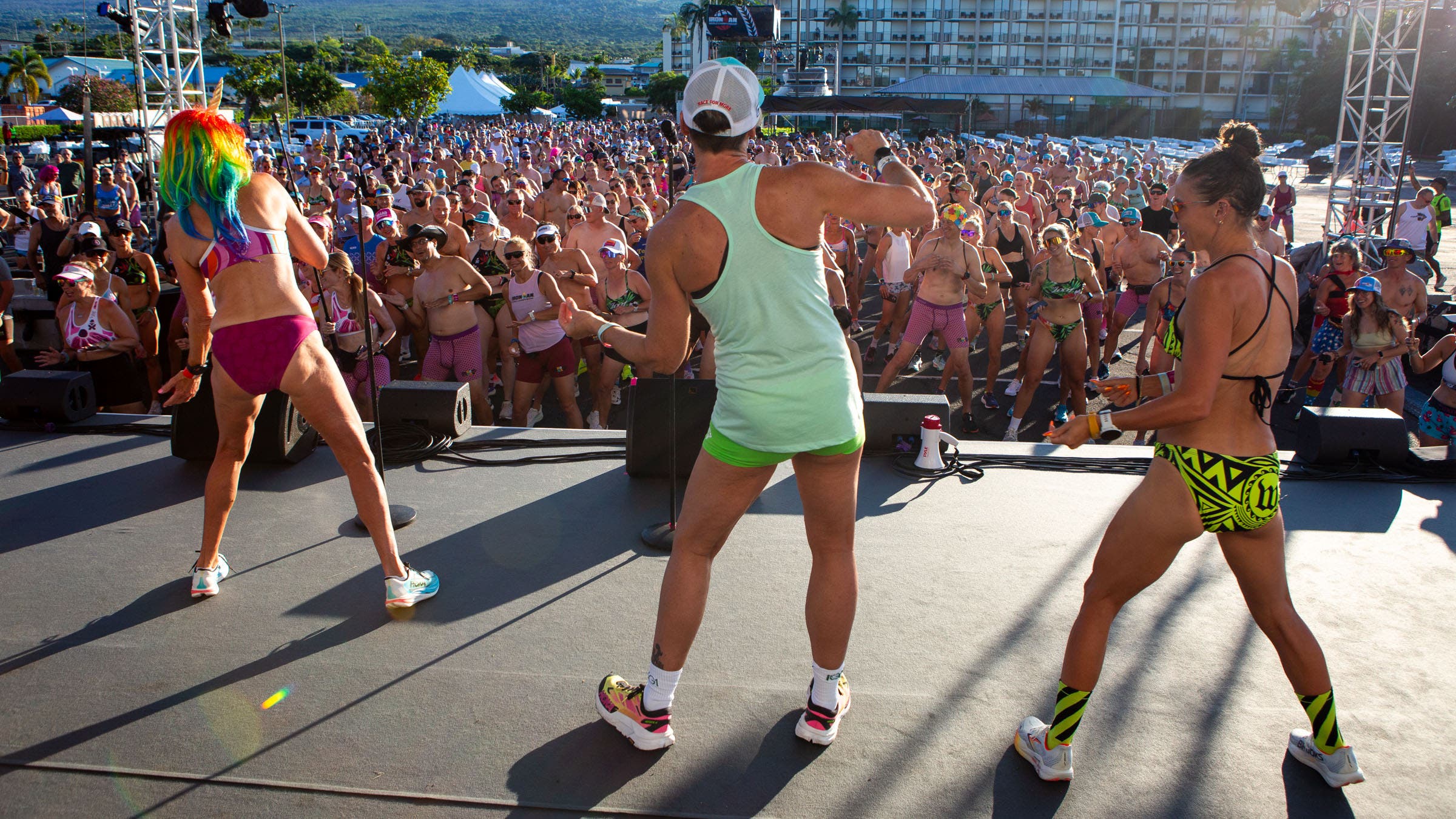
When you’re wearing little, it helps to do a dancing warmup.
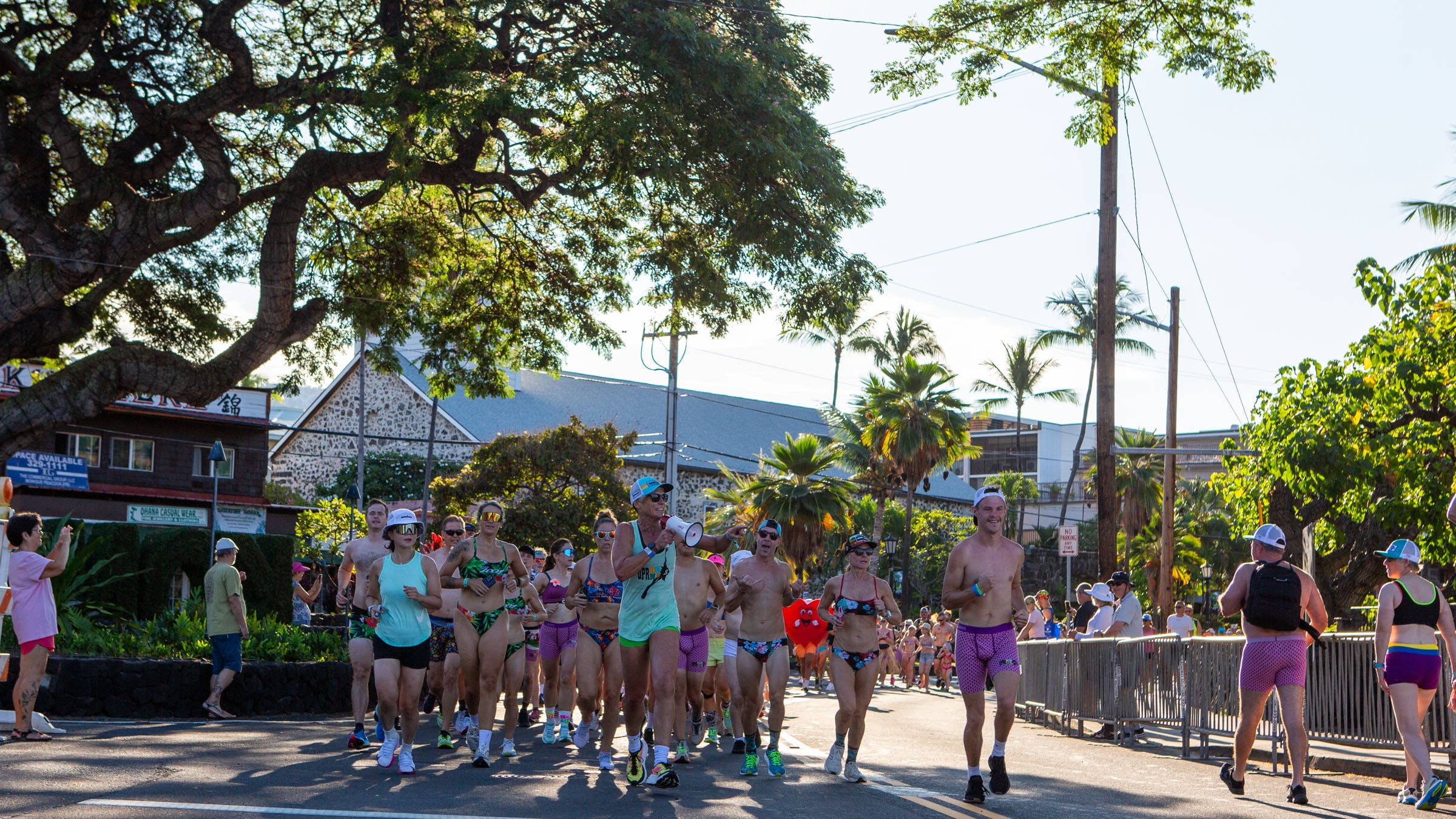
A megaphone kicks off mega fun.
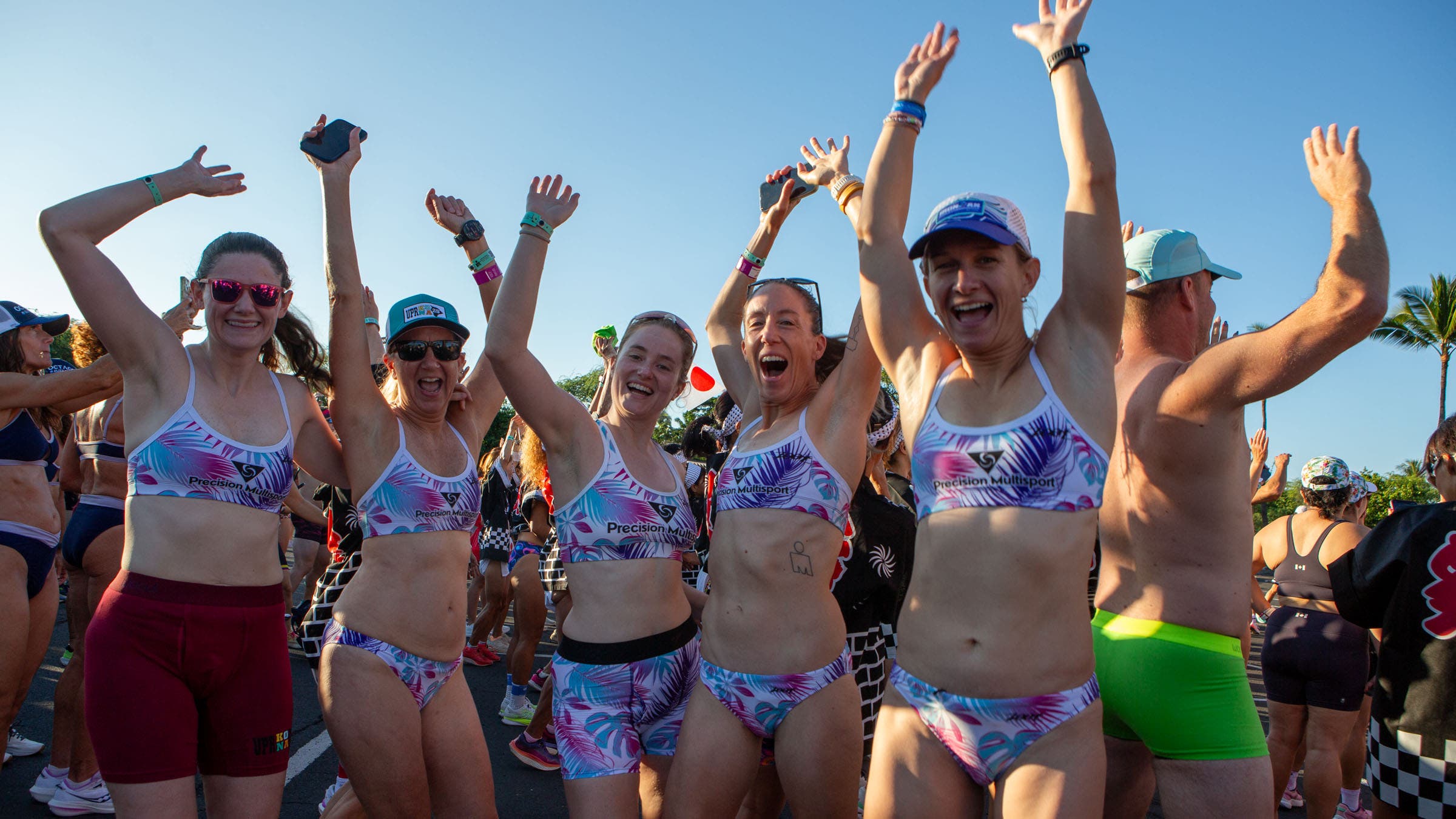
Precision Multisport understood the assignment and came ready with matching attire.
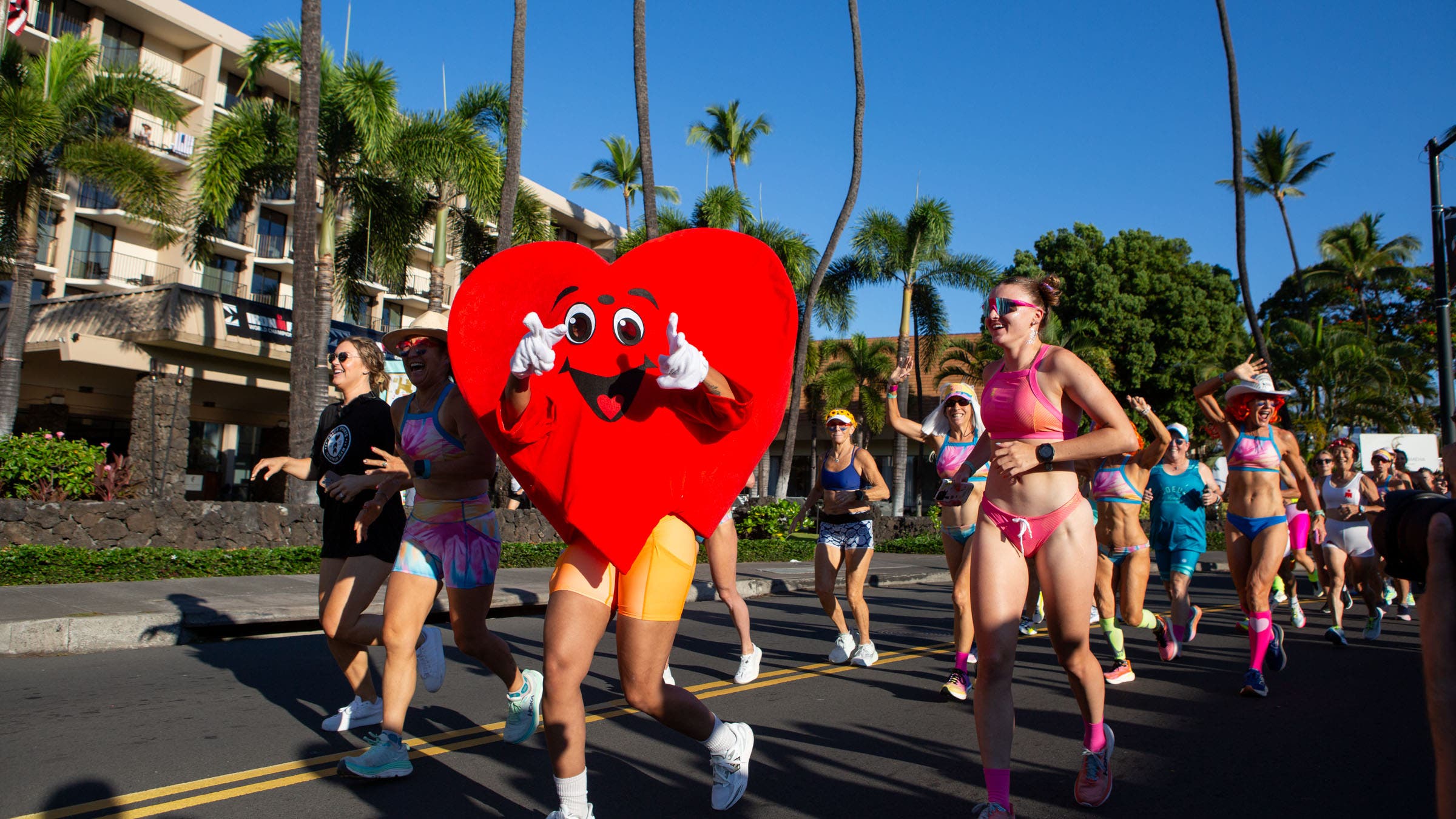
Everybody loves running around in their undies on the Thursday of race week in Kona.
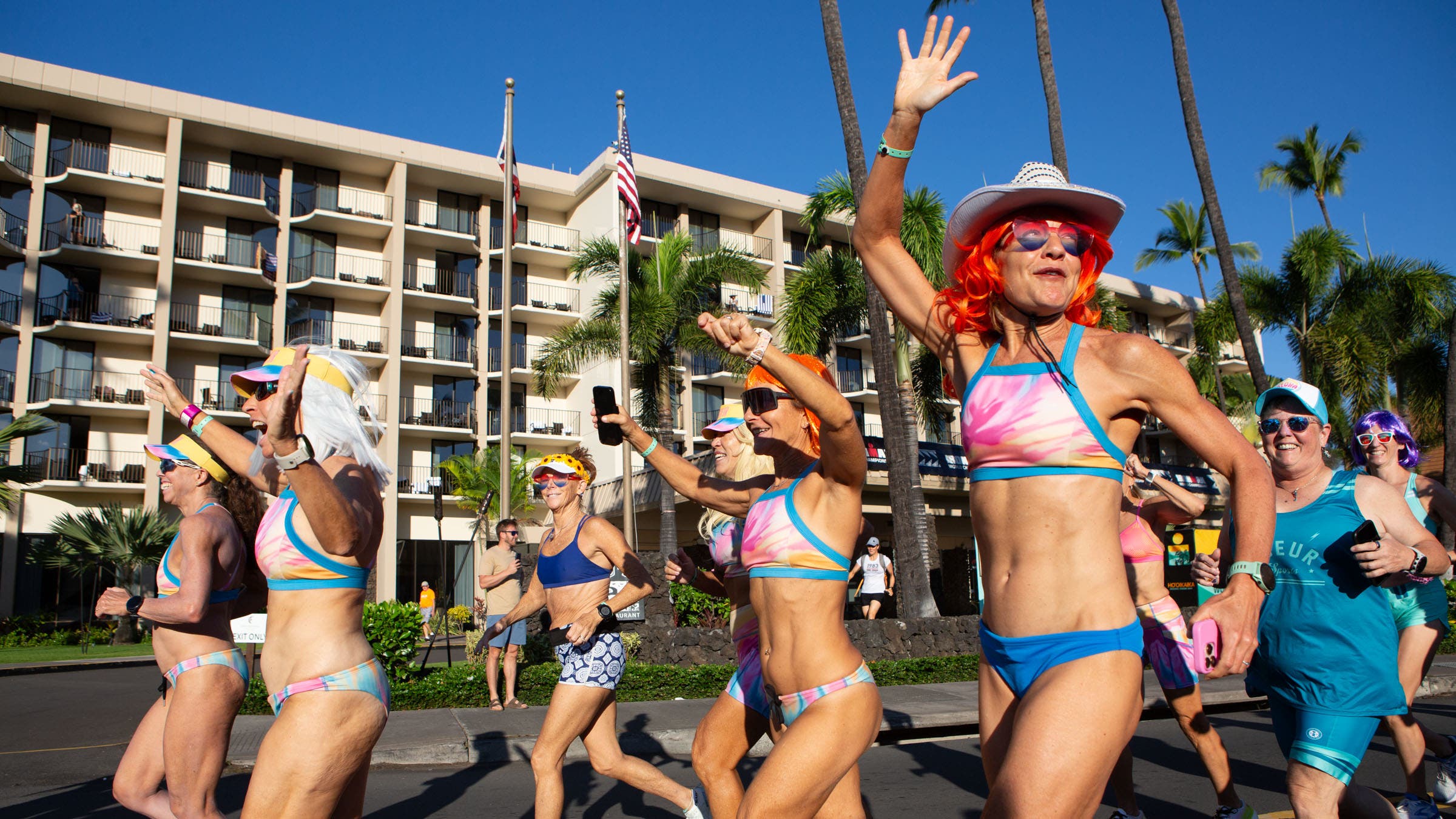
Matching underwear, hats, wigs, and flair rule the day.
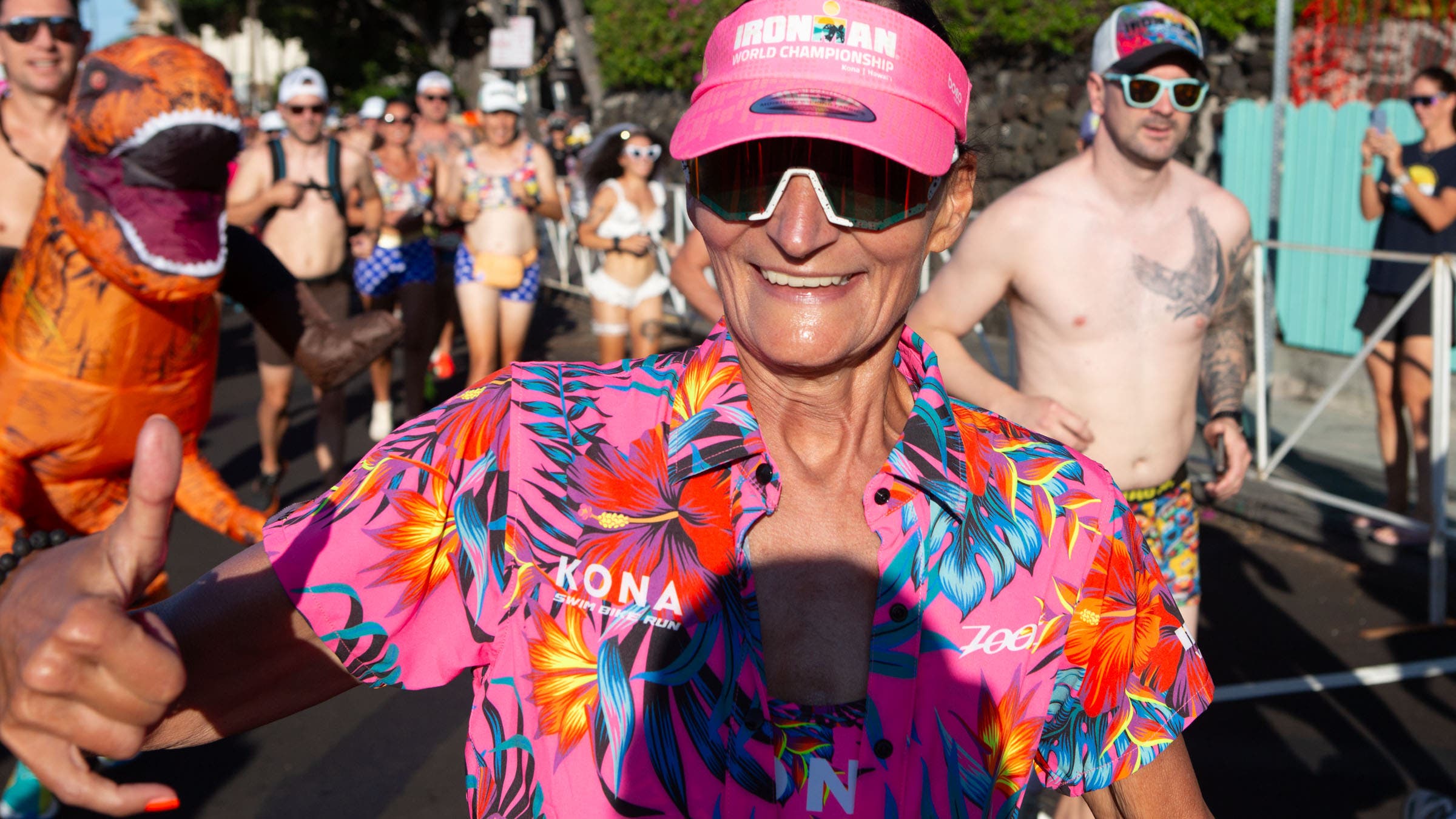
She’s hanging loose without letting it all hang loose.
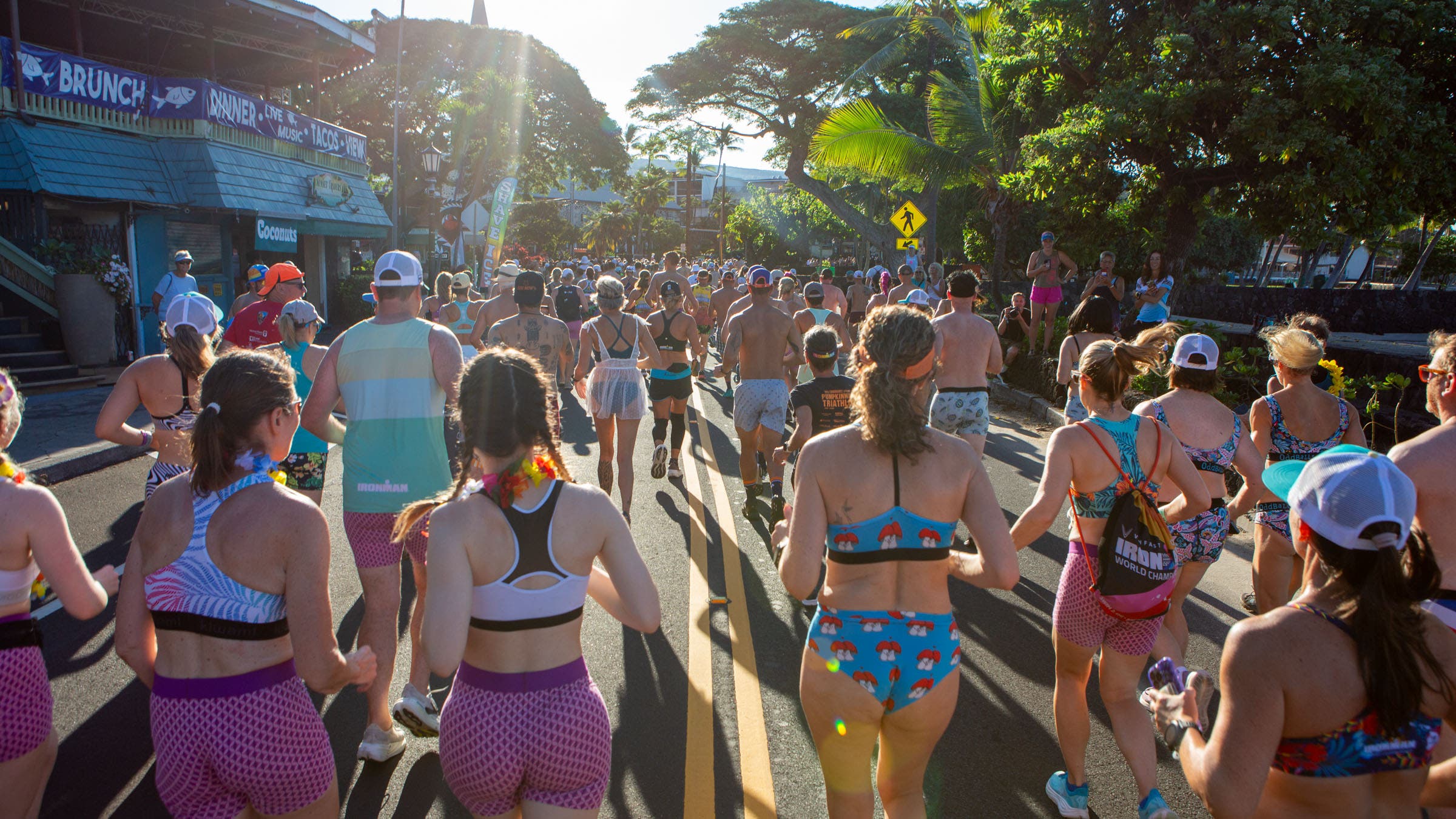
The streets are filled with athletes, locals, and spectators alike, running in their britches.
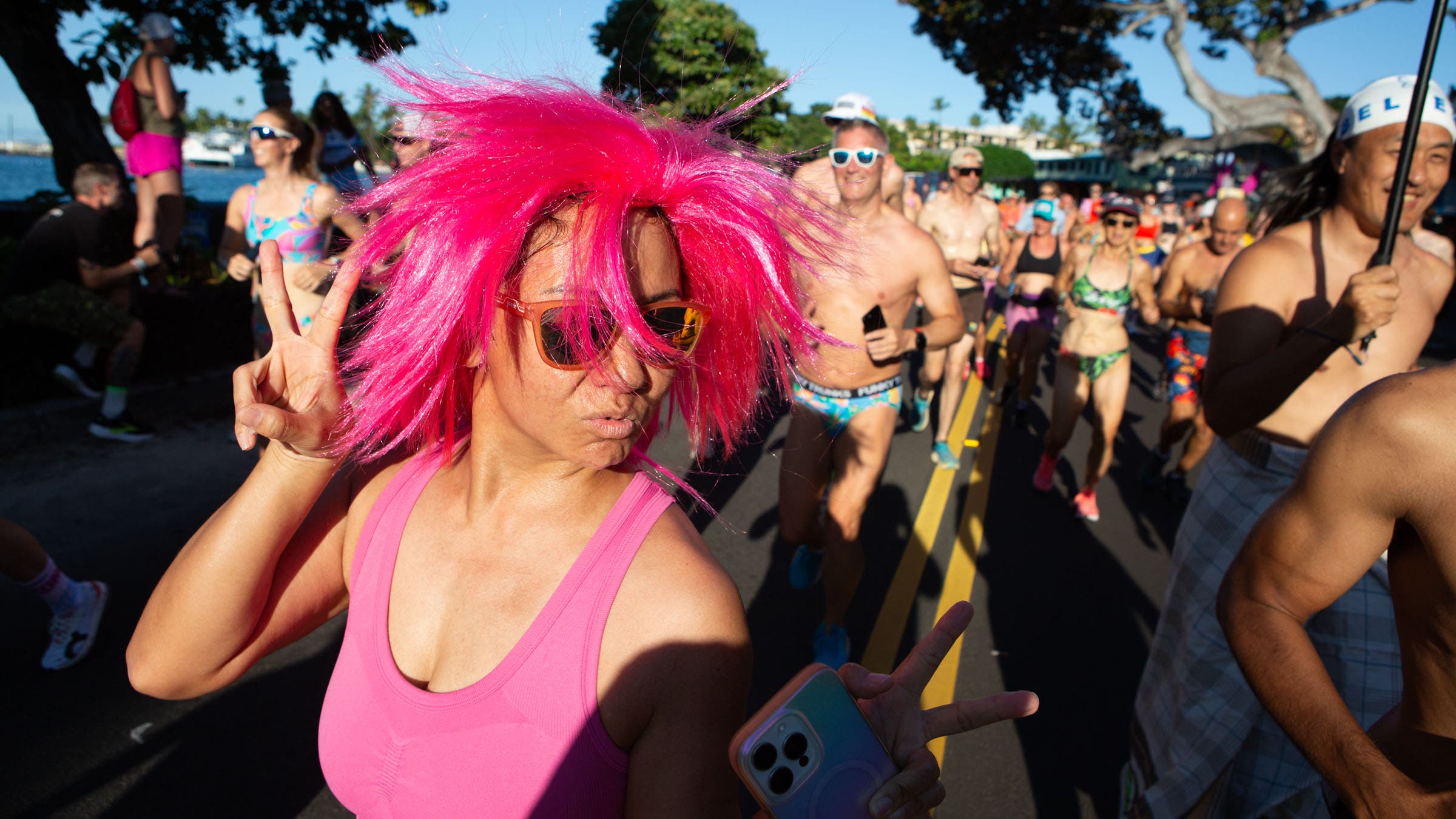
Peace, love, and undies offer a welcomed distraction two days before competing in the Ironman World Championship.
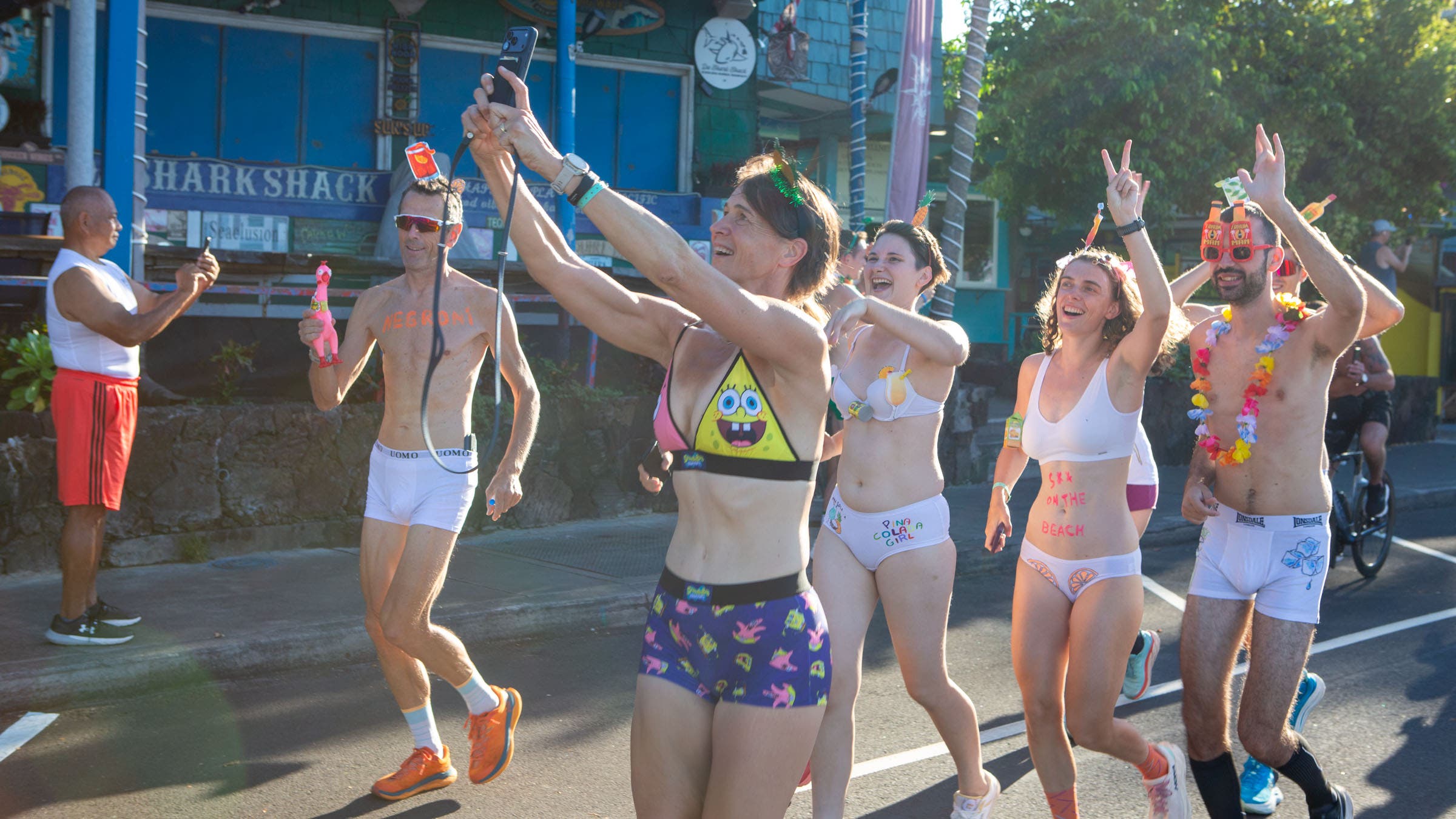
It’s one of the few times it is socially acceptable to take a selfie in your skivvies in the middle of the road.
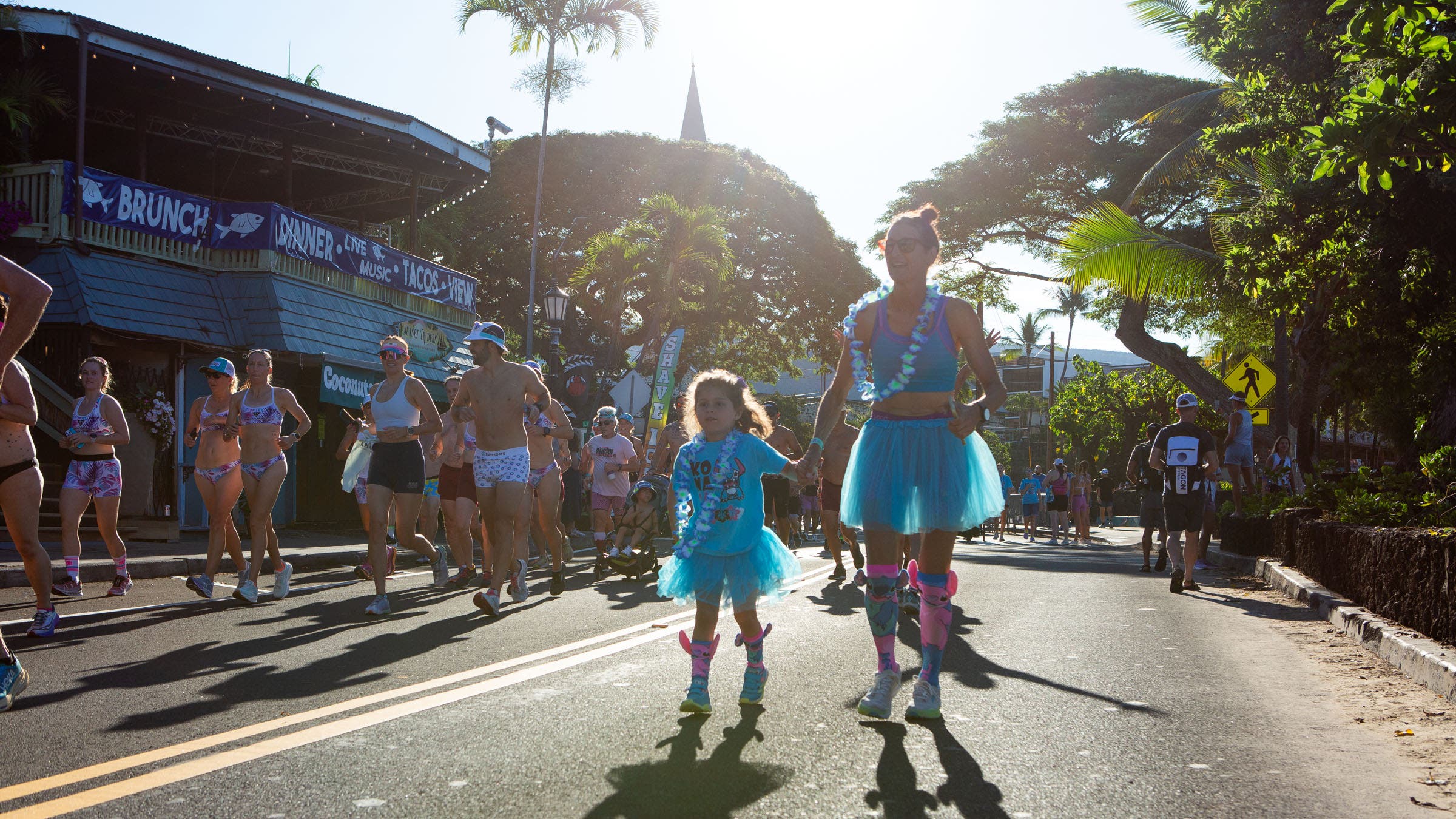
There’s no age limit for the fun that unfolds at the Underpants Run.
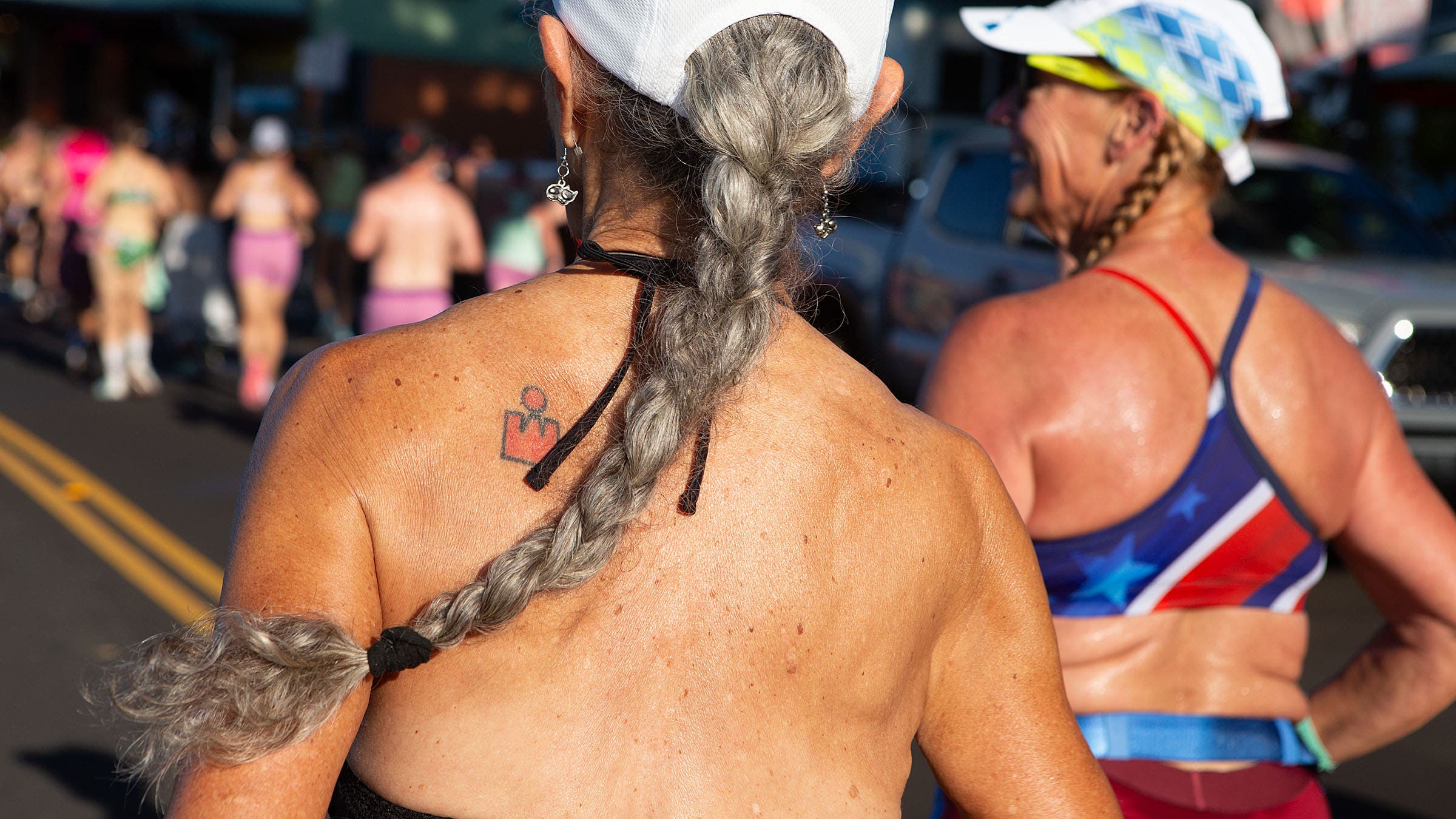
We see what you did there. She’s an Iron-woman!
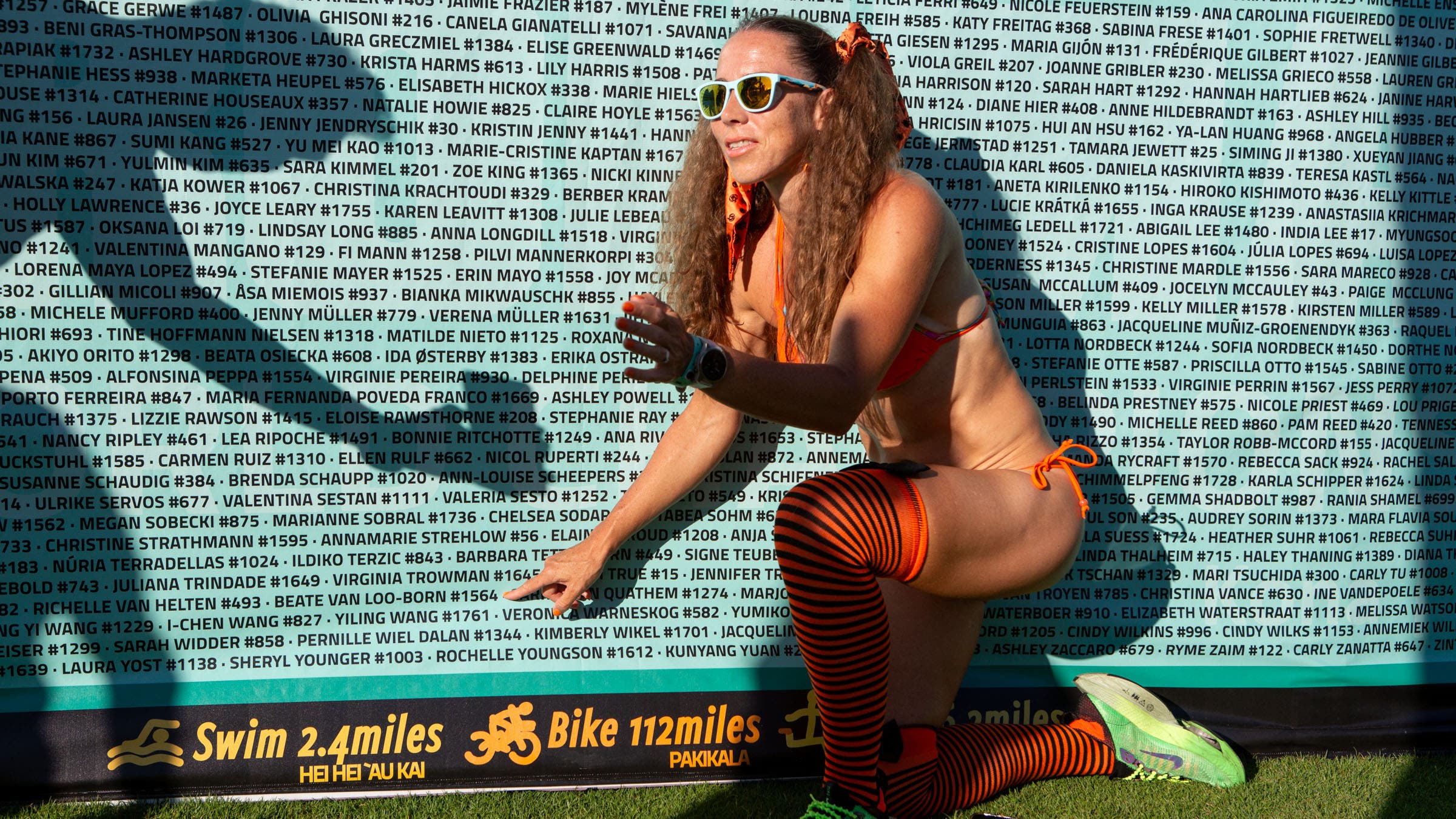
Taking a moment to find her name and strike a pose.