Published May 22, 2020 05:17PM
Mastering the High-Elbow Pull Of The Freestyle Stroke
One of the most difficult swimming concepts to understand is why one should pull with the elbows near the surface.
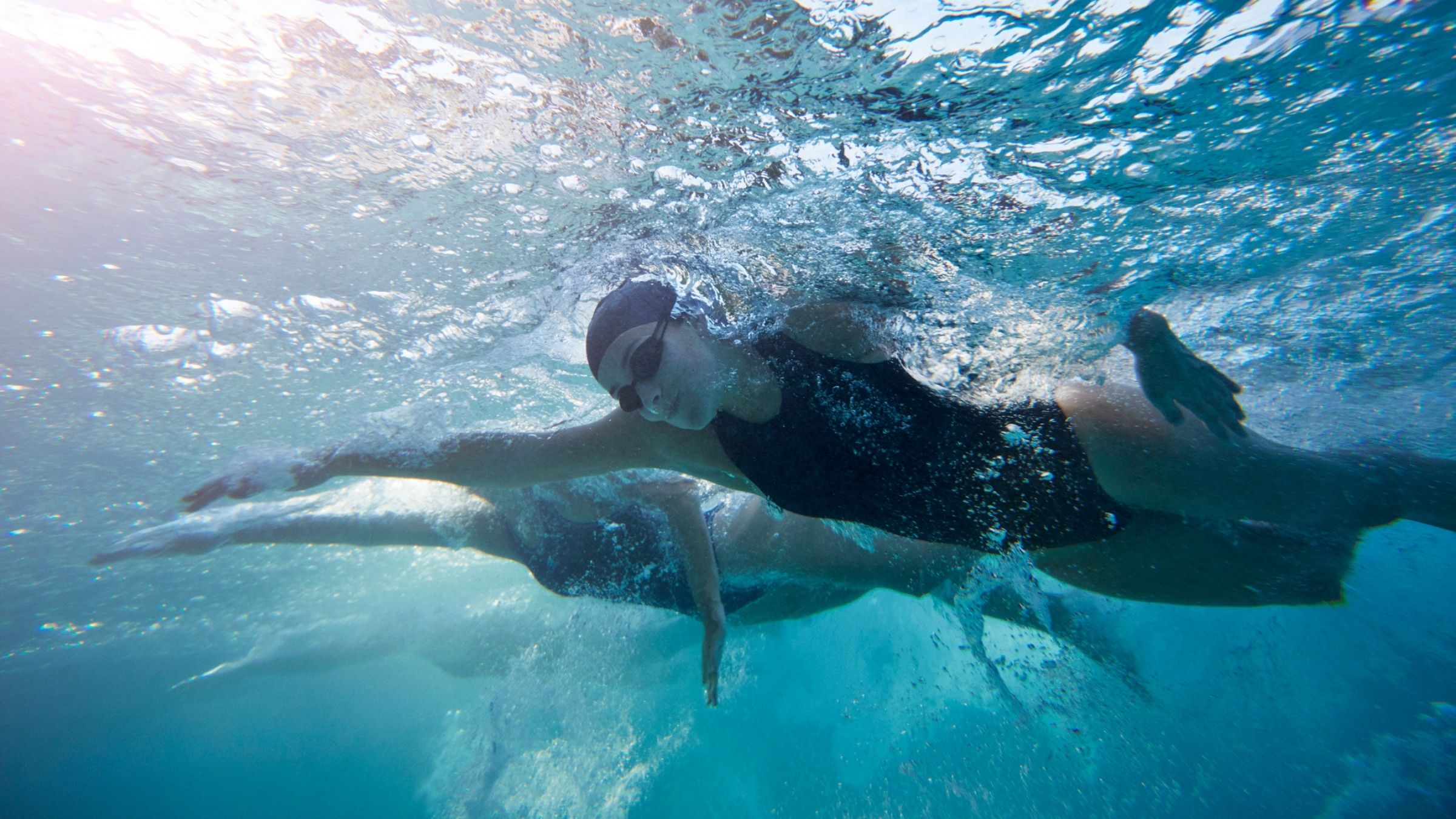
(Photo: Getty Images)
One of the most difficult swimming concepts to understand is why one should pull with the elbows near the surface, also referred to as “high-elbow pull” or the early vertical forearm position (EVF). If you’re not familiar, read on—it could be the most important change you make in your technique.
RELATED: How to (Finally) Become a Faster Swimmer
How to practice high-elbow pull
Begin with the arm outstretched directly in front of the same shoulder. Rather than dropping the entire arm to a lower position to initiate the pull, only lower the hand and forearm, leaving the elbow close to the surface, with the hand directly below. Continue on the path downward until the hand falls almost immediately below the elbow. At this point, it can’t go any farther without changing the position to the upper arm, so sweep it quickly rearward, remaining as close to the surface as possible. From the front view, the hand should travel relatively straight back, with very little motion from side to side. As the hand nears the end of the pull, it should not go underneath the body but rather stay at the edge of the bodyline.
ADVERTISEMENT
Because it’s more comfortable and you can feel the power you generate, most swimmers naturally opt for the deep pull. But doing that is like putting your right foot on the gas pedal and your left foot on the brake … the entire way. Pretty soon, you will burn out your motor. Choosing the EVF over the deep pull is one example of the compromises involved in swimming—opting for less frontal drag over more power.
Pulling with EVF requires a leap of faith. You simply have to trust that using EVF reduces drag enough to more than compensate for the greater power you will get with the deep pull. When you first try pulling this way, it will feel downright awkward. But keep working at it and you will soon get stronger and the motion will become more natural. The stronger your “EVF muscles” (scapular, shoulders and forearms) get, the faster you will go.
RELATED: A 4-Week Training Plan to Help You Swim Better and Faster
A swim drill for high elbows
The simplest drill to practice EVF is the one-arm drill.
- Start on your stomach with both hands stretched out over your head.
- Keeping one hand in front of you, initiate the pull with the other hand by keeping the elbow just under the surface of the water.
- Rotate to your side as you push the hand straight back, maintaining the same elbow position near the surface all the way back. Don’t allow the elbow to come out of the water.
- Once you have completed your pull, recover the arm high over the top of your shoulder and rotate back to your stomach for another pull. Drill for 50 yards/meters with one arm, then switch to the other.
- Finally, swim with both arms trying to duplicate the same pulling motion.
RELATED: These Advanced Skills Will Take Your Open Water Swimming to the Next Level