Published June 3, 2022 01:06PM
The Inside Details On Blummenfelt’s Sub7 CADEX Prototype Bike
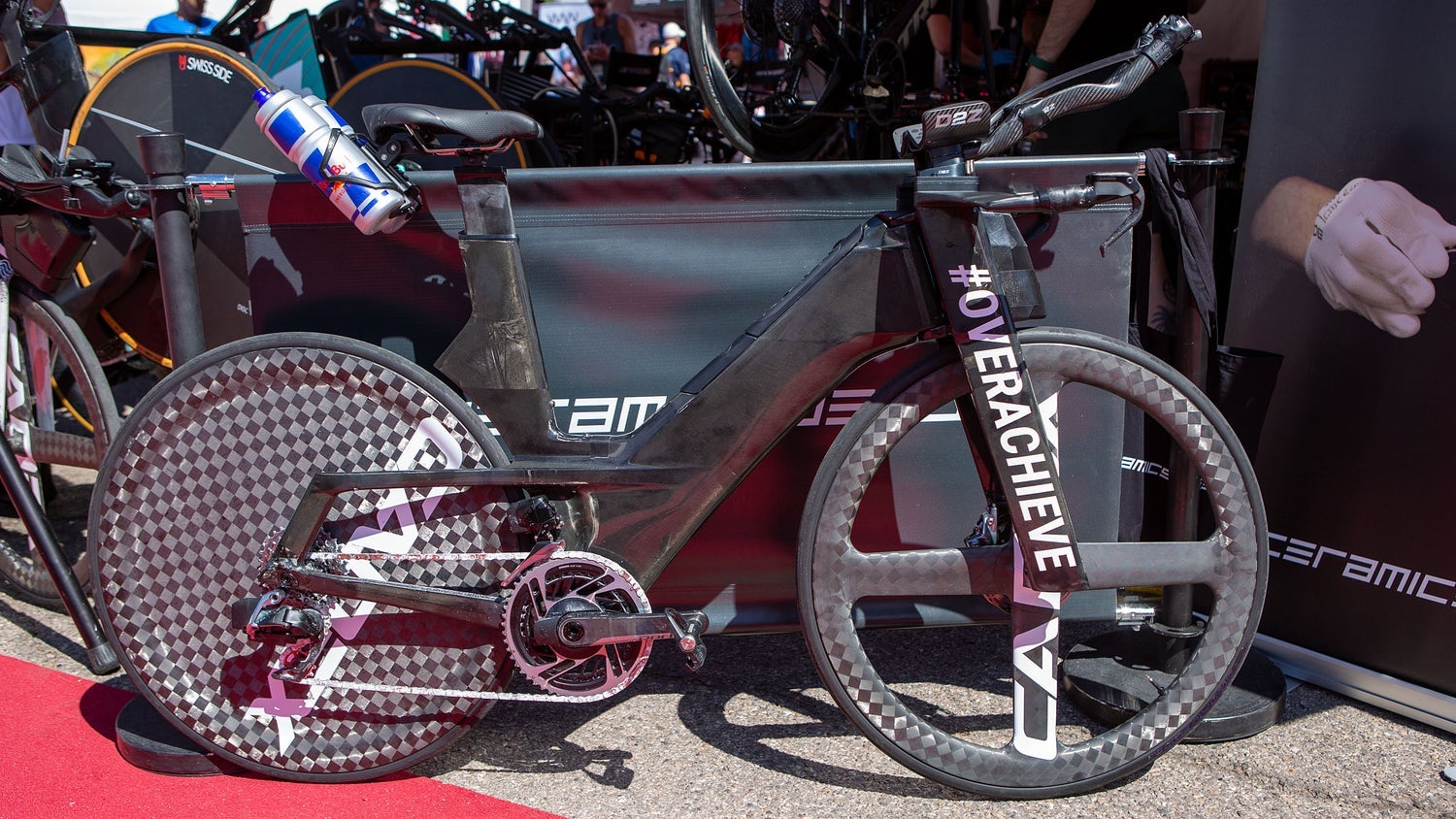
Why is the top tube missing? Why is the seatstay shaped that way? What is happening with the fork? Does it weigh a ton?
(Photo: Brad Kaminski)
The CADEX Prototype Frame Design
The new, radically designed frame may make people think of the ’90s-era Giant MCR, but that’s no accident, said Schneider, who noted the CADEX prototype does, in fact, draw from that same design. For those unfamiliar, the shape is missing a top tube, and has an oversized downtube with an unconventionally placed seatstay—which Schneider said is located about halfway down the seat tube to help increase stiffness in the frame. Like other “non double-diamond” designs, the frameset is made specifically for triathlon and is not UCI legal.
The missing top tube serves three functions: First, it’s to accommodate “specific fit things [for Kristian Blummenfelt] that we couldn’t make work on the Giant Trinity,” he said, referring to CADEX’s parent company, Giant, and their current tri offerings. Blummenfelt prefers an extremely far forward position—one so far that he required a special CNC’d seat post head to keep his position on his St. George rig.
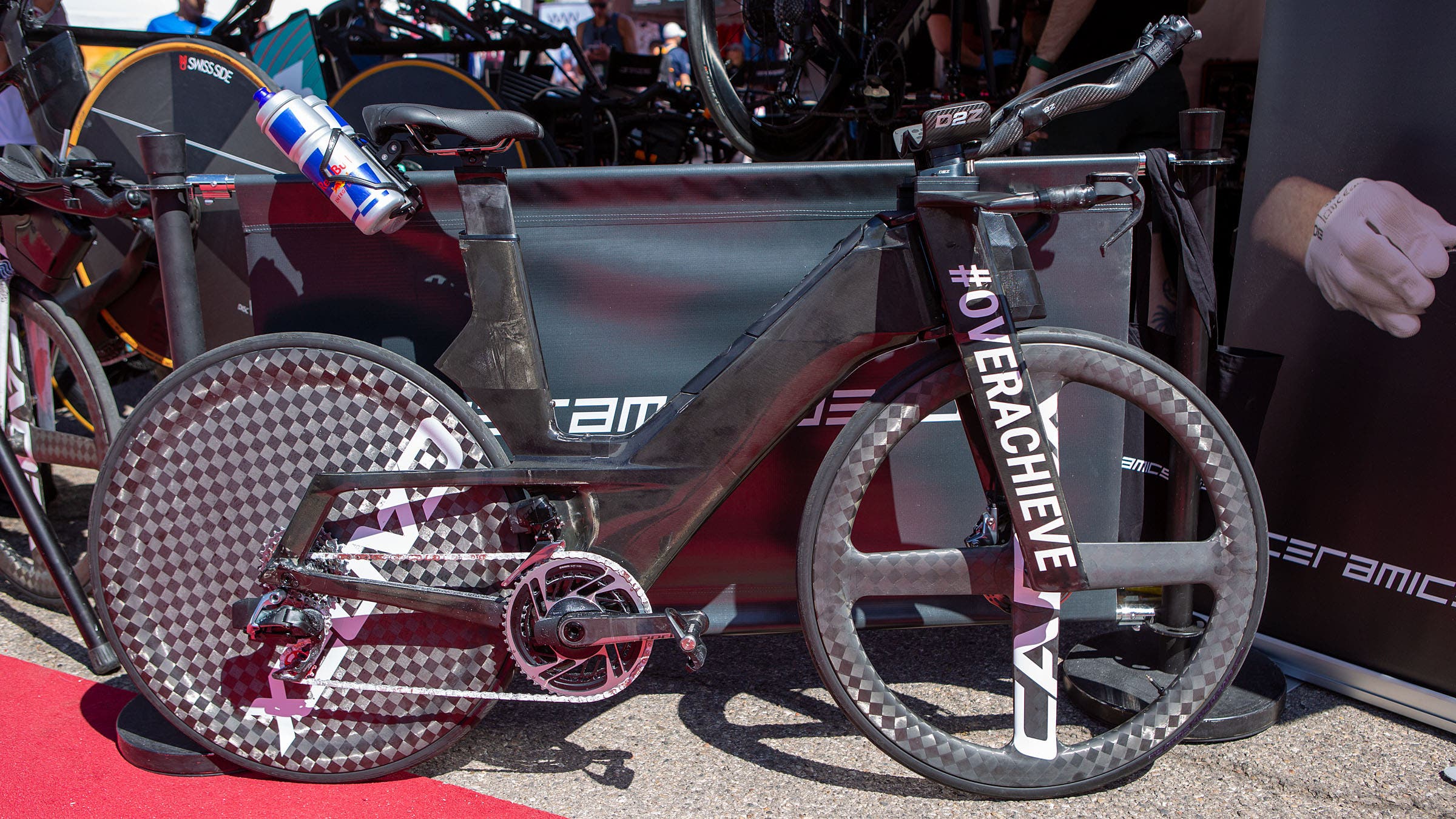
Second, the missing top tube allows for a larger cross section in the downtube—but why is that good? For triathletes who need nutrition, hydration, and repair storage, Schneider said the most aerodynamic way to bring all of that along is to house it inside the frame, and this design has space for an easily accessible toolkit (simply turn the left cranks and open), a huge Bento-style box, and 900mL of fluid storage in a bladder. For comparison, Canyon houses 750mL of fluid in their Speedmax line, Ventum houses 1.4L, and the Specialized Shiv Disc has 1.5L
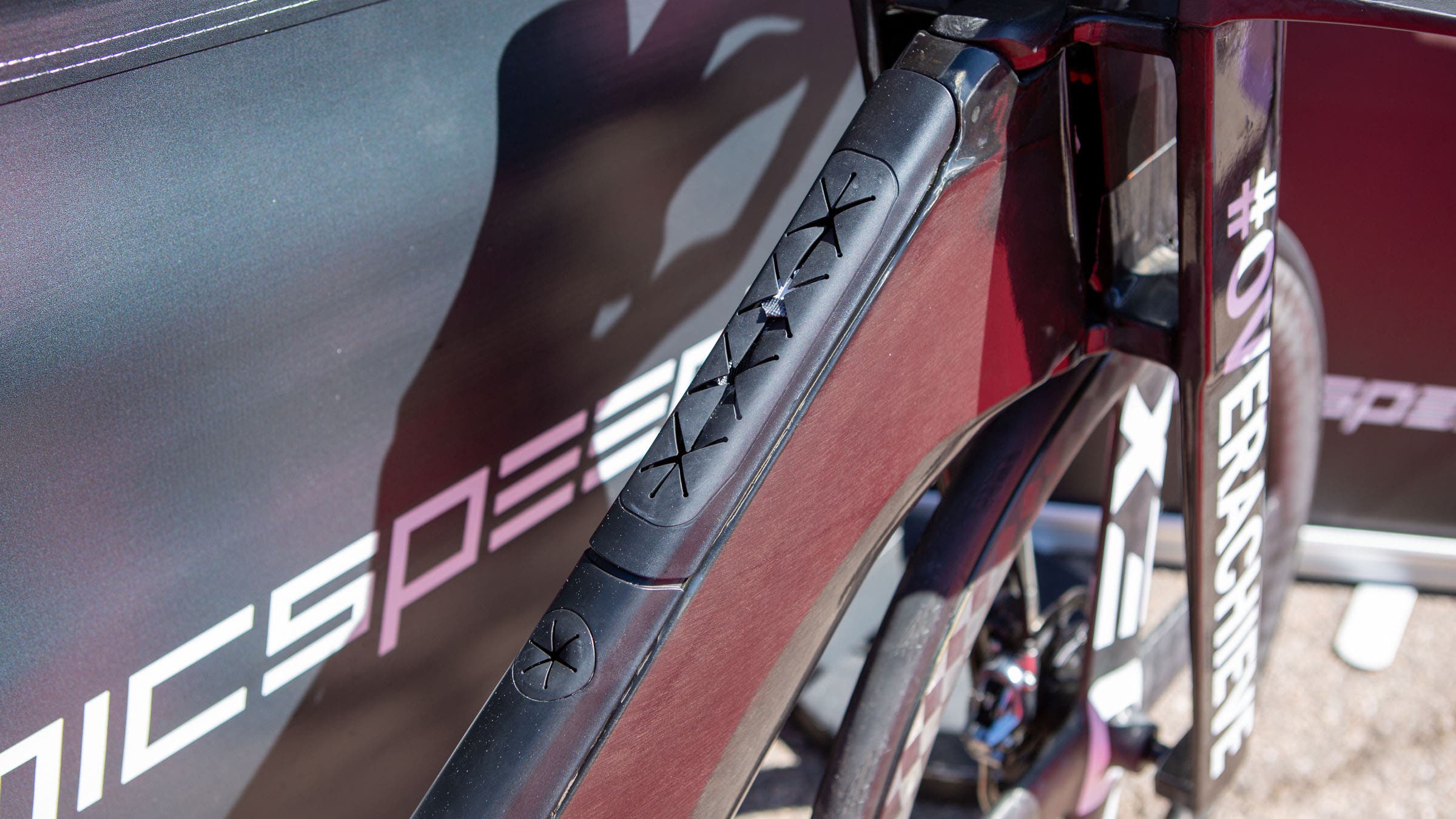
Finally, Schneider said by focusing on the downtube and not an oversized top tube—like other non double-diamond designs, for instance—the “dirtier” aerodynamic air is focused more around shapes on the lower half of the bike, which is already considered a churning, swirling mess of air, between the wheels and the cranks. As such, Schneider says that the new CADEX frame is approximately 6-7 watts faster than the Giant Trinity in the wind tunnel.
ADVERTISEMENT
The CADEX Prototype Front End
Is The CADEX Prototype Practical?
With all of this unique-looking carbon, the big question is, “How much does it weigh?” According to Schneider, the frameset weight is on par with other non double-diamond designs, in fact even lighter than many. In terms of complete bike weight, numbers will be released soon, but we’ve been told that due to the high-quality carbon, it’s not an outlier in the tri bike world.
ADVERTISEMENT
In terms of real-world tri use, Schneider says the new design allows for easy packability—not unlike some similar modularly integrated front-end designs or non double-diamond designs that break down easily for race-day transport.
What’s Next With CADEX?
Schneider also said that CADEX has been working on three new wheels—more their bread and butter, as opposed to framesets—a four-spoke front, a four-spoke rear, and a disc wheel. He also revealed that the brand is working on a new tire that will have a new, special shape, focused almost solely on aerodynamics.
Will the prototype CADEX frame ever be available to regular triathletes? Well, yes and no. CADEX is working on releasing more information in the next month, but the design will be released as a frameset-only option in limited numbers, and at a fairly high cost—due to manufacturing constraints.
Until then, be sure to watch Blummenfelt’s team at the Sub7 event this weekend, as they all ride the new prototype frameset with the hopes of helping him break seven hours for the iron distance.
RELATED: Everything You Need to Know About the Attempt to Break 7 and 8 Hours in the Iron-Distance