Updated July 10, 2025 01:53PM
Seine Swim Could Be Diverted at Paris Paralympic Triathlon
A revised point-to-point swim through the heart of Paris could be the headline change as Paralympic organizers grapple with the challenge of a return to the River Seine.
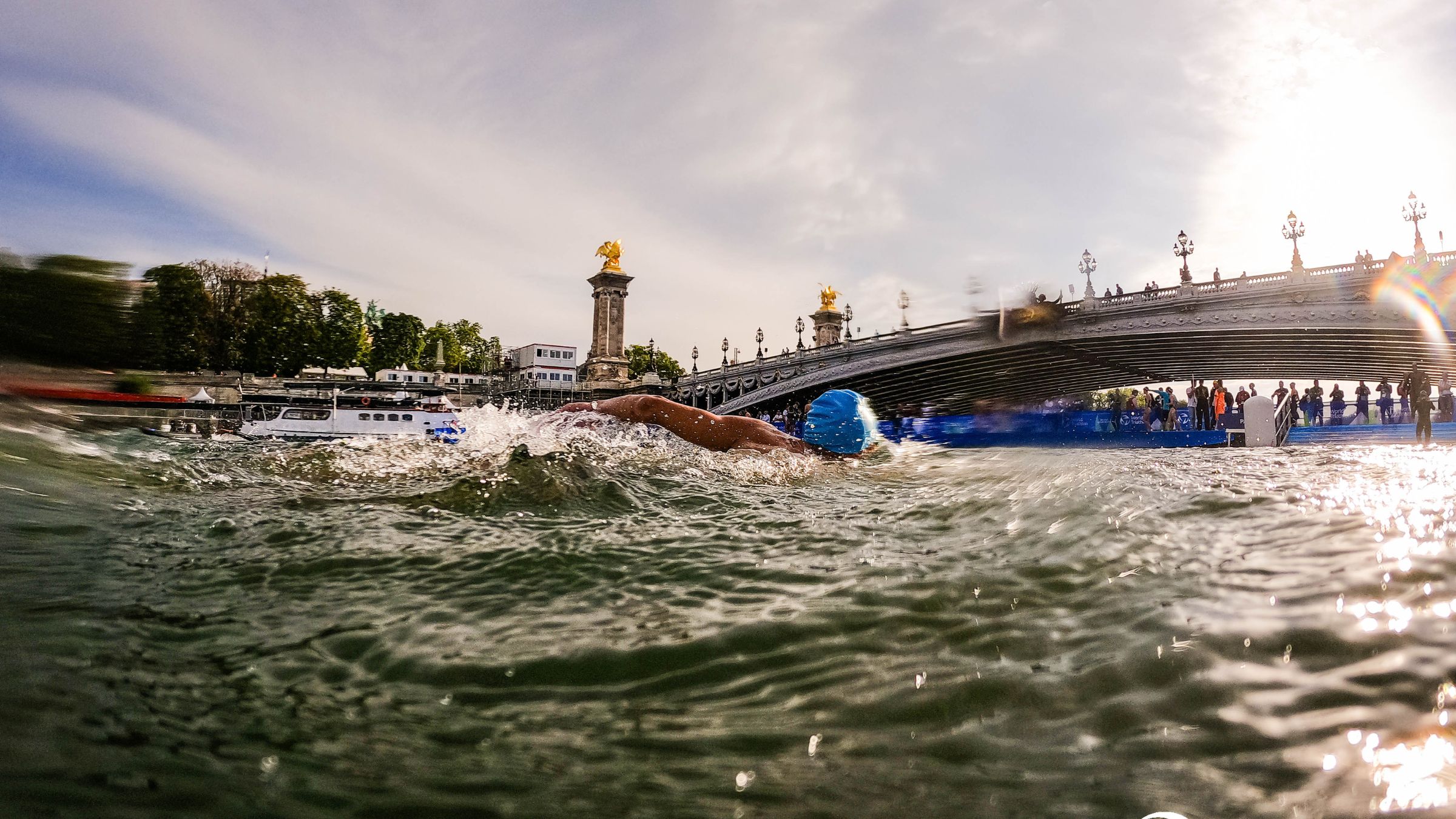
A revised point-to-point swim through the heart of Paris could be the headline change as Paralympic organizers grapple with the challenge of a return to the River Seine. (Photo: Tommy Zaferes/World Triathlon)
The triathlon events in the Olympics were some of the most eagerly anticipated of the Games. Not just for fans of swim, bike, and run, but for observers waiting to see whether the organizers’ grand plans for swimming in the Seine would come to fruition or be humiliatingly halted.
That all three events – the women’s, the men’s, and the mixed team relay, as well as the marathon open-water swims – went ahead (albeit with a day’s delay on the men’s triathlon), can be seen as a successful first chapter. But the story doesn’t end there.
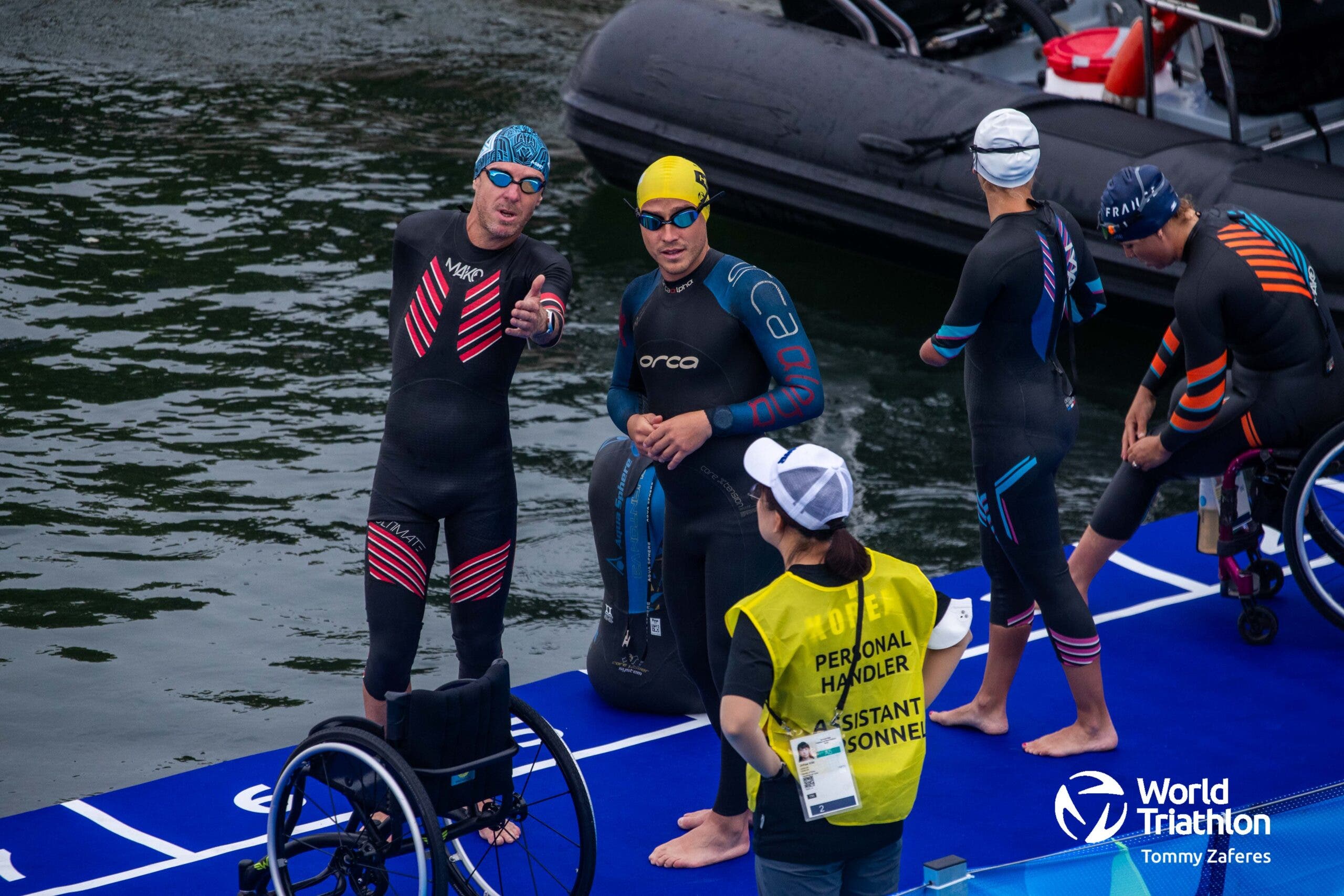
There is still the Paralympics to come, and over two days of racing on Sunday, September 1 and Monday, September 2, approximately 130 paratriathletes will compete in 11 classifications – from wheelchair to visually-impaired divisions and more.
The certainty of uncertainty when it comes to the Seine
While paratriathlon is contested over the sprint distance of a 750-meter swim, a 20-kilometer cycle leg and a 5-kilometer run, the fundamentals of the hosting challenge in Paris remain somewhat the same, if not slightly greater.
ADVERTISEMENT
The venue is still the Pont Alexandre III bridge in the heart of the city, the swim is still planned for the Seine, and the bike takes in plenty of twists and turns on the famous cobbles of the Champs-Élysées.
With an inevitable sense of deja vu, the hot topic of discussion will again be the water quality. Will the river be deemed clean enough to allow a swim to take place?
Morgan Pearson, American silver medalist in the triathlon mixed relay, explained the uncertainty that had engulfed the Olympic events when he told Triathlete post-race: “I don’t want to speak for everyone, but it just seemed like a bit of a crapshoot whether we would race or not. It’d rain one day, the water quality would get bad, and then slowly go down. From a lot of our perspectives, we were just hoping for the best.”
The good news is that organizers have learned lessons from the Olympics earlier this summer, such as notifying the athletes that racing will proceed or be delayed the evening before rather than at 4 a.m. on race day. At the athletes’ request, this was the position adopted for the Olympic mixed team relay, and it at least gave athletes certainty before they went to sleep.
ADVERTISEMENT
But what about the Seine’s water quality?
It’s worth noting that one study showed at London 2012, Paralympic illness rates were generally higher than athletes in the Olympics, and while disability is not inherently related to a greater risk for illness, “some people with disabilities might be at a higher risk of infection or severe illness, at least in part because of their underlying medical conditions,” advises the Centers for Disease Control and Prevention. With that in mind, the water quality guidelines for paratriathlon are the same as all triathlon events, and organizers will again underscore that the health of the athletes is paramount.
Still more than a week out from the Paralympic events, organizers have not released a public update concerning test results, but Fluidion, a French and U.S.-based technology company focused on water safety monitoring, has been taking its own readings from the Seine since April.
“It’s challenging to make specific predictions because water quality can vary significantly, often in response to recent rainfall,” says Fluidion founder and chief executive Dan Angelescu.
ADVERTISEMENT
Another challenge is that not every unintentional mouthful of river water is equal. Angelescu adds: “Our data shows that comprehensive bacterial counts, which measure both free-floating bacteria and those attached to E. coli-rich fecal particles, tend to be much higher than results from standard methods.
“This makes sense, as the current standard methods aren’t designed to detect bacteria from larger E.coli-rich fecal particles, making them inadequate for assessing water safety in urban rivers heavily impacted by untreated sewer overflows, like the Seine.
“This situation may put athletes in a gray zone in terms of risk during the Paralympic Games. There is hope, however: We’ve observed that comprehensive counts can occasionally fall below the World Triathlon threshold, typically after extended dry periods when the river is calm and there’s plenty of sunshine. Hopefully, these favorable conditions will prevail, allowing Paralympic athletes to compete in a clean Seine river.”
Safe and Seine alternatives at the Paralympic Games
As with the Olympics, a contingency day (September 3) is built into the program, but also similar to the Olympics it would not be surprising to see that if the first day’s racing (September 1) had to be postponed, there would be an attempt to run the full 11-event schedule on September 2.
ADVERTISEMENT
It will depend on the weather forecast, with the argument being that given the unpredictability of the river conditions following rainfall, it’s best to get racing as quickly as you can because no one wants the alternative.
That final option would be duathlon events, where a 2.5-kilometer run would replace the 750-meter swim. This was the situation in last summer’s paratri test event in Paris, but it would be the first time in the sport’s history that such an alteration had been made to the Paralympic events, following their debut in Rio 2016.
Current affairs in the Seine
The other factor to consider is the speed of the river and whether the strength of the current may be too strong to allow the swim to take place in a safe manner. At times during the Olympics the flow was measured at more than 1m/second in the center of the river, dropping to around half that at the edge.
ADVERTISEMENT
“The biggest thing to think about going into the Paralympic swim is the current,” says Flora Duffy, the Tokyo Olympic champion, who delivered an open-water masterclass to lead the women into T1 in Paris and effectively change the shape of the race that eventually played out.
“The line choice on the way back is going to be really crucial because as everyone saw it makes a really big difference. You’re not swimming the straightest line back, you’re swimming the fastest line back, which is not straight at all.
“You’re hugging whatever is on the bank of the river, whether it’s a boat, the bank, or a dock, to stay out of that current because it is flowing really fast. This makes sighting really important.
“I don’t know whether athletes will get in for familiarization, I know we didn’t for the Olympics, although luckily we had the test event. I’d suggest walking along the river and standing on Invalides bridge [the first bridge downstream from the start] where you can see the current flowing and what lines to choose.”
ADVERTISEMENT
Duffy adds that it will be “super important” for those in the visually impaired category, who are tethered to a guide athlete who helps direct them.
“The guide will really have to know what they are doing,” she continues. “It’ll be an interesting challenge to navigate because we don’t have that many technical swims where it becomes such a feature of the race.”
Field size is also a consideration, with 55 starters in the Olympics reduced to around a quarter of that number in paratri competition.
“At the Olympics, the women really struggled turning around the buoys. In [the Paralympic events], it will be more spread out, so I wouldn’t expect too much tangling up, but then sighting becomes even more important because each athlete will be swimming their own line.”
But what if the current is just too fast for an out-and-back swim? The contingency plan is for a point-to-point swim, with the paratriathletes starting further upstream and heading current-assisted to Pont Alexandre III.
ADVERTISEMENT
Potential for point-to-point at the Paralympic Games
Triathlete’s understanding is that due to the small field sizes for each class (no more than 15 athletes) the start mechanism could change to in-water, from the side of a boat positioned to give a similar duration to the regular swim, which takes paratriathletes around 10-15 minutes on average to complete.
By definition it would have to be significantly further than 750-meter upstream, and each federation has been given a table of swim course distances corresponding to different currents. The faster the flow, the further they swim. For example, if the river is flowing at 1 meter per second at its fastest point, the swim would start 1,420 meters up river. For those familiar with Paris’s urban topography, athletes could be looking up at the Louvre before the starting hooter sounds.
ADVERTISEMENT
Judging the starting position for a point-to-point swim isn’t easy, but it is critical because the swim duration has a domino effect on the rest of the race, particularly in the wheelchair and visually impaired classes where a system called “factoring” is deployed.
Factoring is essentially a headstart as an attempt to equalize the performance advantage a less-impaired triathlete might have over a more-impaired rival. Think: athletes with lower trunk function in wheelchair competition or less sight in visually impaired racing.
As an example, in the recent para series race in Montreal, H1 athletes, such as Canada’s Leanne Taylor, were given a 3:38 head-start over H2 athletes, like American Kendall Gretsch. Gretsch won the race from Taylor by 13 seconds, making up time on each discipline (and particularly the swim). Had the swim been significantly shorter in duration, the result is likely to have been different. In short, how a point-to-point swim is handled could have a massive bearing on the final outcome of who takes home a Paralympic medal.
ADVERTISEMENT
Organizers are hopeful this won’t come to pass, but it’s not out of the question. They initially banked on the river’s current slowing as the summer wears on, but while the current data from the French government shows it has fallen since Olympic competition it remains stubbornly high. A decision on an out-and-back or point-to-point swim will be taken on Tuesday, before the swim familiarization later in the week (that is more likely to be undertaken by the coaches than the athletes).
Post-Seine situations and solves
Triathlon isn’t just about the swim, though. Before starting the bike leg, the athletes will have to negotiate getting from swim exit pontoon to road level at Pont Alexandre III. This is where the course changes significantly from the Olympic event.
Rather than tackle the flight of 36 steps to transition on Pont Alexandre III, the first transition – from swim to bike – will be at river level, from where the athletes will ride the side-road up to street level at Pont des Invalides before continuing the 20-kilometer bike course. The second transition – bike to run – is on the Pont Alexandre III bridge itself, like the Olympics.
ADVERTISEMENT
The other significant change from the Olympic course is that there is no overlap between the routes for the bike and run legs. The bike route still incorporates a stretch of the Champs-Élysées, but takes a right turn exiting the Pont des Invalides for a different out-and-back section south of the river.
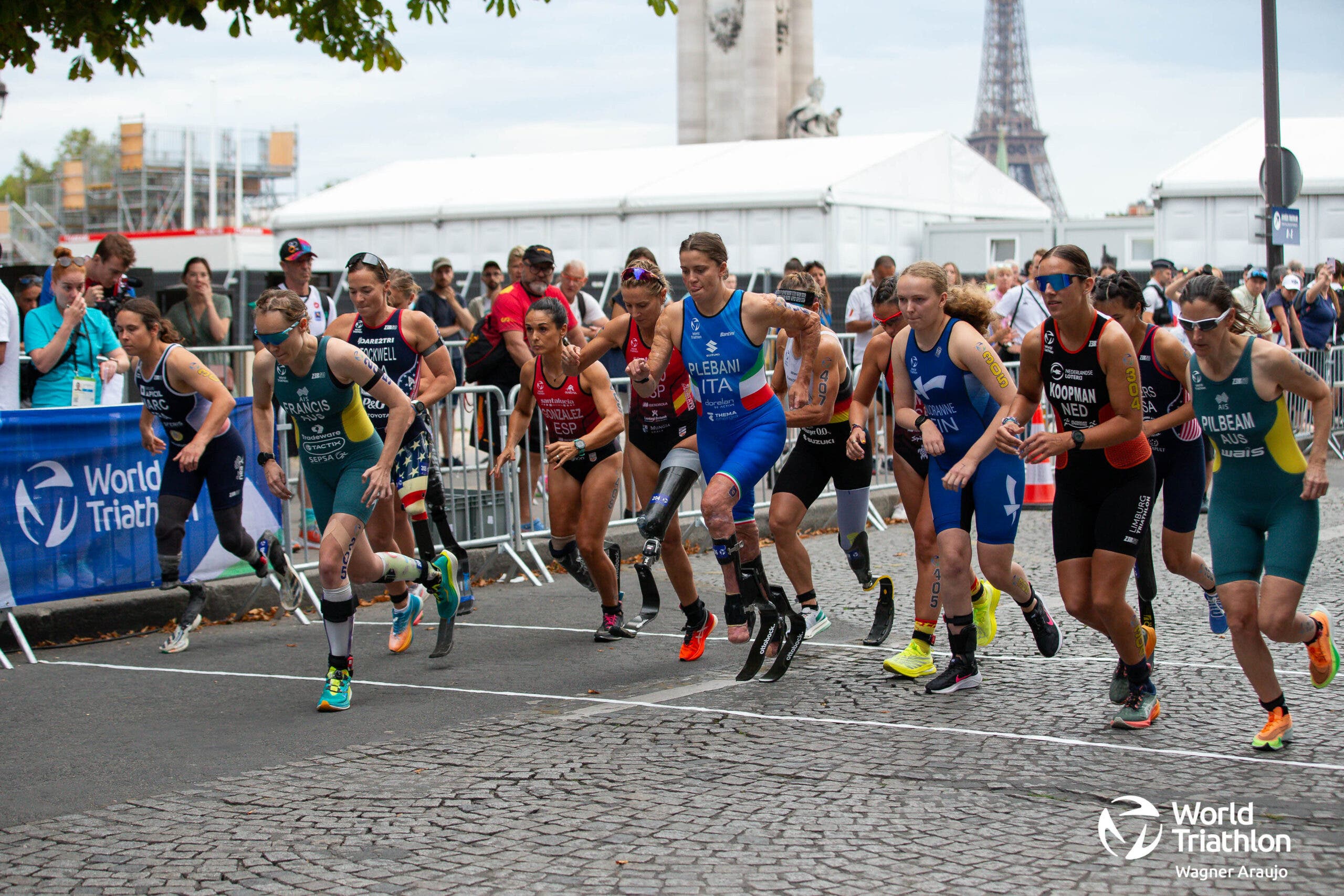
On the run, there are two 1.9-kilometer laps and a 1.2-kilometer lap, which takes the runners southeast along Boulevard Saint-Germain. Just as we saw with the women’s Olympic race where there were numerous crashes, the dangers are less likely to be the straight lines on the cobbles but the turns – particularly if there is overnight rainfall. There are two U-turns and another five 90-degree turns on each of the five bike laps.
Concentration will be key, but not just on staying upright. In the test event, American Kyle Coon and partner Zack Goodman were disqualified for failing to complete the required run laps and heading down the finish chute too early.
ADVERTISEMENT
The individual events will come fast and furious. On Sunday, September 1, the men’s PTS3 class starts at 8:15 a.m. local time to be followed five minutes later by the PTS2 class and then the women’s PTS2 division. There will then be a break until 10:10 a.m., when the men’s PTS5 restarts the action, and will be followed in close succession by the men’s PTS4, women’s PTS5, and women’s PTS4.
The following day the wheelchair classes get the competition underway at 8:15 a.m. (men) and 8:25 a.m. (women) before the visually impaired athletes and their guides round out the program at 10 a.m. (men) and 10:10 a.m. (women). It all means that there will be different athletes in different categories racing at different speeds on the same course at the same time, so athletes and spectators will have to be alert to follow the action.
Finally, unlike the Olympics, there is no mixed team relay competition in the Paralympics, although it is now being introduced to paratri with the U.S. winning an “open” category race at last year’s world championship in Spain with the quartet of Gretsch (PTWC), Coon (PTVI), Grace Norman (PTS5), and Carson Clough (PTS4). All four will be in action in individual competition in Paris.
ADVERTISEMENT
It took six Olympic Games before the mixed relay was added to the Olympic program, but Great Britain’s head of paratriathlon, Tom Hodgkinson, hopes it will happen sooner for paratri. “There’s talk of introducing a mixed team relay, which would be another exciting event for the sport,” he says. “But the women’s PTS3 category still haven’t got their own medal event, so hopefully can have full classifications across both genders and then bring it together in the relay.”
