Published January 5, 2026 09:55AM
21 Days, 4 Workouts: A Simple Indoor Cycling Training Plan to Establish Good Triathlon Habits
This 21-day indoor cycling plan is designed to kickstart triathlon training by building successful habits early in the year.
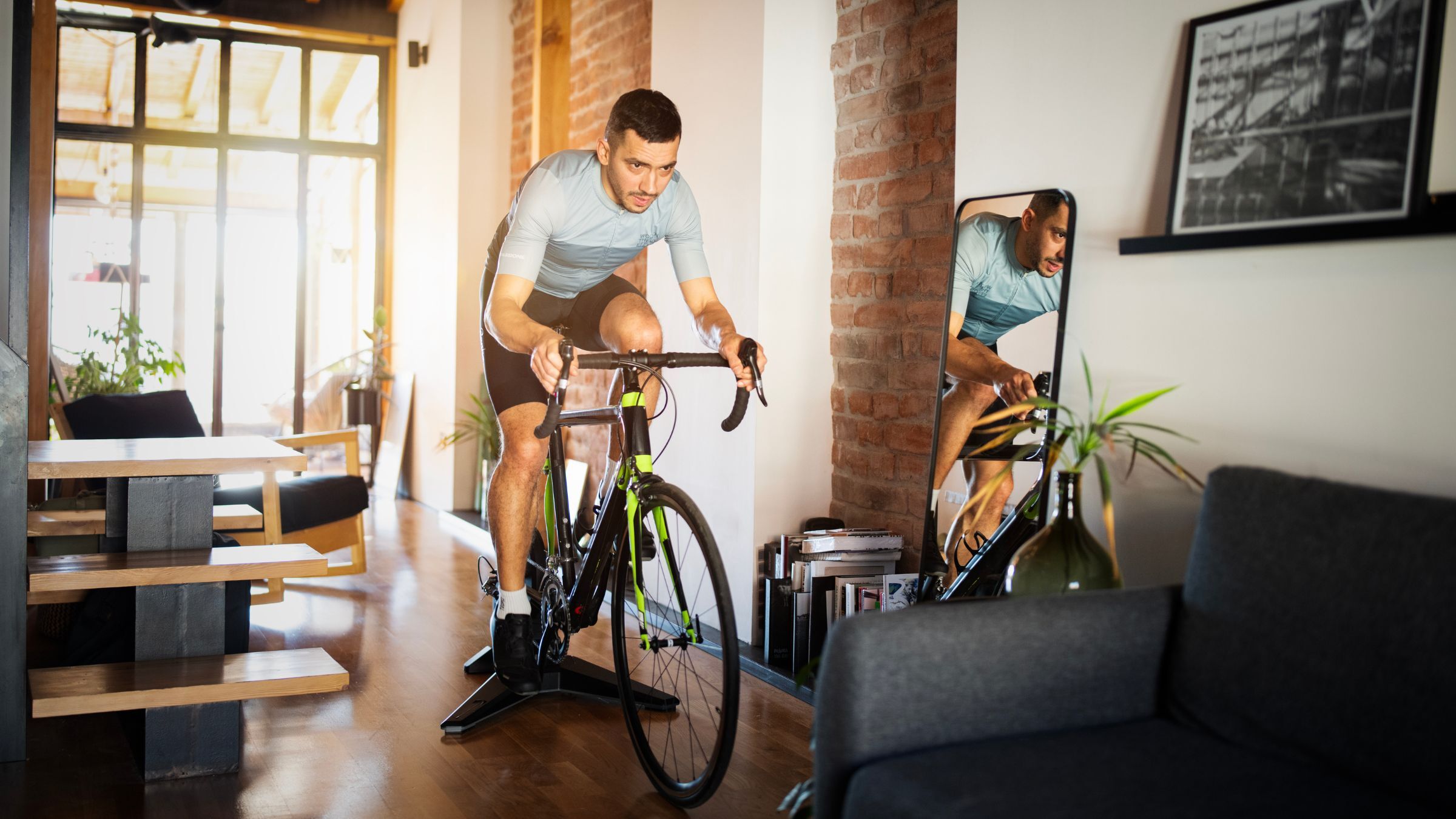
In 21 days with just four indoor trainer workouts, triathletes can transform the way they cycle this upcoming season. (Photo: Getty Images)
I’ve met many successful triathletes, and they all have something in common: habits. Consistency is the cornerstone of success as a triathlete, whether a beginner or pro. And what better time to establish habits than right now, at the beginning of the year?
You may think structured training plans are only about the workouts prescribed, but they’re really about habits. When you follow a structured schedule, like the 21-day indoor cycling training plan below, you’re not only following instructions for a workout, but establishing what you need to stay consistent.
This three-week indoor cycling plan provides more than workout ideas – it teaches you how to develop the foundational habits of a successful athlete. First, I’ll define the three categories of habits triathletes should focus on, and give examples that any athlete can implement immediately. Then, I’ll give you four workouts that will help you incorporate your new habits into daily life. If executed with the right intentions, this simple plan can change your life.
Triathlon habits for the new season
1. Environment
As James Clear says, “environment is the invisible hand that shapes human behavior. A good environment is one of the most common traits among successful triathletes. The main function of an athlete’s environment is to lower the barrier to entry of training. The people and things around you should normalize, promote, and facilitate actions that lead to success.
ADVERTISEMENT
As an athlete, a few environmental hacks have helped me stay on top of my training. First, I keep my indoor training space clean and uncluttered so I can easily access everything I need: trainer, bottles, nutrition, towel, laptop, and headphones. Everything has its place and is ready to go. Being well-organized cuts down on pre-ride preparation time and energy. This makes it easy to get going.
Second, I have my training partner on speed dial. Even though I like to train alone most of the time, training with a friend adds variation and accountability. Friends with similar goals are a huge part of any athlete’s environment. Good friends motivate you to get out the door and make training much more enjoyable.
2. Action
Well-directed action is the engine of progress. While the environment promotes action, systems act as quality control. Systems can be viewed as a sequence of “If-Then” statements. For example, “if I have a threshold ride, then I will ride my TT bike. If I have a threshold ride, then I will have 90 grams of carbs per hour. If I have a threshold ride, then I will do it on this route.” With systems in place, you don’t have to spend time and energy on making decisions. This allows you to focus on high-quality actions and reduces overall fatigue.
ADVERTISEMENT
A system that helps me a lot is the “10-Minute Rule.” I made this rule for myself, and it never lets me down. The premise is simple: no matter what, start your session and continue for 10 minutes. If you don’t feel more motivated, energized, and ready to go, you can stop. Otherwise, you keep going. Now, I never have to go through the thought process of, “I’m tired. Should I do this session?” The system decides for me. There are endless systems you can set up for yourself to achieve the same result. But, how do you know what systems to employ? That’s where knowledge comes in.
3. Knowledge
Successful athletes have a knowledge of their sport and body. Either through years of experience or active learning, you can create a knowledge base that allows you to build effective systems. When learning, start with the basics. There is a sea of information available to learn from online. If you’re reading this article, you’re off to a great start! Actively seeking out tidbits from experienced athletes and coaches quickly compounds into a deeper understanding.
By paying attention to your body, learning can also come from within. Monitor how certain workouts affect you and adjust accordingly. You should feel fitter and healthier over time, not tired and run down. Becoming fluent in reading the messages that your body sends is crucial for staying injury-free and consistent.
Indoor cycling workouts to build good triathlon habits
Now it’s time to apply these habits to our triathlon training. January is a great time to start, as we’re easing back into training after a holiday break. The following four workouts are designed to build and reinforce good habits, increase aerobic fitness, and prepare your body for harder training later in the season.
ADVERTISEMENT
Workout 1: Social Hour
What: 1 hour easy, 3/10 RPE, no intensity
Why: Meet with a friend on the same day and time each week. This creates an automatic habit and builds your community.
Tips: Keep it conversational. Riding at a pace that allows easy conversation promotes fat burning and aerobic development, the most important adaptations from training.
ADVERTISEMENT
Workout 2: Neuromuscular Development
What:
-5 minutes foam rolling calves, hamstrings, glutes, and quads
ADVERTISEMENT
-3×6 reps of glute bridges
-3×6 reps of body weight deadlifts
-45 minute ride as: 15 minutes easy, 5x (8 seconds VERY HARD seated, 4 minutes easy), 10 minutes easy
Why: Five minutes of pre-ride activation is something you can (and should) do all year long – a great habit. Foam rolling increases your range of motion for the time-trial position. Glute bridges and deadlifts activate your most powerful cycling muscles – the glutes. The eight-second sprints develop neuromuscular power, which can improve cycling efficiency.
Tips: Focus on using your glutes to push down on the pedals. Using too much quad can lead to knee pain and tight hip flexors.
ADVERTISEMENT
Workout 3: Tempo Spices
What: 45-minute ride as: 15 minutes easy, 6x (90 seconds @ 6 to 7/10 RPE, 90 seconds easy), 12 minutes easy
Why: January is for building your base fitness. A few short-tempo “spices” add flavor and prepare your body for the harder workouts to come without overdoing it.
Tips: Go by feel on the tempo efforts. They should be done at a moderate effort that could be sustained for 30 to 60 minutes. Using your RPE helps to develop a natural feel for your body’s effort.
ADVERTISEMENT
Workout 4: Relax Your Way to Efficiency
What:
1 hour ride, as: 10 minutes easy, 40 minutes at an upper-endurance effort (ideally done with power and heart rate), 10 minutes easy
ADVERTISEMENT
Why: Being able to relax under constant load is key to maintaining good mechanical and metabolic efficiency. This session teaches you how to maintain output while remaining efficient.
Tips: During the 40-minute rep, try to keep your heart rate as stable as possible while maintaining a steady power. Your heart rate may drift up. Use relaxed breathing, smooth pedal strokes, and a calm grip on the bike to maintain a lower heart rate. Developing a natural ability to reduce your heart rate can improve race performance through improved efficiency.
21-day indoor cycling training plan
Success doesn’t happen overnight. It can, however, happen quicker than you think. Setting yourself up for success requires up-front work by building an environment and systems that make taking action easy. Rotating through these four sessions every other day for three weeks is a great way to form habits that will benefit you forever.
Try this schedule to ease back into training in the new year and begin building your base fitness, and remember: it’s not about intensity, it’s about consistency.
| MON | TUES | WEDS | THURS | FRI | SAT | SUN |
| Workout 1: Social | 30-minute easy run | Workout 2: Neuro | Yoga or easy swim | Workout 3: Tempo | Rest | Workout 4: Efficiency |
| Workout 1: Social | 30-minute easy run | Workout 2: Neuro | Yoga or easy swim | Workout 3: Tempo | Rest | Workout 4: Efficiency |
| Workout 1: Social | 30-minute easy run | Workout 2: Neuro | Yoga or easy swim | Workout 3: Tempo | Rest | Workout 4: Efficiency |