Updated July 10, 2025 01:56PM
Everything You Need to Know About the Chicago Triathlon Course
Two-time Chicago Triathlon winner Malachi Henry shares insider race recon on the iconic urban course—from training to gear to pacing strategy—so you can have your best race-day experience in the Windy City.
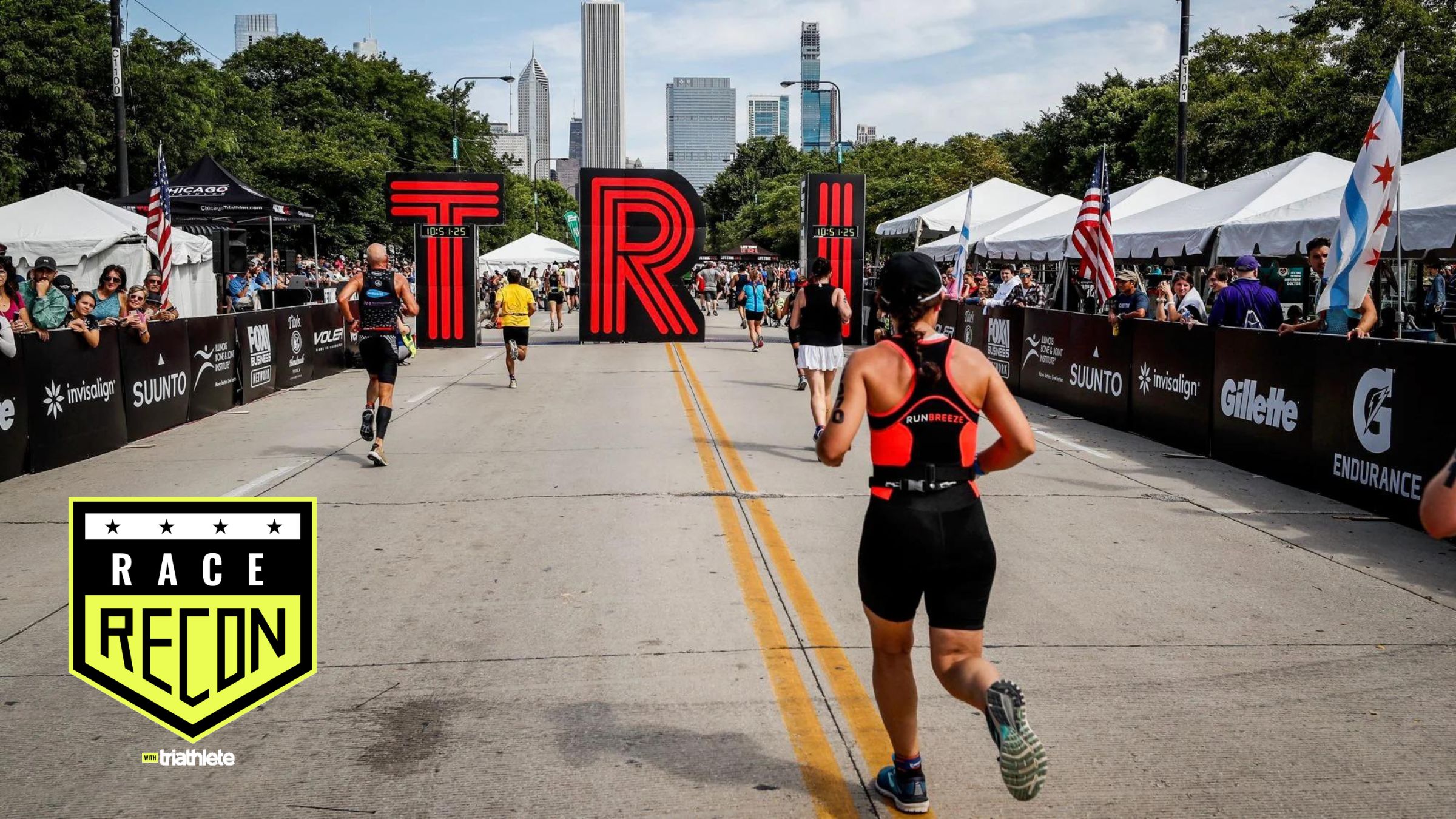
Everything you need to know about the Chicago Triathlon course, from weather and course conditions to how to prep and spectator sports. (Photo: Life Time Tri Chicago Triathlon)
Chicago Triathlon Race Recon
Since 1983, the Chicago Triathlon course has been drawing beginner and veteran age-group triathletes alike to the shores of Lake Michigan. It’s now the largest short-course tri in the country and takes place every August in the heart of the Windy City. The international distance features a 1,500-meter swim in Lake Michigan, a flat 40K bike through the city, and a 10K run finishing underneath the Chicago skyline in Grant Park. (The race also hosts sprint and super-sprint triathlons the same weekend.)
For the first time this year, the Chicago Triathlon will also be the second stop in the draft-legal Supertri pro series calendar, since Supertri acquired the Chicago Triathlon in early 2023. Age-group athletes can stick around Sunday afternoon to watch the high-speed racing from Queens Landing on a tight one-mile loop.
Malachi Henry, who works as a chiropractor in Indiana and got his pro card in late 2021, has raced on this course the last three years. He won not only the international distance in 2022 and 2023, but he also won the Triple Challenge, where athletes race all three events for the fastest cumulative time. “I think it’s just one of the most unique races I’ve ever been to,” Henry says, “and honestly one of my most favorite bike courses.”
ADVERTISEMENT
If you’re taking on the Chi Tri, this guide will help you prepare to race this historic course and enjoy the weekend in town.
Chicago Triathlon Weather
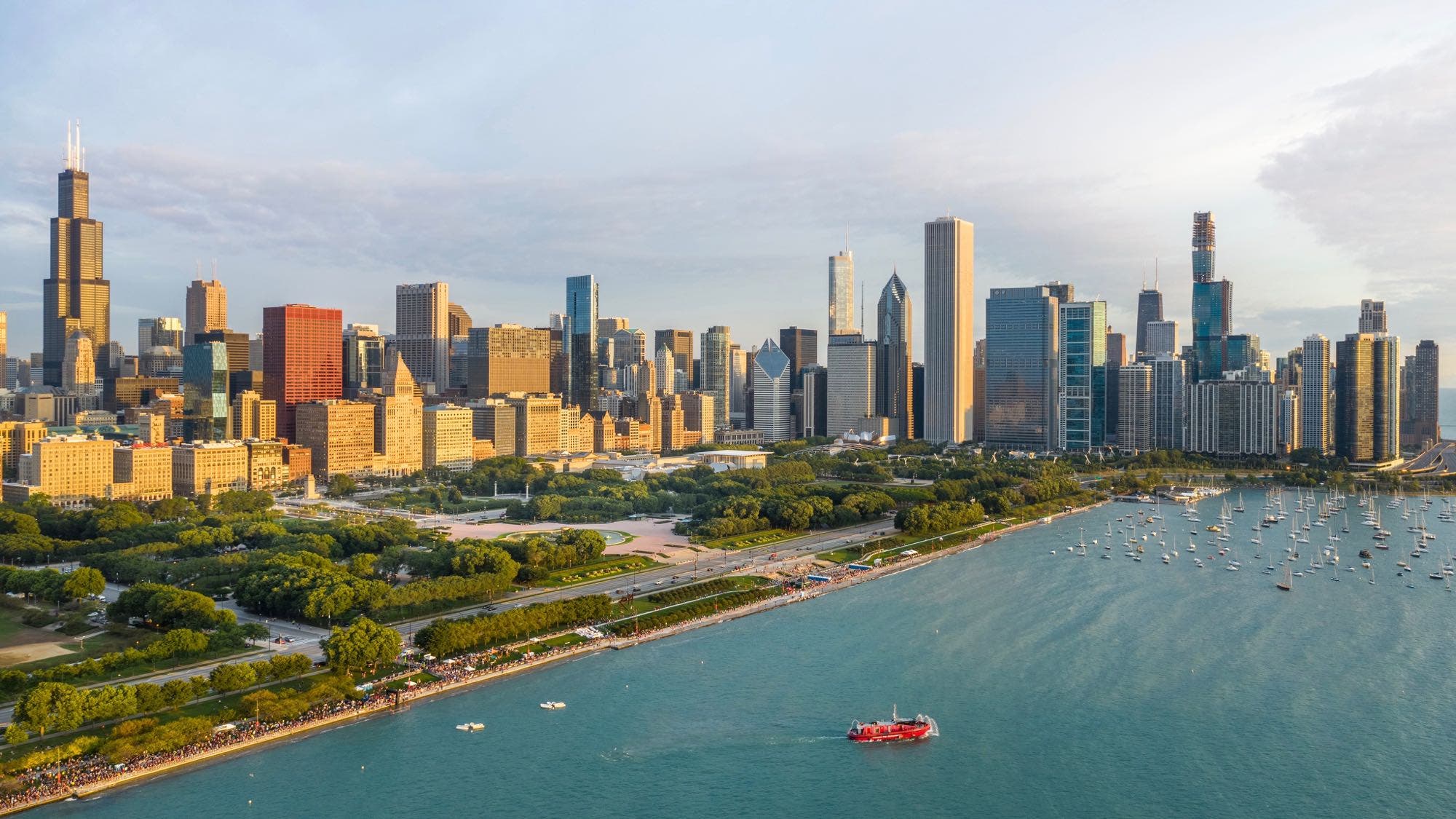
Chicago, the most populous city in the Midwestern United States, is situated in northwest Illinois on the shore of Lake Michigan, one of the five Great Lakes. The climate in summer is humid and warm, with a high in the 80s to low 90s. While the proximity to Lake Michigan moderates the temperatures in the city, the urban heat island effect usually keeps the city about 2 degrees warmer than the surrounding countryside with a cool breeze blowing regularly off the lake. The hot summer causes more water to evaporate off the surface of the lake, increasing humidity, so it can be a little sticky. And sometimes that evaporation turns into precipitation—previous editions of the Chicago Triathlon have experienced thunderstorms seemingly come out of nowhere during the race, so be sure to prepare for the rain by bringing lightweight waterproof layers.
Malachi Henry’s Advice
Even though it’s the Windy City, Henry says the wind hasn’t been an issue in the years he’s raced there. The “decent flow of air” coming off the lake hasn’t been enough to really affect the race, but it’s enough to keep the humidity down. Athletes will feel the humidity the most when going through underground tunnels on the bike, where there’s almost no airflow and the air feels thick. Henry also noted that the run course has little shade cover, so bring a hat and sunglasses for sun protection.
Chicago Triathlon Swim Course
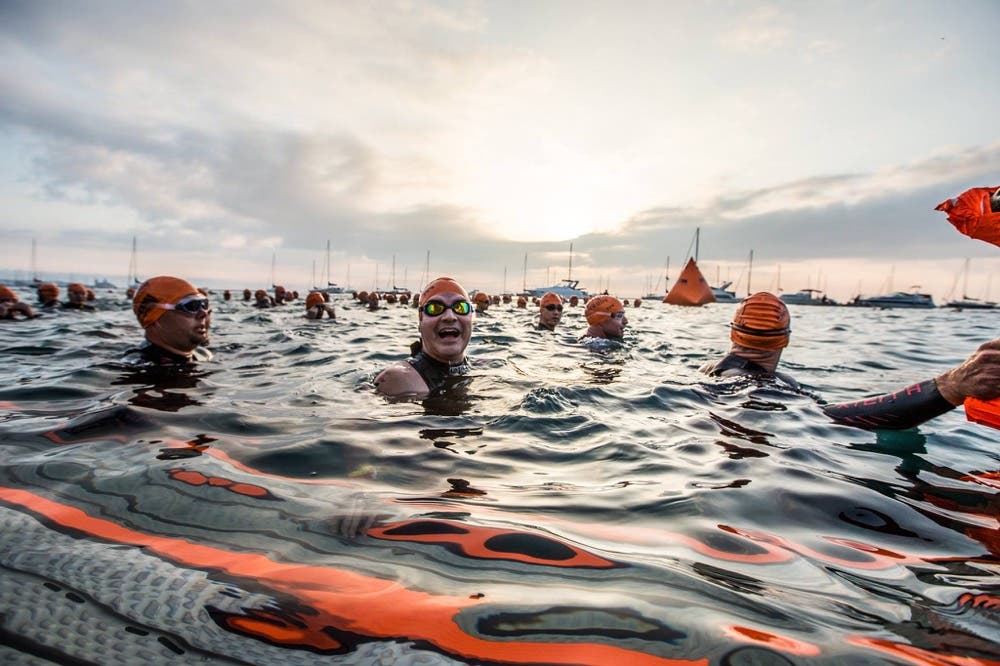
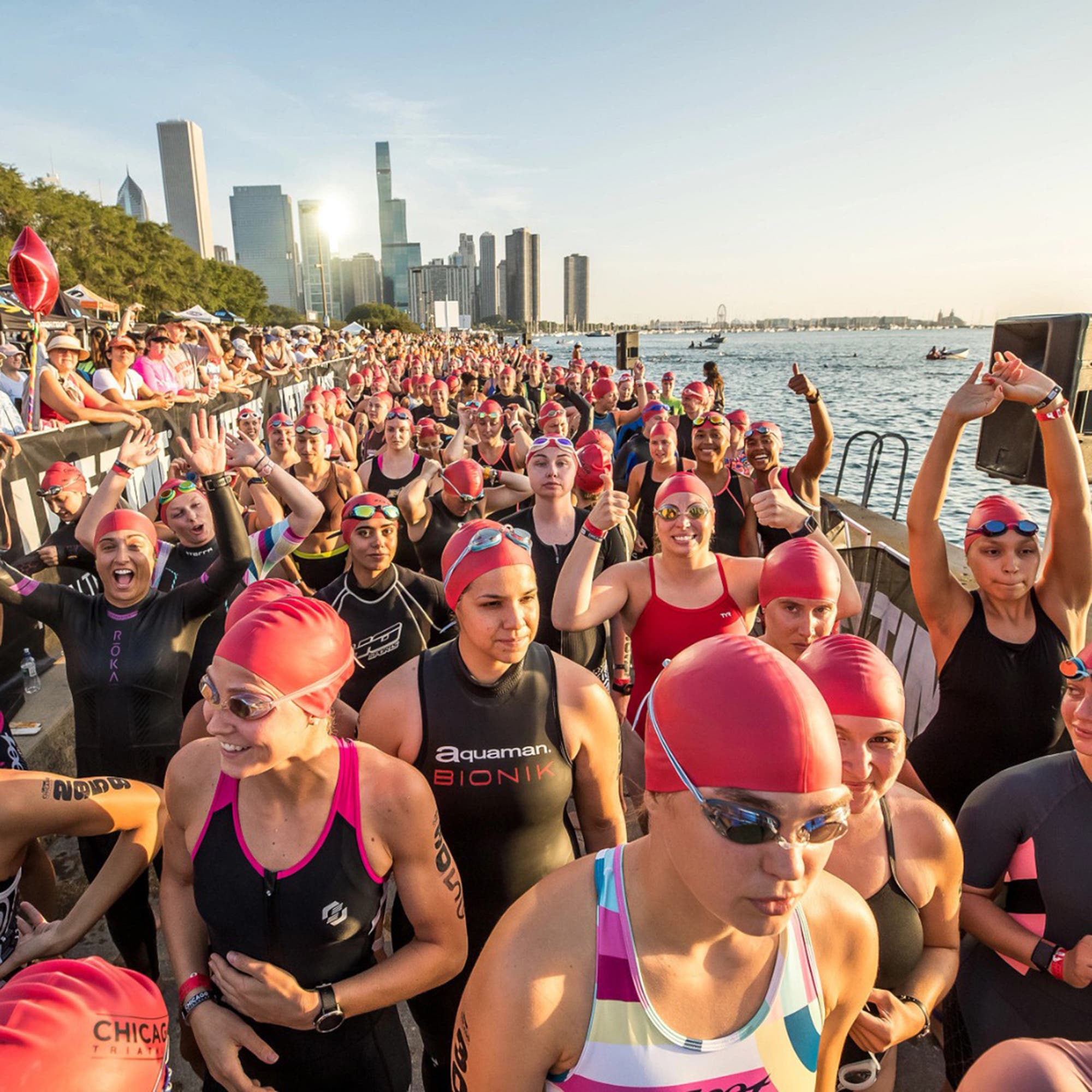
The 1,500-meter swim takes place in Monroe Harbor, which is closed to boat traffic during the event. The Lake Michigan water temperature varies widely—based on previous years, you can expect the water to be 65 to 74 degrees Fahrenheit (18–23 degrees Celsius), which means likely a wetsuit-legal swim. The race features a rolling start with athletes being set off in groups of 5–10 athletes every 5–10 seconds, so each athlete’s race will start when they cross the swim timing mat. The water is 10–12 feet deep in the lake, so athletes won’t be able to touch the bottom when swimming.
In 2023, the 40th running of the race, the swim was canceled on Sunday due to unfavorable swimming conditions, including waves up to six feet in the lake. With the seawall there, it made it dangerous for athletes.
ADVERTISEMENT
“The waves will bounce off the wall and then come back, so you’re kind of yo-yoing up and down the entire time,” Henry says. Even with the protected waters of the harbor, there’s a chance for some choppy conditions.
Training
If you arrive in town early and want to get a feel for the water, you won’t be able to swim the actual swim course—pre-race practice swims are not permitted in Monroe Harbor. However, Chicago has two dozen beaches open to the public in the summer, so head north from the pier to the popular North Avenue Beach or Oak Street Beach to get a chance to swim in the lake, or right by the Navy Pier you can get in the water at Ohio Street Beach. It’s a smart idea to get a feel for the water temperature before race day to minimize the cold-water shock on race morning.
Race morning
On race morning, do a dryland warm-up or some shoulder mobility work, Henry says, since pre-race swims aren’t an option. This will get the blood flowing and your heart rate up so that the water temperature isn’t such a shock to the system. He also finds some water in the transition area to dump into his wetsuit to give himself that shock before the start.
Starting from around Balbo Drive in Lakefront Park, athletes will first swim south toward Soldier Field, swimming parallel to the seawall for 380 yards. They’ll then make a 180-degree left turn around a buoy to head north, past the starting area to just south of the Chicago Yacht Club to climb stairs and exit the water, then head to T1. The transition area is in the grassy area above DuSable Harbor, at the foot of Randolph Street.
ADVERTISEMENT
Gear
The water temperature is “refreshing,” Henry says, so wearing a wetsuit for the swim is a smart choice to reduce the initial shock of jumping in. The added buoyancy of a wetsuit on the 1,500-meter swim also outweighs the time it takes to peel a wetsuit off in T1. Henry normally wears a sleeveless wetsuit to give his shoulders extra mobility, or if it’s an especially warm day, he suggests at least wearing wetsuit bottoms to keep your legs afloat.
The sun will be rising over the lake, so if you’re not a bilateral breather on the swim, you’ll be looking straight into the sun at some point. A polarized, tinted goggle will help reduce glare off the water and protect your eyes as you swim.
ADVERTISEMENT
Malachi Henry’s Advice
Henry liked swimming parallel to the shoreline because of the crowds and easier sighting. “If you can look left when you’re breathing, you can just sight off the wall and you don’t necessarily have to look up,” he says. The seawall will be to your right for the first portion of the swim and to your left for the last 1,100 meters, so it will benefit you in training to practice breathing to both sides. There will also be thousands of spectators lining the waterfront to cheer you on, so use that to motivate you. He also recommends taking the first 200 yards or so to get loose, get used to the water temp, and build into your race pace.
The run to T1 is long (Henry estimates about half a mile), so he recommends using the help of volunteers, if offered, to exit the water and strip your wetsuit right at the swim exit. He likes to remove his wetsuit after the exit and carry it to help him start cooling off and get his heart rate down. He also takes off his cap and goggles and carries them to transition (for more on nailing your transitions, check out our step-by-step guide).
Chicago Triathlon Bike Course
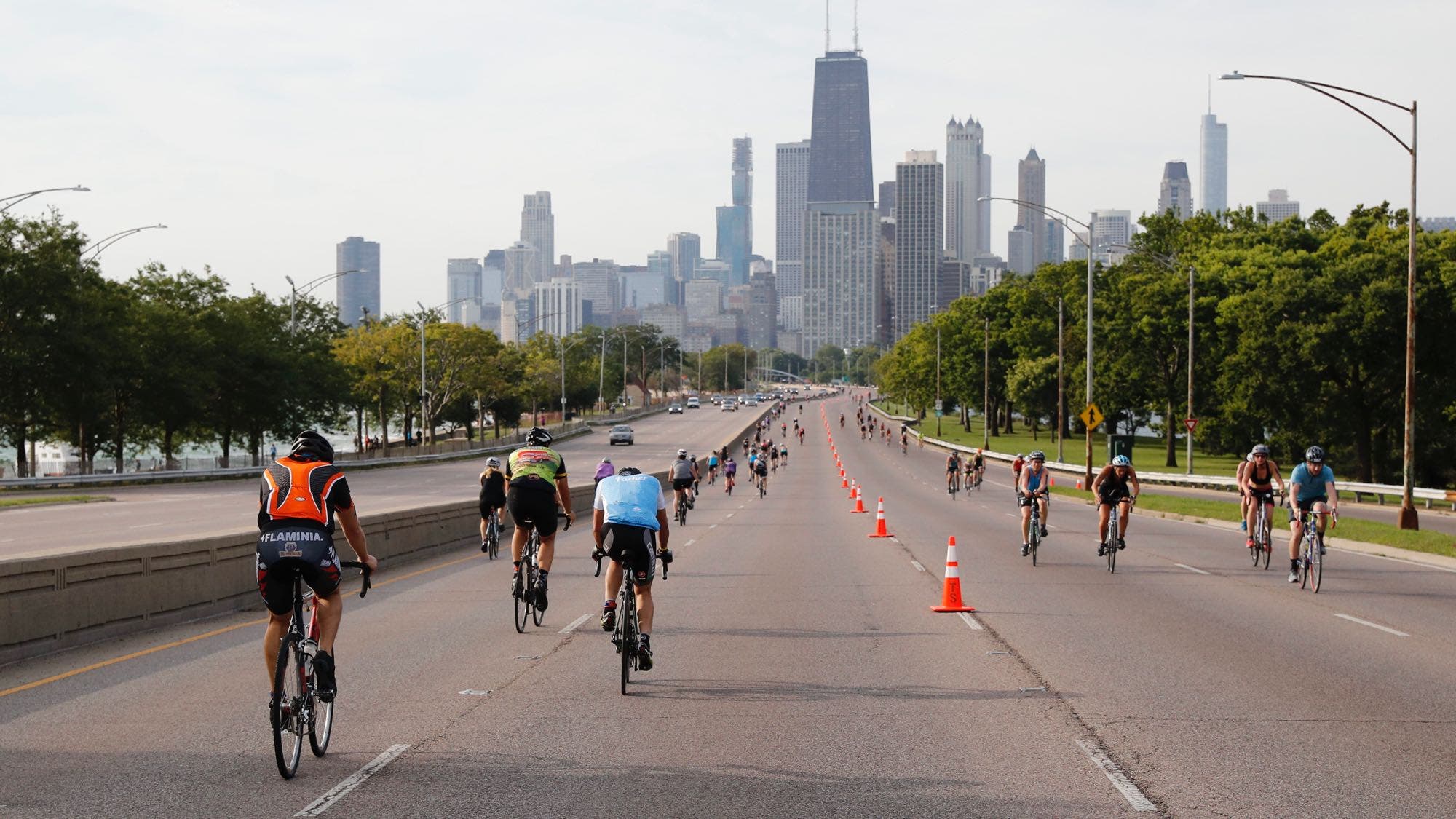
Chicago’s 40K (24.8-mile) bike course is famous for its lakefront view in the first half of the ride and its wind-free underground tunnels on the latter half. The course is flat and fast with very little elevation gain, which mainly comes from short ramps and bridges.
ADVERTISEMENT
Lakeshore Drive (Miles 1 to 15)
Make sure you leave T1 with full water bottles (there are no aid stations on the bike) and feeling comfortable in your bike shoes because you have a hill to climb right away. Immediately after mounting your bike, you head straight up the onramp onto N. Lake Shore Drive and cross the Chicago River. Lake Shore Drive is a multi-level expressway and part of U.S. Highway 41, which runs north to south in this section along Lake Michigan.
ADVERTISEMENT
Make sure you’re in an easy gear as you climb up the on-ramp. Lake Shore Drive is mostly straight and flat, so you can get into your aerobars pretty early into the race, as long as the wind coming off the lake isn’t too intense and you have strong bike-handling skills. Some years, the wind can act as a tailwind on the way up and a headwind on the way back, so be prepared in case you have to battle some wind. This section of the course can get a bit crowded as well (the Sunday races will have about 5,500 athletes on course), so even with the wide roads, make sure you’re navigating safely around your competitors.
Henry especially enjoys this section of the bike: “It’s one of the coolest bike rides ever,” he says. “I mean, it’s a ginormous highway and it’s closed to traffic—it’s very special.” Not to mention the impressive skyline and lake views you get from this section of the course. About 7.5 miles into the race, you’ll U-turn at Hollywood Avenue and return south along the same section of Lake Shore Drive. If you’re racing to compete (versus complete), this is a great section to keep tabs on the competition ahead of or behind you.
Wacker Drive (Miles 16 to 18)
Once you head south and cross back over the Chicago River, you’ll exit Lake Shore Drive and take a ramp down one level below street level onto Lower Wacker Drive. Also known as the “bat cave,” this is an underground tunnel that is free of traffic and wind, and it allows you to gain speed. You’ll go around a few curves before a U-turn to come back through the same section.
ADVERTISEMENT
Entering the tunnel gets a little “sketchy” because of the darkness—you’ll need to pull off your sunglasses and let your eyes adjust. Henry says it’s a bit loud in the tunnel, but “you feel like you’re going super fast, so it’s a very unique event in that regard.”
This section obviously has no sun, but it also has no airflow, so the air can feel thick. Until your eyes adjust, ride carefully because the road surface is not pristine and can be hard on the bikes if you hit a pothole.
McCormick Place Busway (Miles 19 to 24)
Around 18.5 miles into the bike, you’ll drop one more level into the McCormick Place Busway for the final section of the bike course. This open-air busway runs 15 feet below ground level through Grant Park, where you’ll be finishing after the run. It runs past McCormick Place before a final U-turn at about 21.5 miles into the race. This section also allows you to enjoy traffic-free riding.
ADVERTISEMENT
As you near the end of the bike course, you’ll want to have your sunglasses ready to put back on because the transition to full sun as you climb back up to street level is jarring. Top off any nutrition you’ll need before the run, slow down, and get ready to dismount and run into T2.
Gear
Because you’ll be going underground, make sure you have sunglasses or an easily removable visor on your helmet that you can take off and hold onto in the tunnels. You’ll be going from full sun to tunnels that are only dimly lit. Stash your glasses in a jersey pocket, top tube bag, or hold onto them for the underground sections.
Also, make sure your water bottles are tightly secured in your bottle cages. Because the road surfaces are a little rough, you can hit potholes that will send your bottles flying, especially in the dark underground tunnels.
ADVERTISEMENT
This bike course is great for riding in aero with an aero helmet, if you’ve trained for it and are comfortable. And you’ll only need to wear your tri kit for the ride—it’ll be too warm to need sleeves. You also won’t need to worry about sun protection as much, since so much of the bike course is underground.
There will be bike techs patrolling the course, so if you have a mechanical, pull over to the side of the road and either wait for the bike support crew to arrive or be prepared to fix the bike yourself.
Malachi Henry’s Advice
“If you’re not going for the fastest time,” Henry says, “it’s worth slowing it down and soaking it up.” A particularly picturesque spot is at the start of the bike—you can look left and see the skyline as you cross the Chicago River. There’s normally a race photographer stationed there. “So smile and get that photo for the ’gram.”
Henry also recommends not going out too hard at the start of the bike. “I always recommend to go out relatively easy,” he says. “Get your breath, then get into your rhythm.”
Chicago Triathlon Run Course
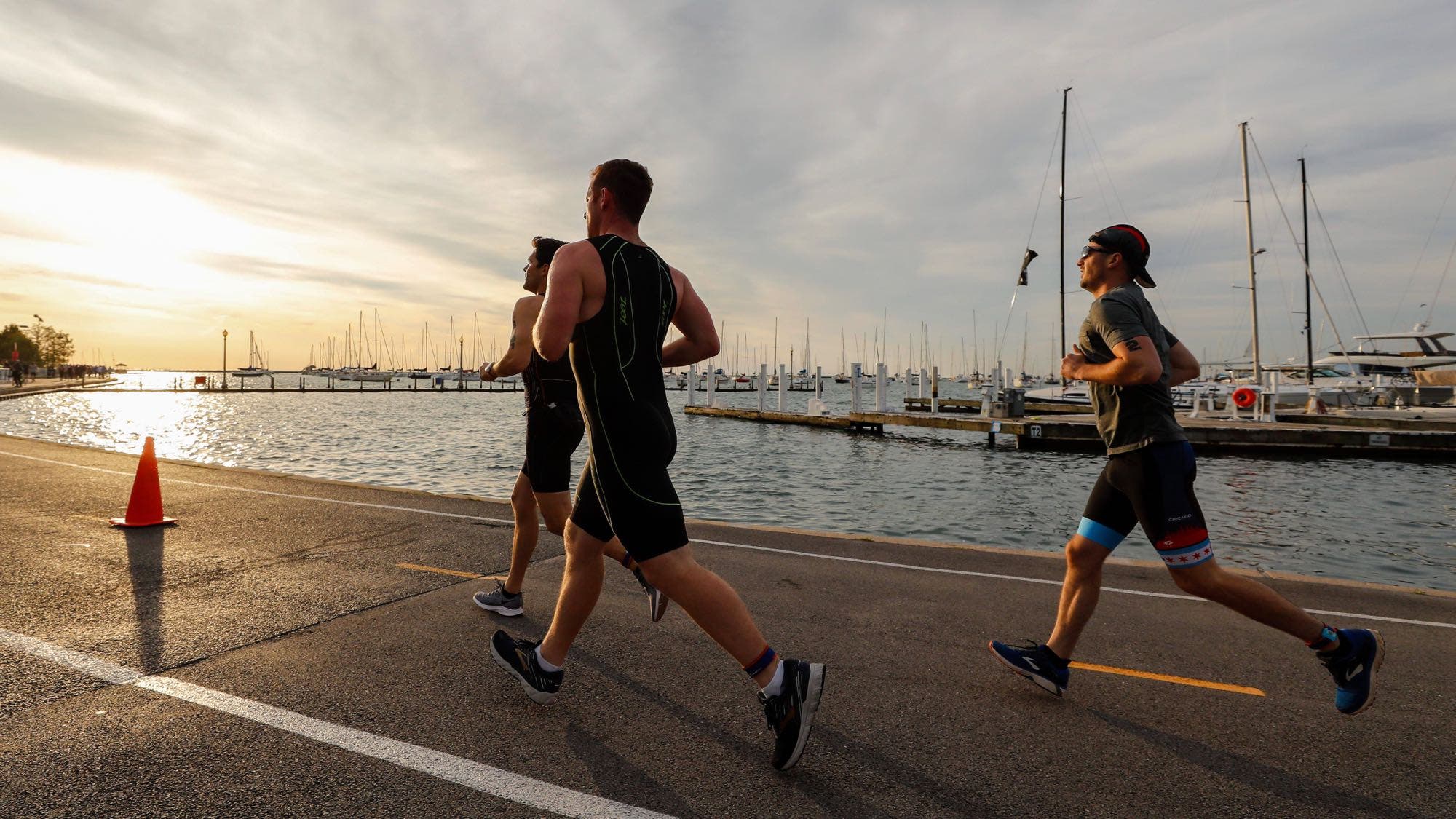
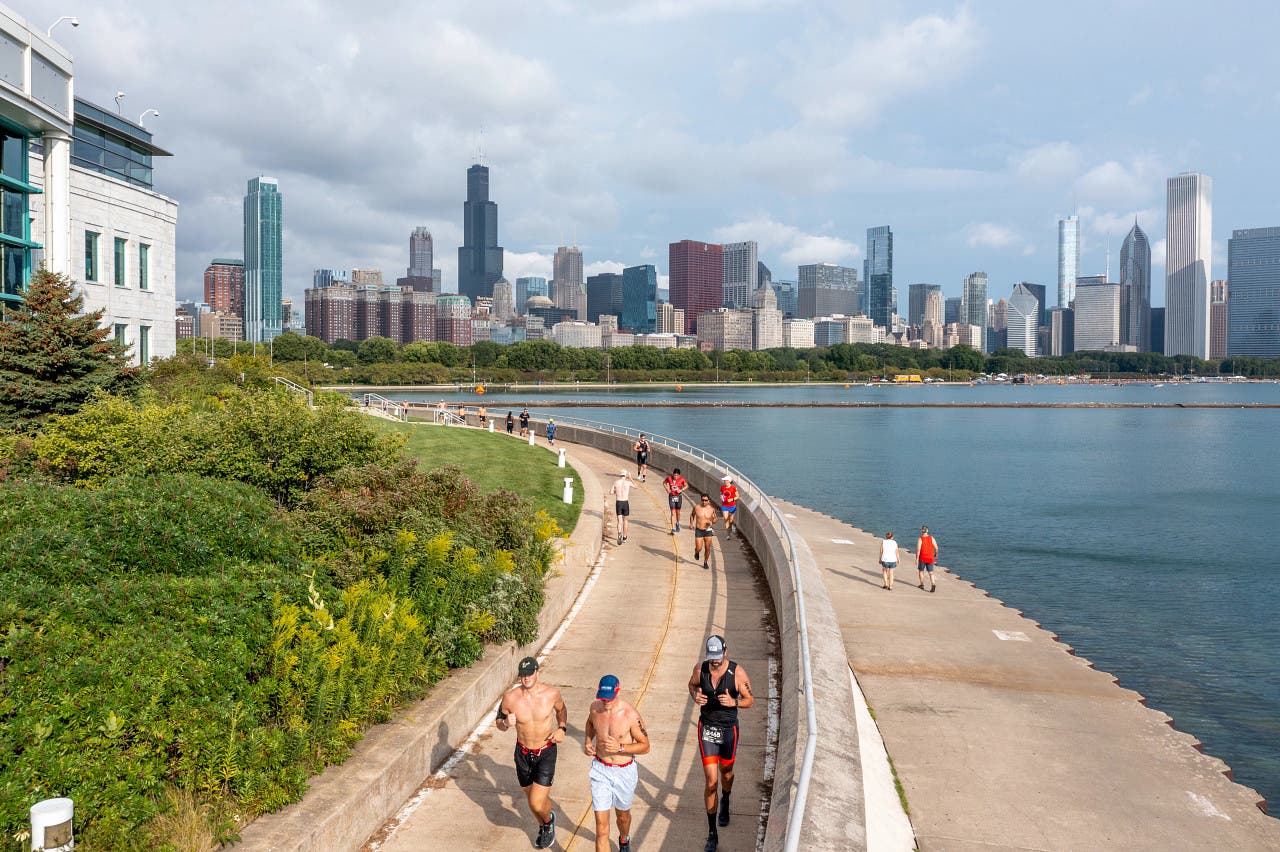
The Chicago Tri’s 10K run takes athletes on a flat course through the spectator-filled Museum Campus, which is a 57-acre park along the lakefront in Grant Park that encompasses major Chicago attractions, such as the Adler Planetarium and the Field Museum of Natural History.
ADVERTISEMENT
South through Museum Campus (Miles 1–3)
The transition area at this race can be a bit of a “zoo” as you try to rack your bike in T2 among the thousands of bikes on the grassy hillside. Henry recommends looking for landmarks or posts around your transition area and slowing down as you come back through to switch to your run gear—it’s better to slow down and find your spot the first time than rush and waste energy running back and forth looking for your spot. Grab your hat, sunglasses, and race bib, and head to the run exit.
ADVERTISEMENT
You’ll start your run on a compacted gravel path, which takes you right along the waterfront past the swim start and to Museum Campus. The course is packed with spectators who are waiting for the sprint race to start, so it can be a little crowded—be patient and safe as you run through this area, but also enjoy the energy you get from the crowds.
The course then turns to sidewalk when you get past the swim start. You’ll curve left to run around the Shedd Aquarium, then continue south past the Field Museum and Soldier Field. You’ll pass McCormick Place, a convention center, just before the wide turnaround area at 31st Street. This stretch has fewer spectators than the start of the course, but it also gives you a nice mental break to enjoy the scenery and get into your own rhythm.
There’s very little shade on the run course, so Henry notes that “the heat will sneak up on you.” Make sure you’re staying on top of your hydration with the aid stations, which are stocked with water and Gatorade and situated about every mile.
ADVERTISEMENT
North to Finish (Miles 4–6)
After the turnaround, you’ll take the same sidewalk path back north along the waterfront. The path can be a bit narrow as you head north because it’s used for the run in both directions. Keep your head up to see who’s in front of you, and be respectful to your fellow competitors trying to pass you in narrower sections. When you make it back to the section around the aquarium, you’ll turn left and head toward the finish line.
The Finish
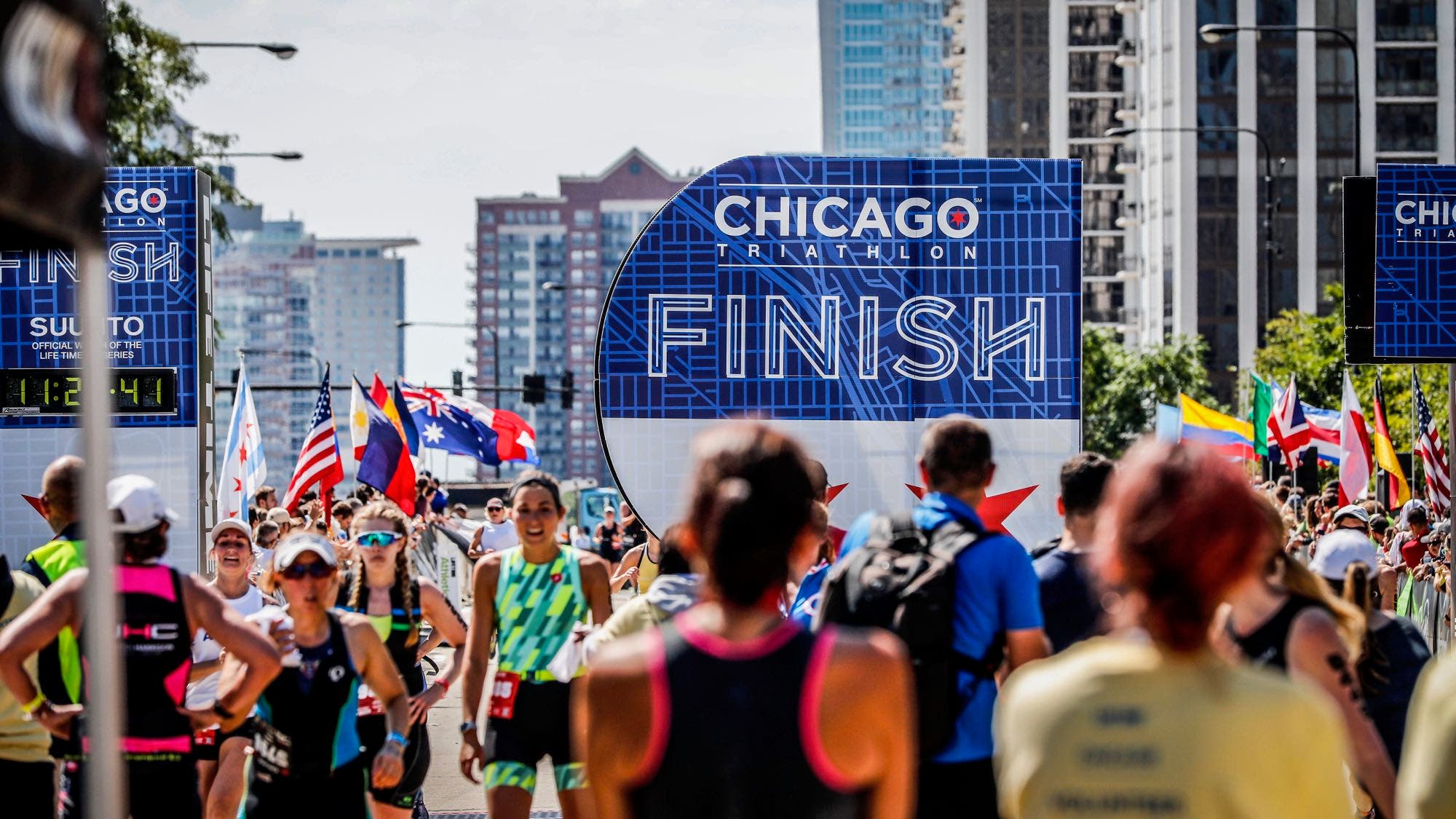
When you make that turn, you head away from the water and are only about half a mile from the finish, which is on Columbus Drive, in the shadow of Chicago’s skyscrapers. You’ll pass under a tunnel, turn, and then you’re on Columbus Drive with a big finish line. You can see the finish line about 300 yards out, so it’s the perfect time to start celebrating as you head toward the chute. “It’s pretty spectacular,” Henry says.
ADVERTISEMENT
The energy at the finish is electric as well: “With the Olympic and with the sprint, that’s a lot of people’s first time, so it’s cool to see the excitement that these people have when they finish.”
Malachi Henry’s Advice
If you’re going for a more enjoyable race, Henry recommends putting on socks in T2 because of the possibility of blisters from that initial gravel section. He also encourages celebrating those last 300 yards before the finish in such a unique urban atmosphere.
Where to Train Before the Chicago Triathlon
Chicago has a thriving tri scene, and if you get into town early or stay post-race and want to get in training, there are plenty of places to enjoy some swim, bike or run training. For an open-water swim, Ohio Street Beach near the Navy Pier is perfect for getting in some strokes, but it’s only permitted while lifeguards are on duty from 11 a.m. to 7 p.m. It has shallow protected water and buoys, and the Chicago Tri Club regularly hosts swim/run events at this beach.
If you want to go for a ride, check out the paved Lakefront Trail, which goes for 18 miles and follows the shoreline. Because it’s a popular pedestrian pathway, make sure to ride your bike early to beat the crowds. The Museum Campus, where the triathlon run course takes place, is great for runs, but know it will likely have swarms of tourists during the day. You can also check out Lakeshore Park, a little north of the race venue, if you want to get in some track workouts on their quarter-mile soft-surface track.
Chicago Triathlon Logistics
Once you get to the race venue, Chicago is a very walkable town, so you can avoid dealing with a rental car. While you can take the “L” Blue Line train from O’Hare International Airport to downtown, it might be more trouble than it’s worth if you have your bike with you—an UberXL might be easiest.
Where to Stay
Consider staying within walking distance of the race venue to make race morning more simple. The Hilton Chicago is the official race hotel and is situated right by the finish area. It’s where you’ll pick up your packet and explore the race expo. Alternatively, you could stay near the start on the Navy Pier at Sable Hotel and enjoy a rooftop bar with surrounding Lake Michigan views. Or stay at the historic Palmer House, between the race start and finish.
ADVERTISEMENT
Race Morning
Wherever you stay, make sure you give yourself plenty of time in transition on race morning. If you’re driving into Chicago that morning, the race recommends parking in the paid Millennium Lakeside and Millennium Park Garages on South Columbus Drive between Monroe and Randolph. If you stayed within walking distance of the start, get to the transition area with enough time to set up your area and then walk the half mile to the swim start. Bring throw-away shoes or sandals so you don’t have to walk barefoot (or have a friend or family member walk with you and hang onto your shoes).
Local Bikes Shops and Running Stores
The race expo will of course have bike gear and sports nutrition for you to stock up on, but if you need something more specific, there are plenty of options around the city. For last-minute bike repairs or parts, head to one of three Kozy’s Cyclery locations—the business has been serving Chicago for 80 years. Or Mox Multisport, in Chicago’s West Loop, offers bike and triathlon gear.
Chicago Triathlon Spectator Spots
If you’re bringing friends or family along for the race, there are a few great spots for them to view your race, in addition to the transition area and finish line:
- Swim: East of Balbo Street and Lake Shore Drive
- Bike: 11th Street Pedestrian Bridge on Michigan Avenue and Columbus Drive
- Run: Monroe Street and Lake Shore Drive, or anywhere along the pedestrian path in Museum Campus
Trolleys will be running from 8 a.m. to 3 p.m. on race day for athletes and spectators between the transition area and the finish line festival, so your support crew doesn’t have to walk the full distance to see you finish.
Post-Race
Chicago has way more to do, see and eat than any person can do in a weekend, but while you’re in town, enjoy some iconic destinations. Henry enjoys going to a comedy show at Zanies while he’s in town for race weekend. “It’s nice to give money back to Chicago for allowing us to use the roads.”
Eat
For some classic pizza—made with Wisconsin cheese and vine-ripened plum tomatoes—visit Lou Malnati’s Pizzeria. For an extensive post-race brunch menu, visit Wildberry Pancakes and Café. Or if you’re looking for a filling plant-based meal, look no further than Native Foods.
ADVERTISEMENT
Drink
Enjoy one of Chicago’s most famous breweries at Goose Island’s taproom in Chicago’s West Loop. For a more unique experience, visit Forbidden Root for a “botanical brewery” and restaurant. Celebrate your race finish over craft beer and cider at the woman-owned Eris Brewery and Cider House.
Sightsee
Of course, Chicago is known for its bold architecture—from the iconic John Hancock Center to the 1,451-foot Willis Tower (formerly the Sears Tower) and the neo-Gothic Tribune Tower, you can admire the architecture just walking around downtown. If you’re looking for a different perspective, head up to the Skydeck in Willis Tower for spectacular views of Chicagoland. You can even step out onto The Ledge, where 1.5 inches of glass will hold you up as you look down at the ground 103 stories below you.
Baseball fans will enjoy a White Sox game at Guaranteed Rate Field south of downtown. And even if the Cubs aren’t playing in town race weekend, you can take a public tour of the historic 110-year-old Wrigley Field.
The museums, aquarium and planetarium you passed on the run course are all top-notch destinations as well. The Art Institute of Chicago is one of the most renowned for its noted Impressionist and Post-Impressionist works. You can even take a unique Ferris Bueller’s Day Off tour and relive the famous scene in the 1986 film.
The 3,300-foot Navy Pier offers a one-of-a-kind experience with shopping, rides (including the famous Centennial Wheel), and restaurants. Sightseeing and dining cruises embark from Navy Pier and can take you around Lake Michigan or up the Chicago River.