Published January 20, 2021 11:41AM
Measurable Goals for Running Mobility, Strength, and Balance
Ten self-assessments every runner should be able to pass, plus the exercises that will get you there and make you a more athletic runner.
(Photo: Getty Images)
Runners are adept at setting concrete, measurable goals for our running, from training volume to race times. When it comes to supplementary strength and mobility work, however, we tend to fall back on vague intentions of doing more—or simply doing any at all. Lacking measurable goals, however, makes it hard to know if we’re succeeding and removes the motivation of being able to see progress. As a result, we often fail to be consistent in our supplementary work, even though we know we can make ourselves better runners by getting stronger, more mobile, and improving our balance.
What we need are assessments to work toward in each area. The program presented here provides 10 self-assessments for you to test your movement skill, mobility, and strength. These benchmarks are correlated with running performance and injury avoidance. Following your self-assessment, you’ll practice drills and exercises that will improve your athletic abilities. You’ll see progress as you reassess your performance, motivating you to keep working toward successful performance of each skill.
Reaching these goals are not guarantees that you won’t get injured or that you will podium in a race. You will however, be a better, more durable athlete and increase your chances of reaching your running performance goals.
Movement Skills

Single-Leg Balance
Why it’s important: Running is a one-legged activity; you should be able to balance on one leg to both perform well and avoid injury.
Your goal: Meet or exceed the single-leg balance time for your age as listed in the table below.
| Age | Time in Seconds, Eyes Open |
| 18-39 | 45 |
| 40-49 | 42 |
| 50-59 | 42 |
| 60-69 | 32 |
| 70-79 | 22 |
| 80-99 | 9 |
| Average: | 33 |
Self-assessment: The Unipedal Stance Test is used with rehab populations. Test performance tends to decline with age while risk of falling increases. Have someone time you or look at a wall clock with a second hand.
- Stand on a hard surface in bare feet, hands crossed on your shoulders.
- Lift one leg off the ground and don’t touch the other leg.
- Hold up to 45 seconds or until loss of balance and the non-stance foot hits the ground.
- Compare your time to the above averages. If you’re below average then you need better balance.
Improve your single-leg balance: The test and the exercise are the same. Practice standing on one leg. The muscles of the lower-leg and foot are critical for balance. Use the following exercises to improve lower-leg dexterity. Practice these exercises several times a day, most or all days of the week.
- Toe yoga
- Toe spread
- Ankle rolls
- Calf raises (discussed further below)
Advanced balance exercise: The single-leg tube rotation integrates hip rotation into single-leg balance.

ADVERTISEMENT
Squat
Why it’s important: A full squat demands mobility, coordination, and balance. If you can perform a full-depth, pain-free squat then you meet those demands. Absent a specific injury, squatting is good for your muscles and joints. Loaded squats will also make you stronger and more durable.
Your goal: Comfortably squat to a depth that brings your hips to knee level or just below level, while keeping your feet flat with heels on the ground. (Individual anatomy may dictate limitations on squat depth).
Self-assessment: Squat as described and shown above. Video yourself or have a friend video you, or observe yourself in a mirror, both straight ahead and in profile. Keep your feet flat and stay balanced. Take note of the location of any excessive tension or pain. Are you balanced and in control? Do your knees track excessively past your toes? Are you comfortable leaning your torso forward from the hips?
Self-assessment: Squat as described and shown above. Video yourself or have a friend video you, or observe yourself in a mirror, both straight ahead and in profile. Keep your feet flat and stay balanced. Take note of the location of any excessive tension or pain. Are you balanced and in control? Do your knees track excessively past your toes? Are you comfortable leaning your torso forward from the hips?
Improve your squat:
- Start squatting. You’ll improve as you practice. Use a low chair, stool, or box as a target. Squat down under control, touch the target and return to the start.
- Improve your ankle dorsiflexion. You must have sufficient ankle mobility to squat to depth. Look below for a full dorsiflexion discussion.
- Learn to hip hinge and incorporate it into your squat technique. Hip hinging involves pushing your hips back behind you as if you’re closing a door with your hips. (Think butt way out!) Use the PVC hip hinge and the band hip hinge to hinge correctly. Here are more hip hinge variations. Use videos 1–3 to learn the hinge. Other videos are more advanced hinge exercises.

ADVERTISEMENT
Single-Leg Squat
Why it’s important: Running is a series of single-leg hops and you must perform a partial single-leg squat upon landing. You need to be able to squat on one leg to avoid injury and perform your best.
Your goal: Perform a single-leg squat to ¼ of the full squat depth for 10–20 reps.
Self-assessment:
Self-assessment:
- Stand on one leg.
- Lower your body toward the ground several inches. Pause. Stand up.
- Repeat for five reps.
Are you pain free and solidly in control? Good! Did you flail and fight for balance? Then you need to practice the single-leg squat.
ADVERTISEMENT
Improve your single-leg squat: Add in a little stability if you struggle with the single-leg squat. Put a few fingers on a wall or couch, or put your non-working foot on a small ball or foam roller for help. Use only the amount of help necessary to make the squat challenging but doable.
- Practice the single-leg squat frequently.
- Use the foot exercises from above to improve balance.
- Learn the hip hinge discussed above.
- Practice a variety of single leg squats and strengthen the hips with these exercises:
***Advanced single-leg exercises: If you’ve mastered the single-leg squat then consider the following exercises:
Mobility Goals

Hip Extension
Hip extension happens in gait as your stance leg extends behind your torso, propelling you forward while your glutes, hamstrings, and calves contract. You need to be able to extend the hip while keeping a neutral spine and pelvis with the torso stacked over the hips.
Your goal: ~ 20 degrees of hip extension
Self-assessment: This test comes from running/cycling coach and physical therapist Jay Dicharry.
Improve your hip extension: Greater hip flexor mobility, glute strength, and core stability will improve your hip extension. Follow these links to learn more.
Improve your hip extension: Greater hip flexor mobility, glute strength, and core stability will improve your hip extension. Follow these links to learn more.

ADVERTISEMENT
Ankle Dorsiflexion
Why it’s important: Dorsiflexion occurs at the ankle when the shin moves toward the foot as the body passes over the foot during gait. Lack of dorsiflexion may contribute to foot, knee, hip, and back pain.
Your goal: ~ 20–30 degrees of ankle dorsiflexion.

Self-assessment:
- Kneel on one knee facing a wall.
- Put your hand flat on the floor, fingers parallel to the wall. Place your foot so that your toes touch your hand, about 4–5 inches away from the wall.
- Remove your hand.
- Push your knee toward the wall while keeping the foot flat and your knee aligned over your 2nd toe.
- If you can reach the wall without your heel coming up or your knee deviating in or out then you have sufficient dorsiflexion.
- If you feel a pinch at the front of the ankle then try this self-mobilization with a strap or you may need help from a physical therapist or podiatrist.
Improve your ankle dorsiflexion: These links will take you to exercises in which you’ll mobilize your ankles in three dimensions with both straight and bent knees.

ADVERTISEMENT
Hallux (Big Toe) Dorsiflexion/Extension
Why it’s important: The hallux is a significant source of stability during the stance phase. Think of it as the thumb of the foot. It must be strong, stable, and mobile. During the running gait, all your propulsive force is transmitted through the hallux into the ground as your stance leg becomes the swing leg.
Your goal: ~ 50–70 degrees of hallux dorsiflexion.
Self-assessment: Kneel down on one knee with your rear foot flexed forward. Try to flatten the big toe of the rear foot to the ground. Assessment from physical therapist Steve Gosner.

Improve your hallux mobility: If you can’t do the self-assessment you may feel tension in the plantar fascia which deserves a stretch. Pain in the big toe joint may indicate arthritis which should be evaluated and treated by a physical therapist or podiatrist. Shoes with a more rigid forefoot, and a rocker bottom, may help too. Follow the links below for exercises to improve your hallux mobility.
- Hallux manual mobilization
- Hallux towel mobilization
- Standing plantar fascia stretch
- Push-ups (See more below.)
ADVERTISEMENT
Strength Goals

Single-Leg Calf Raise
Why it’s important: Calf and lower leg weakness often contributes to plantar fasciitis, Achilles tendinopathy, shin splints, stress fractures, and calf strains or tears. (Weak and immobile hips also contribute to lower-leg injuries.)
Your goal: You should be able to do at least 20 continuous pain-free single-leg calf raises with little discrepancy between the right and left leg.
Assess and improve your calf strength: The test is the exercise and the exercise is the test. Do single-leg calf raises (straight- and bent knee) 2–3 times per week. Do three sets and stop each set about two reps short of failure. That means, if you failed at 12 reps then do 10. Rest two minutes and repeat three times. Your calf-raise capacity will gradually increase. Once you’re able to do 20 reps you’re ready to add weight and consider adding in the tilt board ankle exercise. Continue doing calf raises throughout the year to prevent injury.
Assess and improve your calf strength: The test is the exercise and the exercise is the test. Do single-leg calf raises (straight- and bent knee) 2–3 times per week. Do three sets and stop each set about two reps short of failure. That means, if you failed at 12 reps then do 10. Rest two minutes and repeat three times. Your calf-raise capacity will gradually increase. Once you’re able to do 20 reps you’re ready to add weight and consider adding in the tilt board ankle exercise. Continue doing calf raises throughout the year to prevent injury.

Single-Leg Bridge
Why it’s important: Being able to bridge on one leg tests hip extension strength and hip/core stability which are essential for an effective running stride.
Your goal: Support your hips level while holding a one-leg bridge.

Self-assessment: This test comes from running coach and physical therapist Jay Dicharry.
- Lie on your back with both knees bent and feet flat on the ground.
- Bridge up by pushing the hips toward the ceiling.
- Straighten one leg while keeping the thighs parallel so that you are supported on one leg as shown. Hold for 10 seconds. Repeat on the other side.
Successful if you:
- kept the hips level.
- felt your support leg glute doing the work.
- felt little to no strength discrepancy between right and left sides.
More work needed if:
- the unsupported hip dropped.
- you kicked your extended leg up to maintain level hips.
- your hamstring cramped.
- you felt low-back pain.
- noticeable discrepancy between right and left sides.
Improve your glute strength: Do bridges and dead bugs for stronger, more stable hips. Practice these exercises daily or every other day.

ADVERTISEMENT
Squat Repeats
Why it’s important: The squat is not only a basic human movement, it’s also a superb leg and hip strengthening exercise that will make you a better runner.
Your goal: Do a minimum of 20 full-depth, pain-free squats.
Improve your squat: Start with the mobility strategy discussed for the squat above. Once you’re able to squat correctly, start doing bodyweight squats daily. Do 1–3 sets working to a level 8 of exertion on a 1–10 scale. Stop when you know you can get only two more reps. Add reps and sets over the course of several weeks. Once you hit your goal, add load via dumbbells, barbells, or other objects. Loaded squats should be done 2–3 times per week with 24–48 hours recovery between workouts.
Improve your squat: Start with the mobility strategy discussed for the squat above. Once you’re able to squat correctly, start doing bodyweight squats daily. Do 1–3 sets working to a level 8 of exertion on a 1–10 scale. Stop when you know you can get only two more reps. Add reps and sets over the course of several weeks. Once you hit your goal, add load via dumbbells, barbells, or other objects. Loaded squats should be done 2–3 times per week with 24–48 hours recovery between workouts.
***Advanced goals: For men: Back squat your bodyweight or 75% of bodyweight x 5 reps. For women: 50% x 5 reps.

ADVERTISEMENT
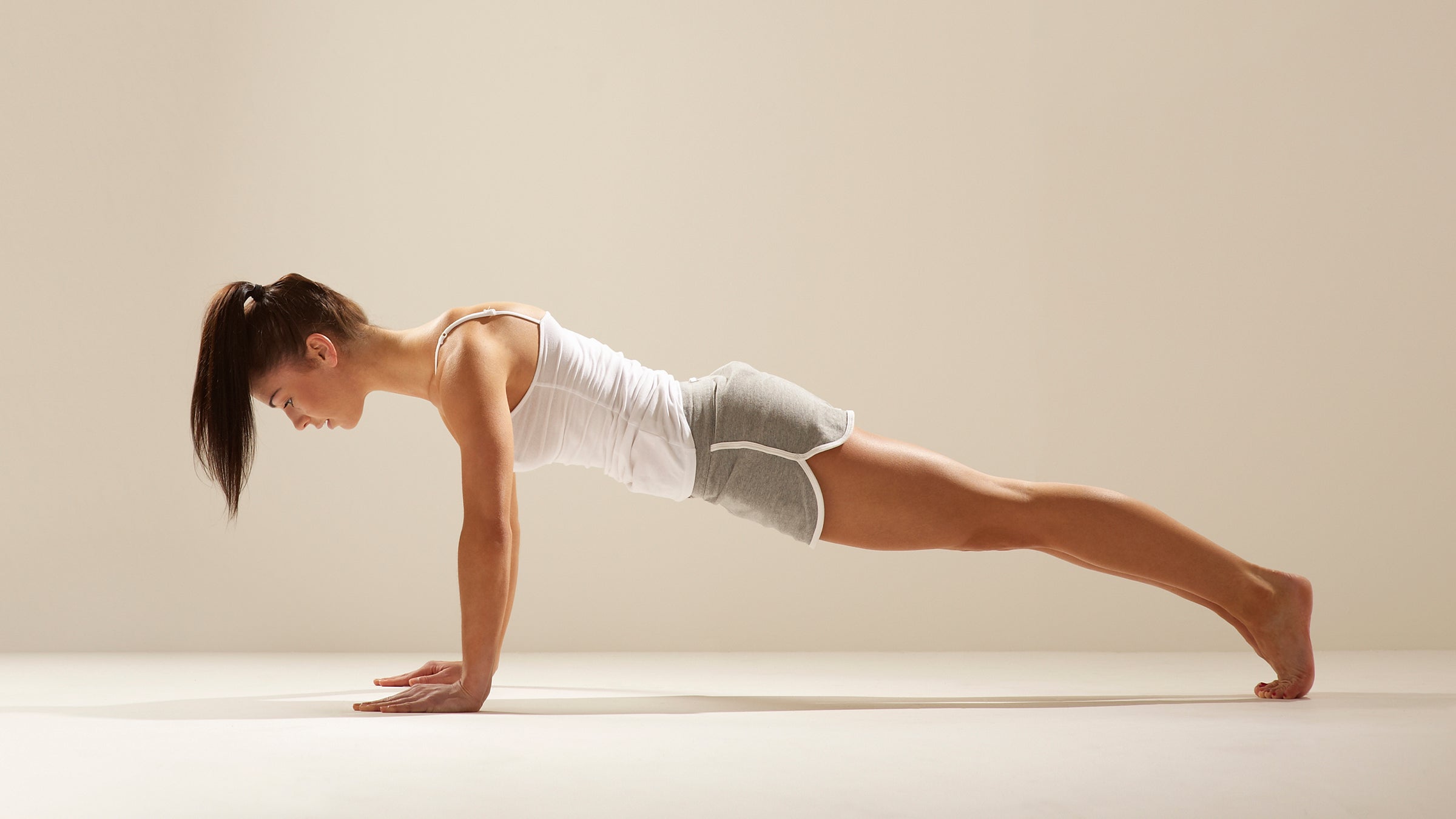
Push-Ups
Why they’re important:
- Core strength/running posture: Push-ups are a better investment of your time than planks. Good push-up posture is similar to good running posture. The anterior abs, glutes, and hip flexors must hold the trunk and hips in place for push-ups.
- Hallux dorsiflexion: Push-ups help maintain big toe mobility as the push-up position requires hallux dorsiflexion.
- If you fall: Push-ups build strong shoulders, arms, and wrists. Strong wrists and arms may save you from broken bones or a broken face if you fall.
Your goal: Men should be able to do at least 10 push-ups, women should do five, with hands on the ground in good form.
Improve your push-ups: If push-ups from the ground are too difficult then use a table, countertop, stairs, or a wall to elevate your hands (See videos 5 and 6 in Instagram post below.) Do 2–3 sets of push-ups 3–4 days per week to build your strength. Stop each set about two reps shy of failure, working up to 10 per set. Progress by lowering the height of your hands over the course of several days or weeks until you can do the push-ups from level ground.
Improve your push-ups: If push-ups from the ground are too difficult then use a table, countertop, stairs, or a wall to elevate your hands (See videos 5 and 6 in Instagram post below.) Do 2–3 sets of push-ups 3–4 days per week to build your strength. Stop each set about two reps shy of failure, working up to 10 per set. Progress by lowering the height of your hands over the course of several days or weeks until you can do the push-ups from level ground.
ADVERTISEMENT
Super-Extra Credit***

Finally
Start with the self-assessments. Don’t start with the advanced exercises. Take note of your weaknesses. Practice the necessary drills and exercises consistently. Reassess every two weeks or so. Consistency is the key to progress. Consider hiring a trainer to help you develop a well-rounded strength and conditioning program. A good trainer will teach you proper exercise technique and keep you accountable.
Most importantly—what must come before the goals themselves—is your engagement in the process of becoming a better runner. You improve by doing the work, by taking deliberate, meaningful steps toward your goals. Your race PR goal won’t happen unless you do the work. These goals are benchmarks that indicate you’ve been doing the work that will make you better.
There’s more to running than just running. Good runners are athletic. Athleticism consists of balance, mobility, and strength. Dedicate part of your time to pursuing these goals and you’ll be a better, more durable athlete. Engage in the process of improvement and you are guaranteed to get better.