Updated October 23, 2025 10:21AM
If you buy through our links, we may earn an affiliate commission. This supports our mission to get more people active and outside.Learn about Outside Online's affiliate link policy
The Best Triathlon GPS Smartwatches of 2025, Reviewed (Fall Releases)
Editor-in-chief Chris Foster hands-on reviews five of the top smartwatches of 2025 and breaks them down by price, specs, and an eight-point rating system.
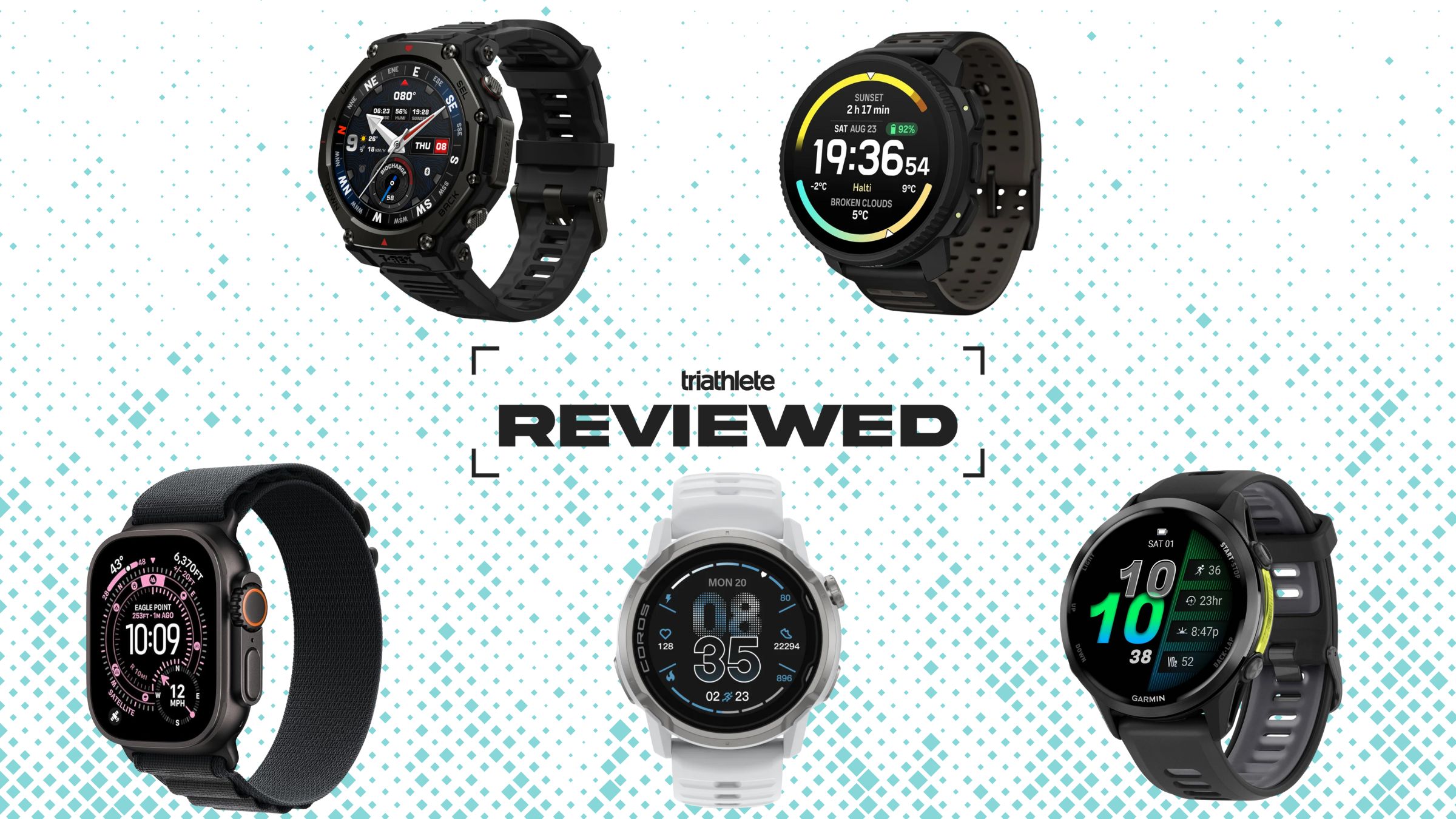
What's the best triathlon smartwatch? Our gear editor reviewed the running watches on the market for 2025 - these five were his picks. (Photo: Triathlete)
Best Triathlon Smartwatches
Like in previous years, there has been a steady stream of new and exciting smartwatches for triathletes. In 2024, we saw the sub-$400 category grow somewhat, and 2025 actually continues that trend even further. While one watch did go up in price this year – the Garmin Forerunner 970 – other brands have added new, fully capable smartwatches to their lines from $400 down, making that price point easily the most competitive for triathletes.
As the smartwatch space gets more crowded for triathletes (this is a good thing!), it can make it harder to differentiate the new Coros Apex 4 from the Suunto Vertical 2 (they couldn’t be any more different, by the way). Fortunately, we can help: We’ve got the specs/prices alongside our exclusive eight-point rating system and hands-on review for each watch.
And new for fall 2025, we’ve added the LED Flashlight feature in our spec list, as an increasing number of brands have (finally) broken through with this amazing function. While it may seem gimmicky, for triathletes who train early or late or have to set up transition in the pre-dawn hours, having a hands-free LED that’s about the same strength as a smartphone flashlight (but you don’t have to hold it) is actually pretty crucial. Personally, I’ve found myself reaching for smartwatches that are slightly more expensive or have slightly fewer features just because I lean on this function so much in my day-to-day (and training) life.
ADVERTISEMENT
We’ve also included a “Where does it stand?” section for each watch to help understand where it fits in today’s smartwatch universe. And if you want to dig deeper, we’ve got links for longer reviews for most of the watches below.
Looking for an older smartwatch? We don’t miss much, so check out our previous roundups for quick looks and deep dives on watches from 2024, like the Garmin Fenix 8 or the Suunto Race S – take a look at last year’s roundup for more.
We’ve also got watches from 2023, like the Polar Pacer, Coros Apex 2 Pro, Garmin Forerunner 965, Suunto 9 Peak Pro, Apple Watch Ultra 1, and Garmin Enduro 2. Or watches from 2022, like the Timex R300, Wahoo Rival, Apple Watch Series 7, Garmin Instinct 2 Solar, Polar Grit X Pro, Suunto 9 Peak, Coros Vertix 2, and Garmin Fenix 7X Solar. Or our 2020 buyer’s guide with reviews of the Coros Pace 2, Apple Watch SE, Garmin Forerunner 745, Fitbit Sense, Polar Vantage V2, and Suunto 7.
RELATED: How to Choose the Best Smartwatch for Triathletes
ADVERTISEMENT
Triathlete‘s 2025 GPS smartwatch guide – The ratings, explained
| Overall Rating | A combination of the features, functions, specs, and other ratings below - from the perspective of a multisport athlete. On a scale of 1-5. |
| Overall Value | This rating looks at the sum of the functions, battery life, and usability compared to other smartwatches and compares it all with the price. On a scale of 1-5. |
| GPS Accuracy | A rating on how accurate the GPS accuracy is for mileage. On a scale of 1-5. |
| Heart-Rate Accuracy | A rating for how accurate the on-wrist optical heart-rate monitor is. On a scale of 1-5. |
| Ease of Use | A rating based on how easy it is to navigate the menus, set up the watch, and use daily. On a scale of 1-5. |
| Sports Functions | This rating indicates the breadth and usefulness of tri-related sports functions. On a scale of 1-5. |
| Lifestyle Functions | This rating focuses on daily-use functions like music, smartphone notifications, convenience, and more. On a scale of 1-5. |
| Durability | This rating takes into account the watch's construction, materials, and moving parts (or the lack thereof). On a scale of 1-5. |
Suunto Vertical 2
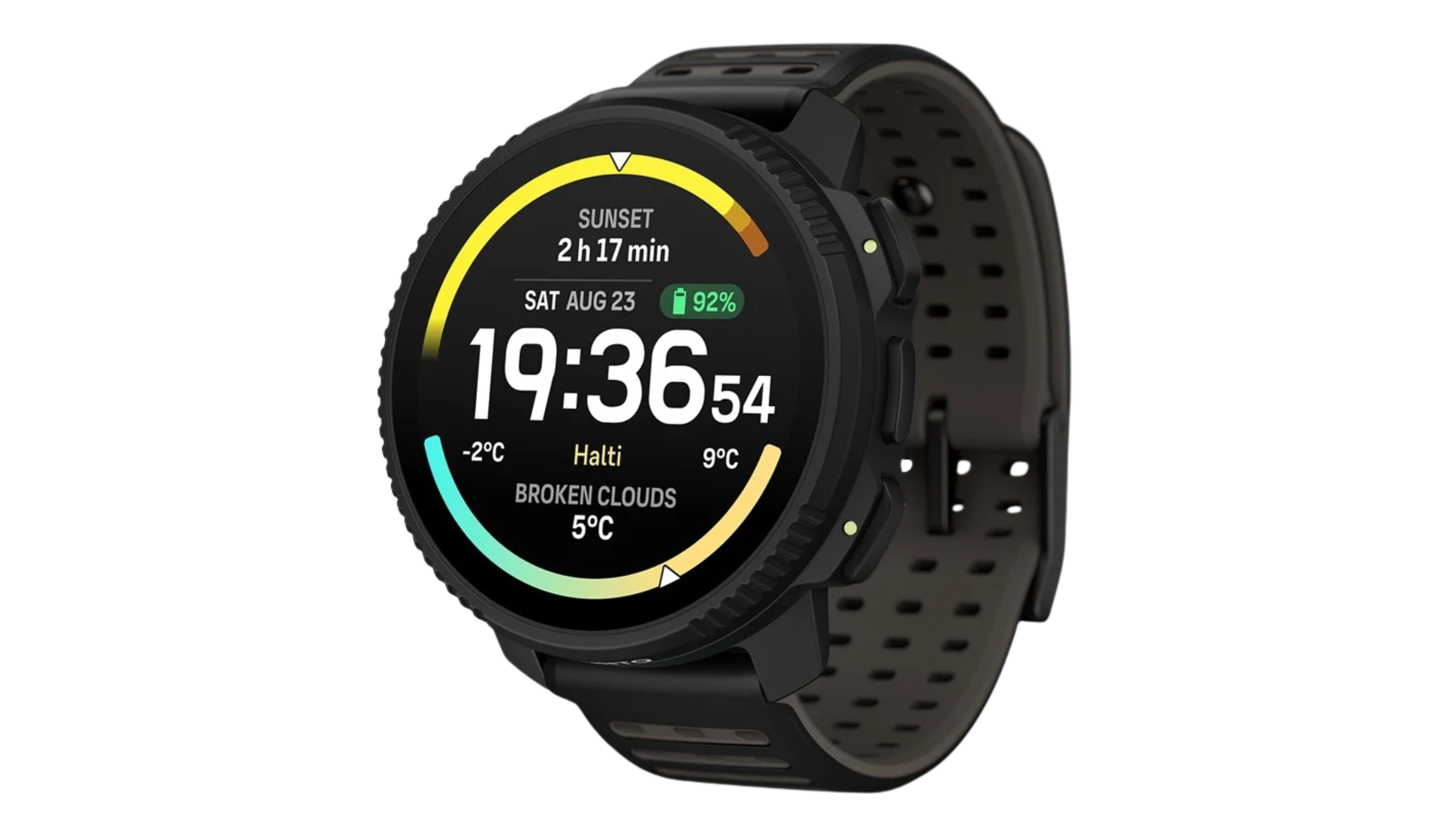
| TL;DR | Adding an AMOLED screen and LED flashlight with this battery life is a game changer |
| Overall Rating | ★★★★★ |
| Overall Value | ★★★★ |
| GPS Accuracy | ★★★★ |
| HR Accuracy | ★★★★ |
| Ease of Use | ★★★★ |
| Sports Functions | ★★★★ |
| Lifestyle Functions | ★★★★ |
| Durability | ★★★★ |
| Touchscreen | Yes |
| Screen Type | AMOLED, 466x466 |
| Running With Power | Yes |
| LED Flashlight | Yes |
| Tri Mode | Yes |
| Music Control | Yes, but no offline storage |
| Superpower | LED flashlight, great battery life for AMOLED |
| Kryptonite | Lack of rotating crown for mapping functions, no onboard music storage, weight |
Suunto just keeps surprising me. After releasing a reasonably OK Race 2 earlier this year – which only added a few under-the-hood updates in my opinion, and tacked on an extra $100 to the Race’s price – I was left a little disappointed. After loving the original Race so much, and thinking the Race S was a fine “junior version,” I expected a little more in the Race 2.
And given that Suunto had already released two smartwatches – the Run and the Race 2 – in 2025, I figured that was it for Suunto until 2026. But of course I forgot about the somewhat-antiquated Suunto Vertical, with its over-the-top battery life, but dated matrix display (as opposed to a bright AMOLED).
So with this month’s release of the Suunto Vertical 2, which not only adds a much-needed AMOLED screen (which is insanely bright by the way) but also something Garmin has had a monopoly on for the past few years: a built-in LED flashlight. I’ll admit I’m hooked on bright, shiny things that let me see and be seen during all hours of the day, so I’m willing to fork over $600 to make that happen.
ADVERTISEMENT
My only gripe with the Vertical 2 is that, without a rotating crown, using zoom functions on offline mapping is pretty clunky and having 32GB of onboard storage is a little goofy without offline music storage (still Suunto?).
Where does the Suunto Vertical 2 stand?
It used to be that if you wanted an LED flashlight on your smartwatch – which I contend is an incredible, not-novelty feature for triathletes and ultrarunners – you’d need to get a Garmin. Nowadays, if you’re getting the latest model, that means an Instinct 3 with an AMOLED screen for $450+, but with no offline mapping/true navigation, or you’re in Forerunner 970/Fenix territory, which has both of those things, but starts at $750.
Of course, Amazfit now also has an LED flashlight in the T-Rex 3 Pro that starts at $400 with an AMOLED screen (and mic plus speaker), but Amazfit’s platform and hardware still aren’t nearly as refined as Suunto, Garmin, or Coros.
ADVERTISEMENT
If I had less than $400 to spend, I’d either get a Coros Pace Pro ($350) or an on-sale Suunto Race 1. However, for $600, the Vertical 2 still boasts that $800-plus battery life, an LED flashlight, and amazing mapping/training features on a gorgeously luminous AMOLED screen.
Suunto Vertical 2 specs
- Weight: 87g
- Listed Everyday Battery Life: 20 days
- Listed GPS Battery Life: 65 hours
- Approximate “Tri Battery Life”* With Daily Multisport Use: 8-12 days
- Bezel Size: 48.6 x 48.6mm
- Screen Size: 38.1mm
Apple Watch Ultra 3
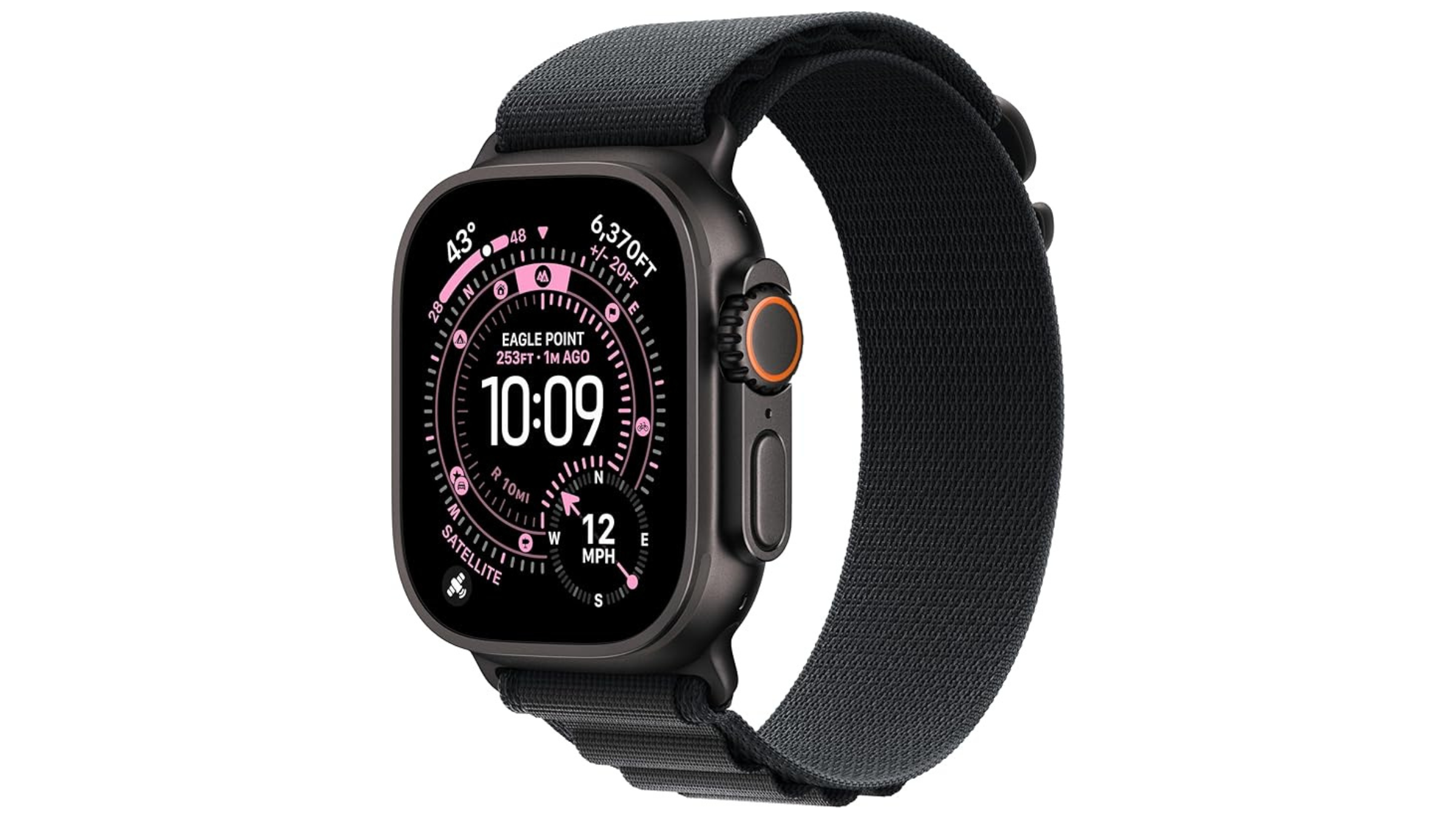
| TL;DR | Minimal updates to the Ultra 2 like satellite emergency SOS and an upgraded screen |
| Overall Rating | ★★★ |
| Overall Value | ★★ |
| GPS Accuracy | ★★★★ |
| HR Accuracy | ★★★★ |
| Ease of Use | ★★★★★ |
| Sports Functions | ★★★ |
| Lifestyle Functions | ★★★★★ |
| Durability | ★★★ |
| Touchscreen | Yes |
| Screen Type | Wide-angle OLED, 422x514 |
| Running With Power | Yes |
| LED Flashlight | No |
| Tri Mode | Yes |
| Music Control | Yes, and 64GB offline storage |
| Superpower | Beautiful screen, satellite SOS support, unparalleled smartphone integration (Apple only!) |
| Kryptonite | Battery life, less sport customization than most sport-specific smartwatches |
Back when Apple released the first generation of Watch Ultra in 2022, it was a big deal because for the first time ever, you could go more than a day before recharging an Apple Watch and you could now use an Apple Watch for an entire iron-distance event from start to finish. And while there’s a reasonable argument against using only an Apple Watch Ultra for all of your data needs during an Ironman, it also meant you could use it for real-world triathlon training (think: a long open-water swim in the morning, then a long run or ride in the afternoon) without charging midday.
Sure, even the worst-performing battery in a sport-specific watch from Garmin, Coros, Suunto, or Polar is still magnitudes better than the Ultra series, but none of those watches come even close in terms of smartphone integration. With the Ultra 3, the biggest draws for a triathlete include minor upgrades in battery life (though faster charging, to be sure) and screen, but also standalone two-way satellite communication.
ADVERTISEMENT
It’s this last new feature that’s most intriguing to triathletes, but it’s also worth taking a use-case inventory before jumping in: If you are in a for-real off-grid situation training (or hiking or whatever), are you likely doing so without your phone? Everyone has different risk tolerances, but I’d probably have my phone at least for robust navigation if I’m really, really out there – let alone for safety. And to this point, Apple has had a satellite SOS feature on all iPhones from the 14 to the current model.
Finally, when it comes to battery life, I would say the Ultra 3 is better, and much better in some performance settings, but this is still not in the category of a week between charges. More like two days versus two-and-three-quarters.
Where does the Apple Watch Ultra 3 stand?
In terms of comparing the Ultra 3 to sport-focused smartwatches in the same price range, you’re probably looking at the very, very capable kitchen-sink Garmin Forerunner 970 and Fenix 8 lines – both of which have better batteries on an order of magnitude. However, when it comes to satellite communication (which would ostensibly be redundant if you had a somewhat recent iPhone anyway), the only competition is the Fenix 8 Pro, which is $500 more than the Ultra 3.
ADVERTISEMENT
And like I said before, there’s not really a sport watch made right now, at any price, that has as low battery life as an Apple Watch – Ultra 3 included. But of course, one of the major reasons for this is that no other sports-focused smartwatch connects, integrates, and updates nearly as much as an Apple Watch with an iPhone. Also, the storage, sound, microphones, and other “lifestyle” features on the Ultra 3 are completely without rival. While the sport functions are getting dangerously close to a Garmin, Suunto, or Coros, they still require a little tinkering to get super customized/data.
So then, where does the Ultra 3 stand compared to previous versions of the Ultra, which are obviously on sale? Well, similar to the Ultra 2, this latest version isn’t an earth-shattering update. If you’re thinking about getting an Apple Watch and using it for training, I’d probably recommend the Ultra 3 (given the hardware will keep it recent longer), unless you really want to save $150 or so on an older model. But if you have any previous models there’s very little motivation to buy the upgrade.
Apple Watch Ultra 3 specs
- Weight: 61.6g
- Listed Everyday Battery Life: 42 hours
- Listed GPS Battery Life: 14 hours
- Approximate “Tri Battery Life”* With Daily Multisport Use: 50 hours
- Bezel Size: 49 x 44mm
- Screen Size: 49mm
Coros Apex 4
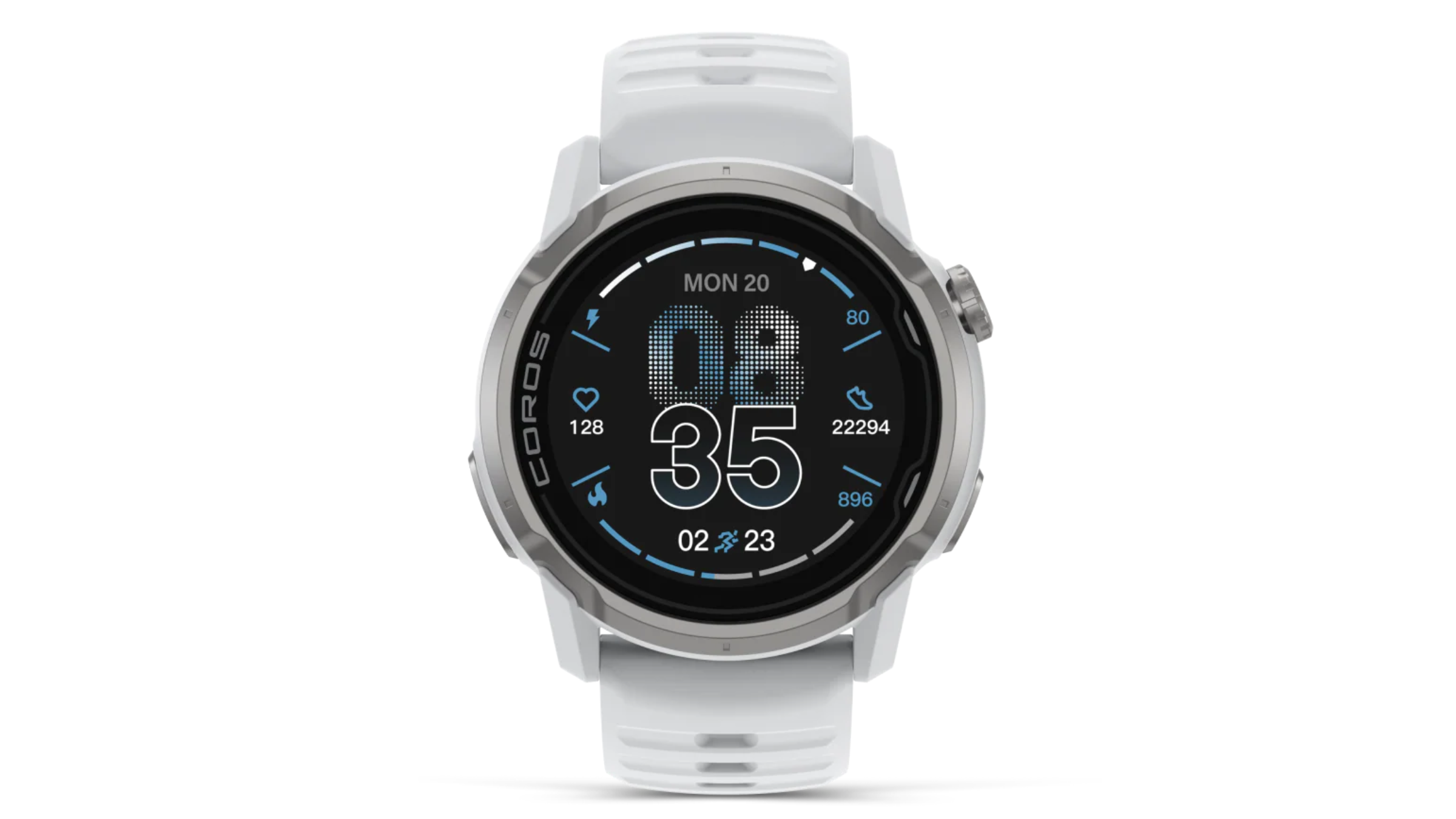
| TL;DR | Loads of battery, detailed mapping, and useful dictation-to-text, but a very old-school touchscreen |
| Overall Rating | ★★★ |
| Overall Value | ★★ |
| GPS Accuracy | ★★★★ |
| HR Accuracy | ★★★★ |
| Ease of Use | ★★★ |
| Sports Functions | ★★★★ |
| Lifestyle Functions | ★★★ |
| Durability | ★★★★ |
| Touchscreen | Yes |
| Screen Type | MIP, 260x260 |
| Running With Power | Yes |
| LED Flashlight | No |
| Tri Mode | Yes |
| Music Control | No, but 32GB of offline storage |
| Superpower | Battery life |
| Kryptonite | Small, tough-to-see screen (compared to modern AMOLED) with low resolution; high price for what you get |
It had been three years since Coros released the last version of the Apex line – a model that had already struggled greatly to establish itself in Coros’ otherwise excellent lineup. While Coros’ Pace line was one of the best-valued watches in the space, Coros’ flagship line, the Vertix, wasn’t flashy, but would last so long you’d probably lose your charging cable. Right in between was the Apex which was not super long-lasting, had no real standout features (compared to Coros or other brands), and wasn’t priced low enough to be considered a strong value.
So imagine my surprise when I learned Coros was not only maintaining the Apex line, but going for a full update with the Apex 4. Sadly, the update is nearly indistinguishable from the last one, save for a faster processor, more detailed maps, an added mic and speaker, and a little more battery. It’s still an MIP screen with reasonable battery life, but nothing that’ll stay alive for a month.
Where does the Coros Apex 4 stand?
Three years ago, the Coros Apex was right on par with other watches in the $400-600 price range, but a lot has changed since then: Suunto has stormed onto the endurance sports watch scene with a super strong Race line for $500 and under and now with a pitch-perfect update to the Vertical ($600) – all with bright AMOLED screens and reasonable battery live.
ADVERTISEMENT
Even Coros’ own Pace Pro has a beautiful AMOLED screen that is still my overall choice for tricky navigation (when paired with the Coros smartphone app’s extended screen function) – for only $350. None of the above have a speaker and mic, like the Apex 4, but the crazy capable Fenix 8 does (though it’s an $800 watch). The Fenix 8 also has a super-helpful LED flashlight – as does the Amazfit T-Rex 3 Pro (which also has a speaker and mic for $400) and the Suunto Vertical 2 ($600). I’m not going to lie: I was shocked not to see an LED flashlight on the Apex 4.
Furthermore, the MIP screen is not only lower resolution (meaning less info can be displayed) and objectively smaller than its competition, but it’s also troublingly dim when compared to even midrange AMOLED screens of 2025.
The biggest thing the Apex 4 has going for it is good-but-not-insane battery life, but unless you’re planning on doing the UTMB Mont-Blanc 100-mile event twice without recharging, I’m not sure getting two weeks of real-world battery time is significantly better than 10 days on a watch with more features at a similar price. Having a battery life of over a month, like the Coros Vertix or some versions of the Garmin Fenix and Instinct lines, is another matter.
Sadly, a lot has changed in the three years since the last version of the Apex was released, but the Apex 4 hasn’t exactly proven three years’ worth of updates.
ADVERTISEMENT
Coros Apex 4 specs (all 46mm version)
- Weight: 64g
- Listed Everyday Battery Life: 24 days
- Listed GPS Battery Life: 41 hours
- Approximate “Tri Battery Life”* With Daily Multisport Use: 14-20 days
- Bezel Size: 46.2 x 46.2mm
- Screen Size: 33mm
Amazfit T-Rex 3 Pro
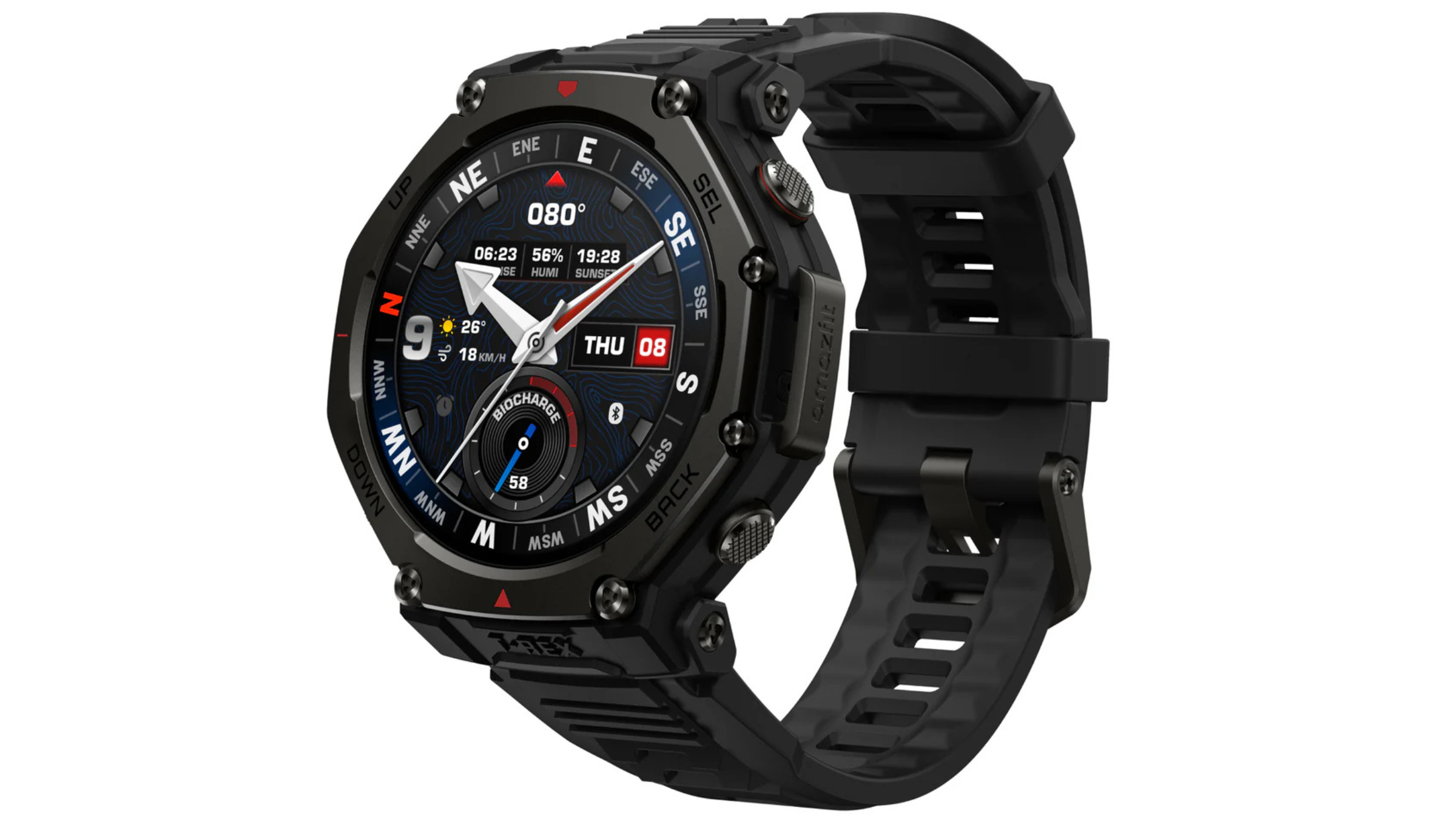
| TL;DR | Features and functions for days in a watch that’s nearly less than half the price of its competition |
| Overall Rating | ★★★★ |
| Overall Value | ★★★★★ |
| GPS Accuracy | ★★★★ |
| HR Accuracy | ★★★★ |
| Ease of Use | ★★★ |
| Sports Functions | ★★★★ |
| Lifestyle Functions | ★★★ |
| Durability | ★★★★ |
| Touchscreen | Yes |
| Screen Type | AMOLED, 480x480 |
| Running With Power | Yes |
| LED Flashlight | Yes |
| Tri Mode | Yes |
| Music Control | Yes, with 32GB of offline music storage |
| Superpower | Price, super-bright AMOLED screen, price, LED flashlight, price |
| Kryptonite | Chunky design, OK app and watch software/user interface |
This is probably the third Amazfit smartwatch I’ve tested, but the first one I’ve felt is polished enough to actually review. For those who haven’t heard of the brand, Amazfit is a Chinese company, formerly known as Huami that released its first smartwatch in 2016. After some pretty not-awesome news through the first few years (reports of burns and very basic design flaws on the screen), their initial attempts at an endurance sports-specific smartwatch felt way more beta than they should have been.
It was only after catching a glimpse of eventual UTMB Mont-Blanc winner Ruth Croft’s Amazfit watch at a photoshoot in Chamonix, France, that Amazfit popped back up on my radar: I think I passive-aggressively called Croft’s choice of smartwatch for the grueling 20-hour-plus trail event “brave.” And yet, the Amazfit T-Rex 3 Pro has actually been the most surprising watch I’ve tried in 2025.
Not only does the T-Rex 3 Pro have hardware like a super-bright (and fast) AMOLED touchscreen, excellent heart-rate monitor/GPS sensors, a speaker/mic, and a reasonably good battery life, but it does all of those things for $400 – easily $200 less than the next similarly featured smartwatch, but more like half the price of something comparable.
Better yet, Amazfit’s software and user interface is finally up to par with the competition, where only a few years ago I found it to be nearly unusable.
ADVERTISEMENT
Where does the Amazfit T-Rex 3 Pro stand?
Despite competing in the very busy $400-600 category, I found that the 3,000-nit AMOLED screen (on par with the king of screen brightness, the Apple Watch Ultra 3) was actually very fast and crisp, the feature set well-designed and not overwhelming, and the LED flashlight was something really worth owning. And all for $400, I had to keep checking the price over and over again, knowing that these features typically exist in the $600-$1,000 range of multisport smartwatches.
ADVERTISEMENT
One could compare this to the $600 Suunto Vertical 2, but the Vertical 2 squeezes out a little more battery life and has slightly better software/interface (but no speaker/mic). The most accurate comparison would be the 47mm Garmin Fenix 8 AMOLED, with a great screen, LED flashlight, speaker/mic, and comparable battery life, but that watch is almost three times the price of the T-Rex 3 Pro at $1,100. And while Garmin’s software and interface are certainly better, it’s not three times better.
All in all, I had written off Amazfit more than once in the last 10 years, but a chance encounter with the T-Rex 3 Pro at UTMB proved that the Chinese brand has turned a corner for multisport smartwatches. This is a watch that punches so far outside of its weight class (and does a good job) that I’d have a hard time recommending anything else at $400.
Amazfit T-Rex 3 Pro specs (all 48mm version)
- Weight: 75g
- Listed Everyday Battery Life: 25 days
- Listed GPS Battery Life: 38 hours
- Approximate “Tri Battery Life”* With Daily Multisport Use: 6-10 days
- Bezel Size: 48 x 48mm
- Screen Size: 38.1mm
Garmin Forerunner 970
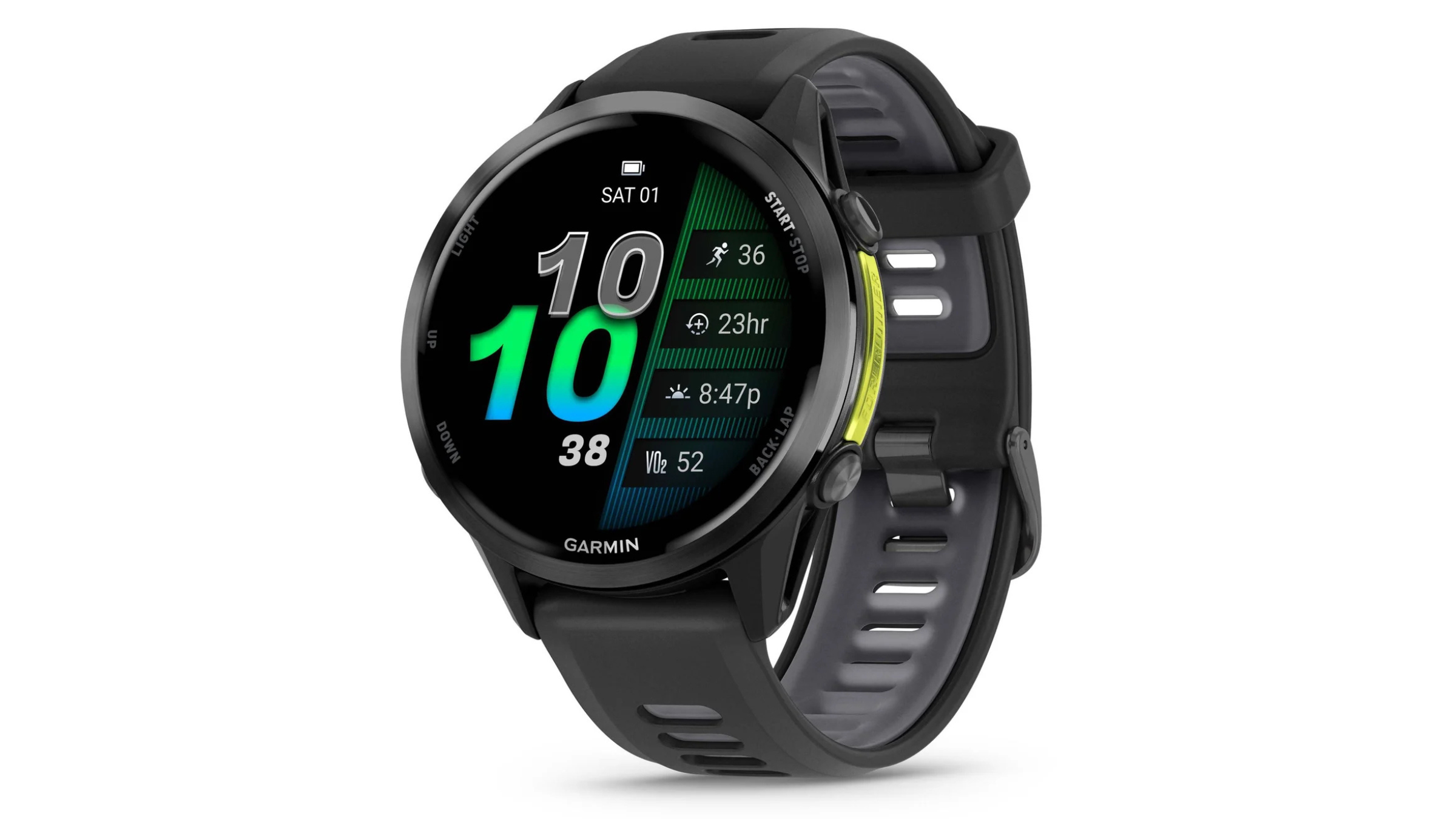
| TL;DR | Kitchen sink watch with new running dynamics, an LED flashlight, and a mic/speaker for calls and voice commands |
| Overall Rating | ★★★ |
| Overall Value | ★★ |
| GPS Accuracy | ★★★★ |
| HR Accuracy | ★★★★ |
| Ease of Use | ★★★★★ |
| Sports Functions | ★★★★★ |
| Lifestyle Functions | ★★★★ |
| Durability | ★★★★ |
| Touchscreen | Yes |
| Screen Type | AMOLED, 454x454 |
| Running With Power | Yes |
| LED Flashlight | Yes |
| Tri Mode | Yes |
| Music Control | Yes, plus 32GB of offline storage |
| Superpower | LED flashlight is indispensable for triathletes |
| Kryptonite | Not a ton of value, disappointing battery life |
Garmin’s 9xx series has always been a little bit of a gluttonous offering of features and functions, and the Forerunner 970 follows suit. By adding the LED flashlight that has been on some Garmin Instinct- and Fenix-series smartwatches, this is the first non “outdoor-targeted” offering (read, small profile) with that amazing function. Think: smartphone camera light without having to use your hands. The Forerunner 970 also has a new speaker/mic system for calls and some voice commands – another function borrowed from the Garmin Fenix 8 line. This new watch also has a few new running dynamic features, of varying degrees of usefulness.
All that said, this watch is $150 more than the Garmin Forerunner 965 (when it wasn’t on sale, which it probably will be forever now), and the latest version has a pretty OK battery life (about seven days of everyday “triathlete” use, with everything on always and plenty of workouts) – while the 965 had nearly double that, even with a similar AMOLED screen. The LED flashlight is cool, but the speaker/mic functions probably less so, and with so much less battery life than other watches in this premium price range, it’s a tough sell.
Where does the Garmin Forerunner 970 stand?
When you look at the Forerunner 970 compared to recent 9xx-series watches, it’s pretty pricey, and yes it’s cheaper than the Fenix 8 series, but not by a ton. When looking at other brands in this price range, you’re comparing the similarly featured Polar Vantage V3 and the burlier Grit X2 Pro – neither of which I feel are superior watches to the Forerunner 970. You’re also looking at the Coros Vertix 2S, which doesn’t have an AMOLED screen, flashlight, or speaker/mic, but it has nearly five times the battery life; almost the exact same can be said for the Suunto Vertical.
So in this case, it’s just a matter of how important the AMOLED touchscreen, the LED flashlight, and the speaker/mic are – in exchange for arguably weak battery life. Because if you strip away the LED flashlight and speaker/mic, now you’re competing with really good watches, like the Suunto Race, which has way better battery life, good offline navigation, and costs nearly half the price of the Forerunner 970. There’s also an argument to be made that the Forerunner 970 is looking to compete with the speaker/mic on Apple watches, but that’s probably a losing battle.
ADVERTISEMENT
Read the full Garmin Forerunner 970 review: A Triathlete Reviews the New Garmin Forerunner 970 Smartwatch
Garmin Forerunner 970 specs
- Weight: 56g
- Listed Everyday Battery Life: 15 days
- Listed GPS Battery Life: 21 hours
- Approximate “Tri Battery Life”* With Daily Multisport Use: 7-10 days
- Bezel Size: 47 x 47mm
- Screen Size: 35 x 35mm
*Tri Battery Life includes the following settings/uses: Always-on display with lowest-possible brightness for bright daylight use; sleep and all-day heart-rate tracking; HRV tracking; 1-2 workouts/day with max GPS accuracy.
