Updated July 10, 2025 01:57PM
Deja Vu in Paris as Water Quality Again Threatens Olympic Triathlon Swim
Paris spent $1.5 billion to clean up the Seine River for the Olympics and Paralympics - but will the water actually be safe for swimming?
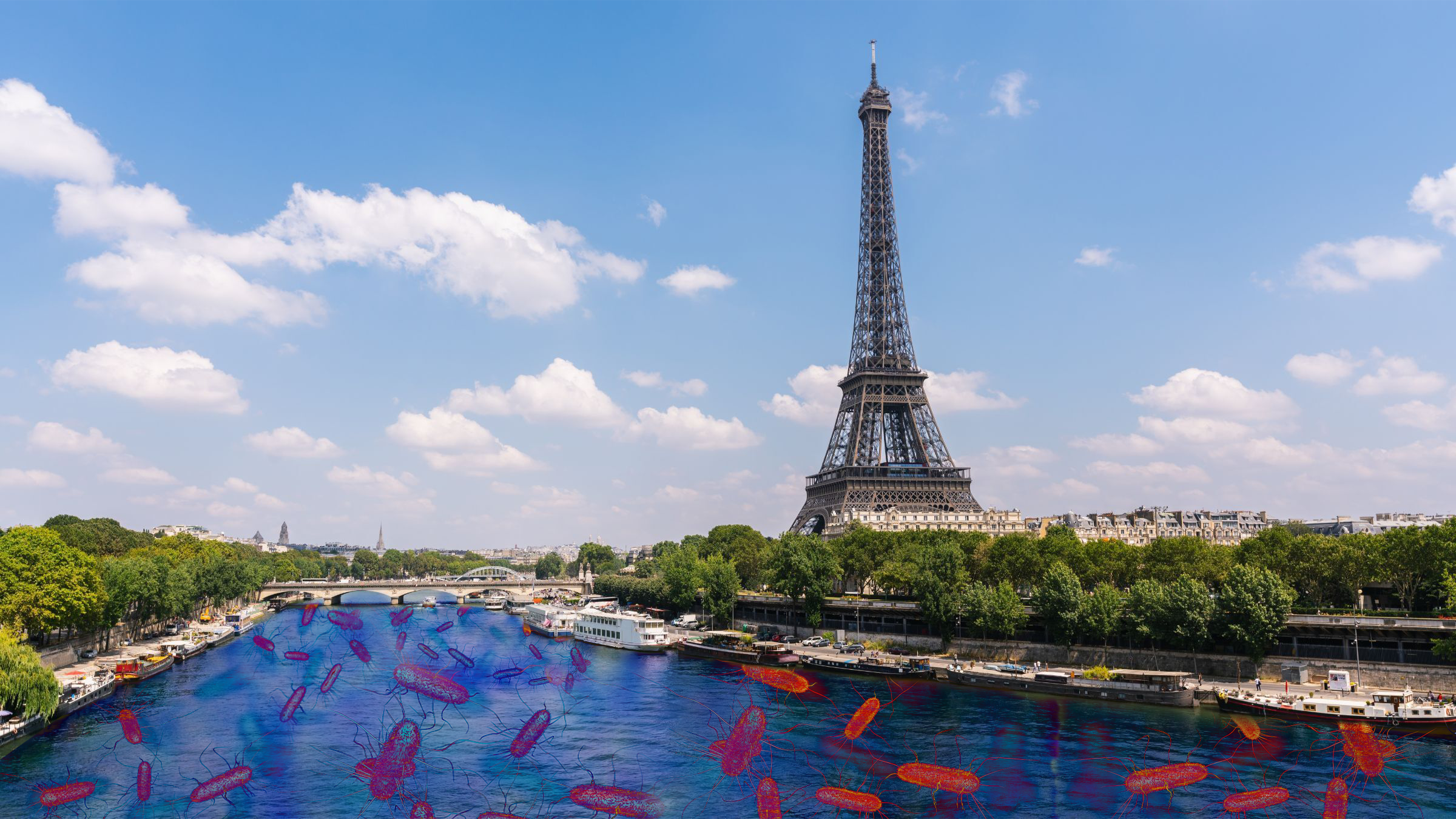
Will the Seine River be clean enough for swimming before this year's Olympic and Paralympic triathlon races? (Photo: Triathlete, Getty Images)
For those who can recall the build-up to previous Olympic Games triathlons, it has become a familiar ritual: The hand-wringing over whether the swim leg will actually take place on the sport’s biggest global showcase, or if the event will revert to an unmentionable duathlon and an asterisk forever hanging over the podiums.
With that backdrop, you could be forgiven for thinking we’ve been here before, and that cancellation of the 1,500m swim is as likely to come to pass as, say, a media boat reversing across the starting pontoon as the starting hooter sounds. (Oh, wait. That actually happened.)
But all snark aside, the picture does look a little different this time, and when Paris mayor Anne Hidalgo publicly exclaims, “Yes, I plan to swim in the Seine. That is clear,” what is also clear is that the hosts are on a PR offensive to try and allay fears ahead of this summer. In many ways the ambition is laudable. Swimming has officially been banned in the Seine since 1923, and organizers don’t just want to open it for elites – they want to create a desirable swimming hole for the masses too. That would be a Games legacy Paris would show off with pride.
ADVERTISEMENT
But first, they want the river to bring top-level sport to millions of fans, and starting in late July, it will prove a spectacular host for the Olympic triathlon individual events and mixed team relay as well as the marathon swim. A month later, it will then be used for the paratriathlon in the Paralympics. At least, that’s the plan. But will it actually happen?
Cleaning up the Seine River for the Paris Olympics
The Seine has seen Olympic action before, but not since 1900, and a lot has happened in the intervening 124 years. An obstacle race that required competitors to swim under and then climb over rows or boats is no longer on the program, nor an underwater swimming event. But – thankfully – science has improved in that time, and we now have better protocols for testing illness-inducing bacteria in the water.
It’s not straightforward or inexpensive – the estimated cost of the river clean-up is close to $1.5 billion. The challenges of attempting a first-ever Olympic triathlon river swim were also evident during last year’s test event, where the swim legs of the mixed team relay and paratriathlon were scrapped due to low water quality. The Open Water Swimming World Cup – effectively the 10-kilometer marathon swim test event – had already been canceled two weeks prior due to the same issue, blamed on a spell of heavy rainfall leading to unavoidable sewage discharge into the Seine.
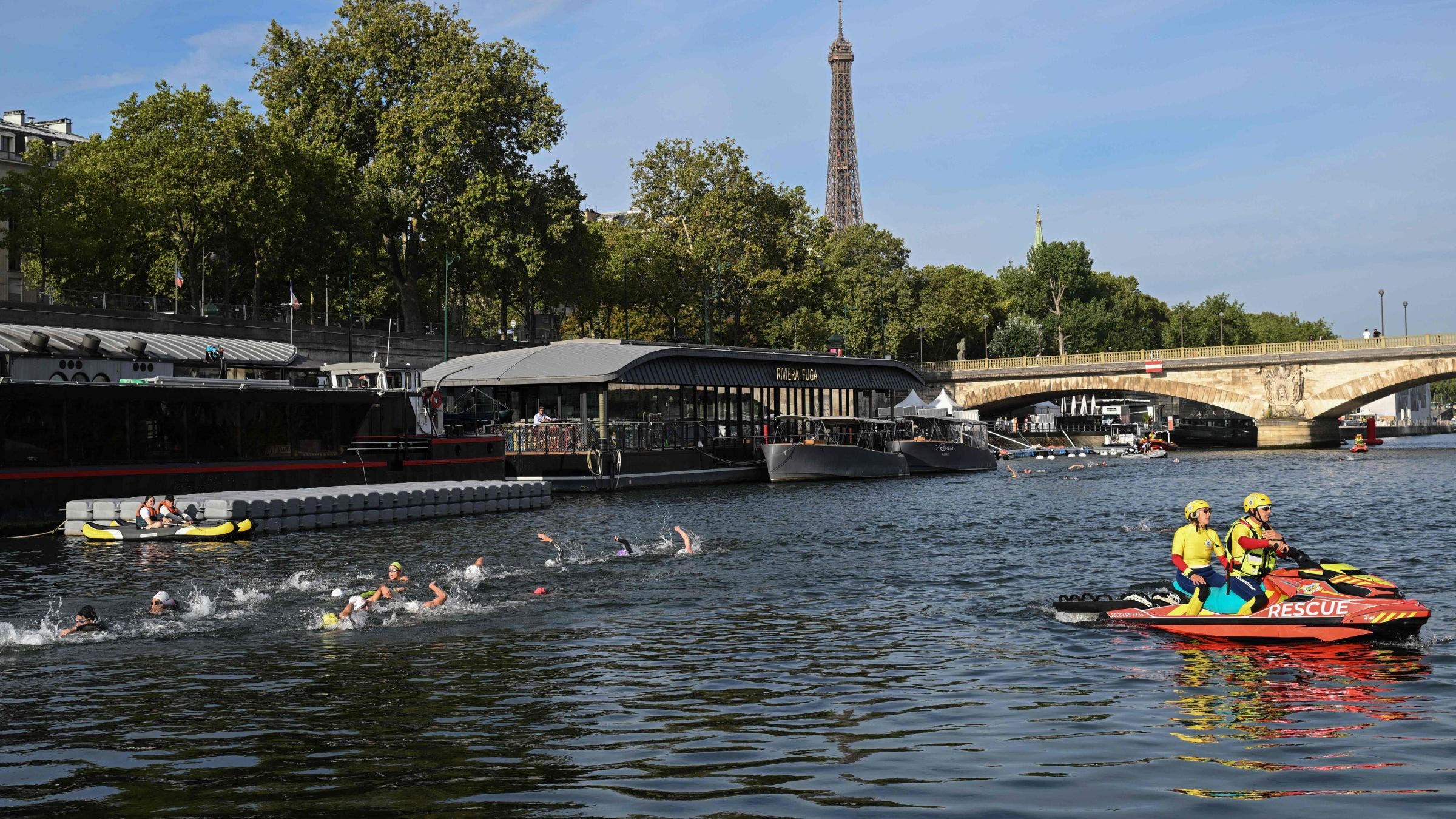
The individual triathlon events scheduled two and three days before the relay had proceeded as swim-bike-runs however, and, contrary to rumors at the time, when Triathlete contacted athletes that raced for this article under the promise of anonymity, no incidents of sickness were reported.
Concerns remain though, with the major challenge being that the Seine River presents a different aquatic environment to the sea or bay swims in Sydney (2000), Athens (2004), Rio (2016), and Tokyo (2021) or the reservoir and lake swims of Beijing (2008) and London (2012).
ADVERTISEMENT
“Major measures have already been taken since 2020 to improve the quality of the water in the Seine, thanks to the commitment of a number of stakeholders,” officials told Triathlete in a bullish joint statement from the Paris 2024 organizing committee and World Triathlon. “The clean-up drive is continuing with the most significant water quality improvement projects due to be completed in the coming months, particularly to cope with exceptional weather events.”
A mainstay of plans is the multi-million dollar Austerlitz storage basin, a 50-meter diameter, 30-meter deep cylinder that can store enough wastewater to fill 20 Olympic-sized swimming pools. It works as an overfill tank in the event of heavy rain, allowing effluent to be treated and then released more slowly back into the system.
Other facilities that will be operational by the Games include a 10-kilometer-long, high-capacity collector between Essonne and Val-de-Marne, and upgrades to the Val-de-Marne rainwater treatment plant including using ultraviolet lamps to neutralize bacteria. Boats and floating platforms located upstream of the site will also be connected to the sewers.
In exciting news for the locals, organizers hope that the river clean-up program won’t just facilitate a healthy environment for the athletes but lead to a legacy that from 2025 will provide sustainable swimming facilities in the Seine, with three city-center sites being earmarked.
ADVERTISEMENT
Testing, testing, and more testing
If all that sounds encouraging, knowing whether it will work under duress is paramount. This is where testing, testing, and more testing comes in. Local organizers and World Triathlon have even committed to setting up a remote laboratory close to the event site, doubling the amount of lab analysis being undertaken.
What constitutes a pass or a fail? It comes as little surprise that it’s not a black or white result. PH – a measure of acidity or alkalinity – must remain between 6 and 9. The bacteria, enterococci, must not be more than 200 parts per 100ml, and Escherichia coli (abbreviated as E. coli) not more than 500 parts per 100ml. Because the Seine is classified as “inland water,” a greater degree of tolerance is permitted as opposed to “transition water” (sea or tidal water) where the limits are halved.
There are also checks for the presence of blue-green algal blooms, known as cyanobacteria, or scum, to use a simpler term, with the multiple tests run through World Triathlon’s Water Quality Decision-Making Matrix, essentially a way of scoring the water quality before a final decision is made.
ADVERTISEMENT
World Triathlon Water Quality Decision-Making Matrix: Inland Water (Paris Olympics, Seine)
| Two past results E.Coli < 500* Enterococci <200* | Last result E.Coli 500 to 1000* Enterococci 200 to 400* | Two past results E. Coli 500 to 1000* Enterococci 200 to 400* | Last result E.Coli > 1000* Enterococci >400* | ||
| Sanitary inspection category (susceptibility to fecal influence) | Low | 1 | 2 | 2 | 4 |
| Moderate | 1 | 2 | 3 | 4 | |
| High | 2 | 3 | 3 | 4 |
Scoring Key
| 1 | Very Good Water Quality: (E.Coli <500 ufc/100 or Enterococci <200 ufc/100ml) with no or potential visual pollution during sanitary inspection or forecasted heavy rain |
| 2 | Good Water Quality: (E.Coli <500 ufc/100ml or Enterococci <200 ufc/100ml) with poor visual pollution during sanitary inspection or forecasted heavy rain |
| 2 | Good Water Quality: (E.Coli500 to 1000 ufc/100ml or Enterococci 200 to 400 ufc/100ml) but no or potential visual pollution during sanitary inspection or forecasted heavy rain; |
| 3 | Fair Water Quality: ( E.Coli 500 to 1000 ufc/100ml or Enterococci 200 to 400 ufc/100ml) but with potential or poor visual pollution during sanitary inspection and/or potential for forecast heavy rain |
| 4 | Poor Water Quality: (E.Coli >1000 ufc/100ml or Enterococci >400 ufc/100ml) with any visual pollution during sanitary inspection and/or potential for forecast heavy rain |
In the case of the Olympics and Paralympics, that final decision is made by three technical delegates and the medical delegate at 3:30 a.m. after receiving the latest results from the laboratory, sanitary inspections, weather reports, and all relevant information. “The decision is always made considering the latest available information and communicated immediately to all relevant parties,” World Triathlon stressed.
While the criteria are the same as in every other World Triathlon race, more frequent testing takes place for the Olympics and Paralympics, specifically two tests per day – morning and evening – for a period of 10 days before the first competition until two days after the last competition.
Will the Paris 2024 triathlon swim actually happen?
There is one other section of the competition rules worth noting: Section 10.1.b.ii, which says that even if the water quality test shows values outside the tolerance limits, the World Triathlon Medical and Anti-Doping Committee can still permit the races to go ahead.
This caveat is where the cynicism comes in that swims are given the go-ahead in spite of what the data shows. It’s an allegation World Triathlon will refute, but sickness in the aftermath of events such as Sunderland WTCS last year, where more than 50 athletes reported symptoms of diarrhea and vomiting (although organizers claimed it was due to a virus), and last weekend’s World Cup race in Hong Kong, has heightened fears for the athletes’ safety. “For both Paris 2024 and World Triathlon, the health and safety of the athletes is the absolute priority, and we are confident in the great efforts made by all the stakeholders to ensure this,” World Triathlon said.
What else may halt the swim? Unlike in Tokyo, where much focus fell on the Wet-Bulb-Globe-Temperature (WBGT) index, which gives a measure of heat stress, and the women’s test event was shortened as a result, water temperature is unlikely to be an issue in Paris. Even though it was a non-wetsuit swim in the test events, the water was measured at 68.9 degrees F (elite women) and 74 degrees F (elite men).
The current will be assessed and rules state a limit of 1.5m/s, but with essentially an out-and-back swim, as long as headway can be made into the flow, it won’t be an issue. Lightning strikes within eight miles of the race area are another concern, but not one that can be controlled.
ADVERTISEMENT
“Heavy rain is probably the most impactful threat to water quality, as happens with any body of water,” World Triathlon confirmed. “Considering the efforts made by the city on sewage and cleaning of the river, the current speed and the water basin, we are confident that even in the case of heavy rain, the impact will be controlled.”
In six editions, we’ve yet to see an Olympic triathlon swim canceled, and stalwarts such as John Lunt, the competition manager for London 2012, sees that trend continuing. “When the Olympics is mentioned, a kind of escalation kicks into action [to get the venue ready],” he explained. “So much is dependent on the event happening, TV revenue, the city reputation, IOC [International Olympic Committee] contracts, to the standing of the sport within the Olympic movement, and so on and so forth.
“I’m sure the organizing committee will be on overdrive to make everything work safely and will belt and brace everything to deliver a fantastic race”.
Lunt says the advantage they had in London was that the Serpentine Lake in [Hyde Park] was fed by bore holes, not river water from the Thames, meaning the water coming in was “practically drinking water quality”.
ADVERTISEMENT
He added: “Yes, there was the naturally-produced bacteria from geese, swans, and pigeon droppings, and we also had concerns over blue-green algae build-up during a hot summer, but there were a few mitigations we could take with the Royal Parks [who manage the site year-round] to reduce the levels and impact, such as restricting run off and introducing low levels of hydrogen peroxide to oxygenate and give us some decent water-quality readings. I remember doing a hydrosound survey of the bed of the lake to check the depth, and we even found a few bomb craters from the Second World War.”
He does believe that the Paris hosts face the trickiest task yet. “Professionally, I’d be more concerned about the Seine. There were always questions about Rio and Tokyo, but those are much bigger bodies of water. As a race organizer we try to control the controllables. But while we can shut the roads, a free-flowing river is way more complicated.
“Finding an ideal clean water swim venue within a city environment is always the major challenge for triathlon. A city wins the bid and then the sport has to make it work. Athens for example, ended up being a sea swim at Vouliagmeni on the outskirts of the city, although it was a nice environment.”
ADVERTISEMENT
Paris 2024 wants it to be a step above “nice.” Bounded by four impressive columns supporting golden bronze statues, the Pont Alexandre III bridge will be a spectacular venue, what flows beneath just needs to be of similar quality.
The mayor, of course, remains confident: “Parisians, Parisians, and athletes,” Hidalgo said. “This great collective plunge will be the signal that the Seine belongs to everyone.”