Updated March 8, 2026 09:45PM
Triathlon’s 7 Most Brutal Bike Courses
According to pros, these bike courses are some of the most grueling on the race circuit. Read on to see if your arch nemesis ride made the cut.
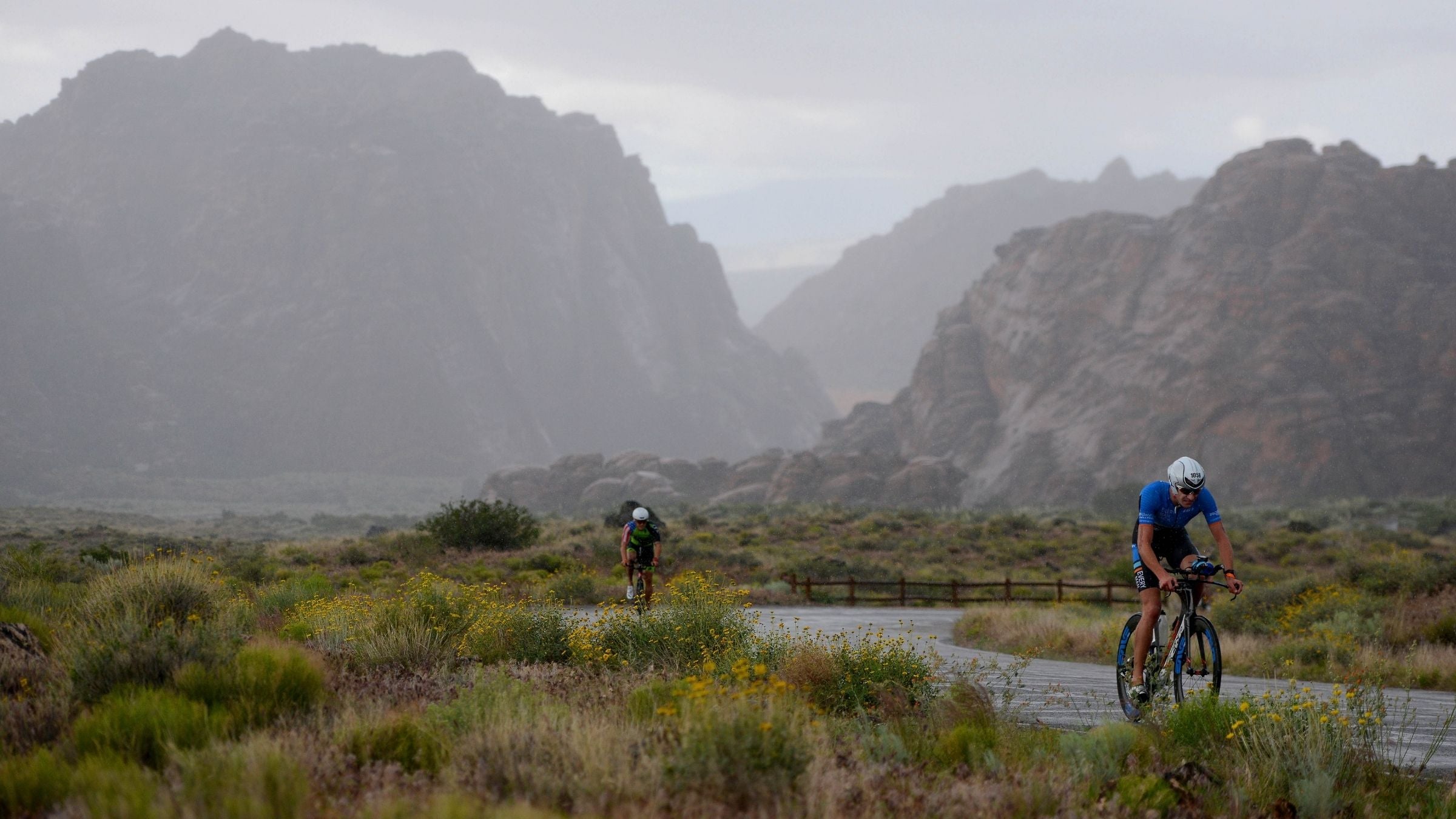
(Photo: Donald Miralle/Getty Images)
Ironman Races with the Most Brutal Bike Courses
Given that the longest leg of a triathlon is the bike, a challenging course can truly make or break your race. From relentless climbs to powerful head winds, there are plenty of ways to zap your legs before you even get to the run. Pro triathletes handpicked these seven courses as some of the hardest.
Ironman Lake Placid
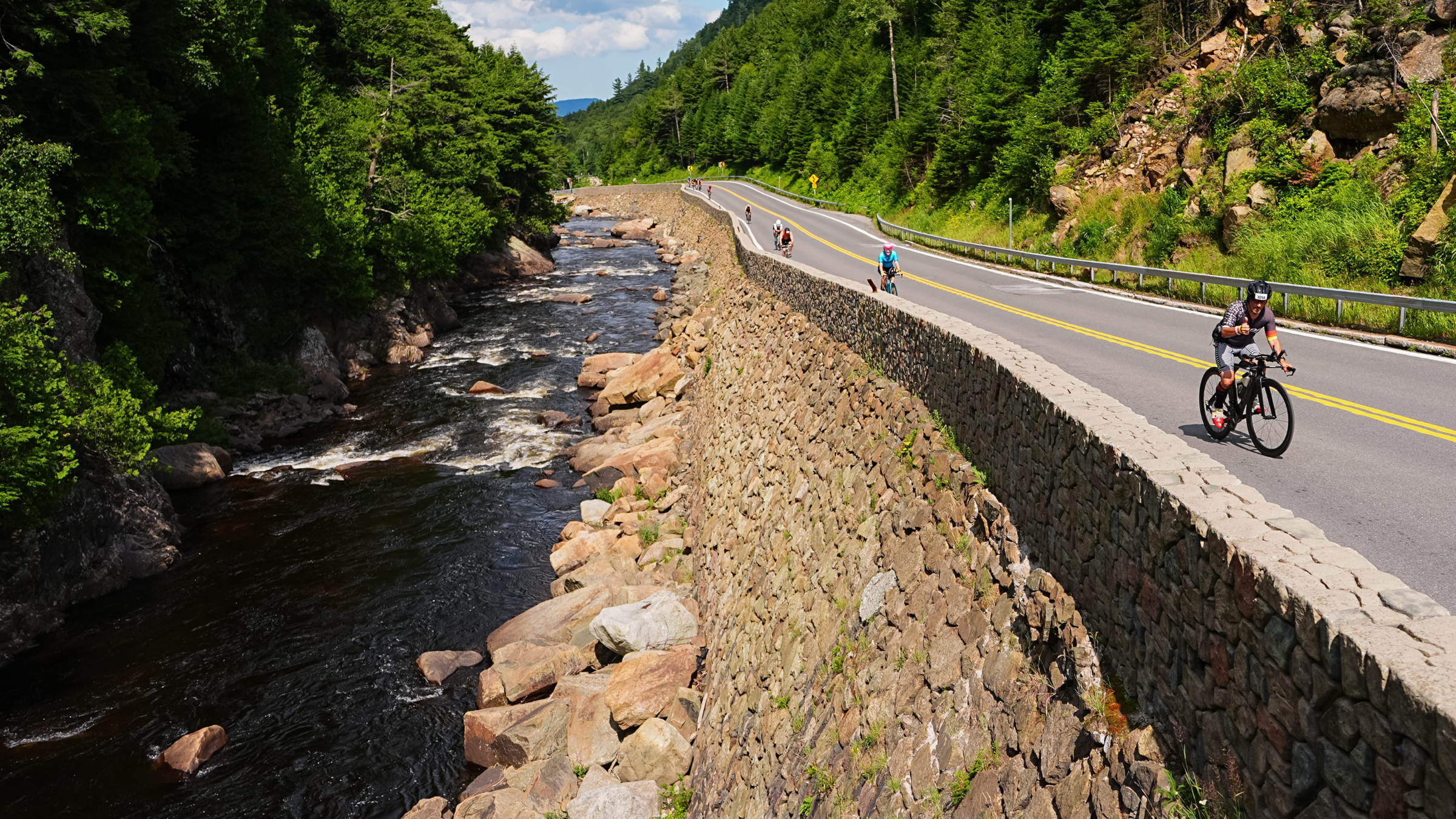
Outside of the world championship, Ironman Lake Placid is the longest-running full distance triathlon in North America. The quaint mountain town, which hosted the Winter Olympics in both 1932 and 1980, has been home to the race since 1999.
The two-loop, 112-mile course has a few distinct sections, including an 11-mile sustained climb and a three-part ascent nicknamed Baby Bear, Mama Bear, and Papa Bear, with a total of more than 6,000 feet of elevation gain. It’s a very scenic course through the Adirondack Mountains with epic climbs and fast descents, but it’s not easy.
“Ironman Lake Placid is notorious as one of the most challenging – but also most rewarding – courses on the Ironman circuit because of its significant elevation,” says pro Matthew Marquardt, the 2025 Ironman Lake Placid winner. “The majority of the climbing comes from some short punchy climbs in the middle and one long climb at the end of each loop. This means that if you over-bike the first loop, you’re in for a world of hurt during the second loop.”
Ironman Lanzarote
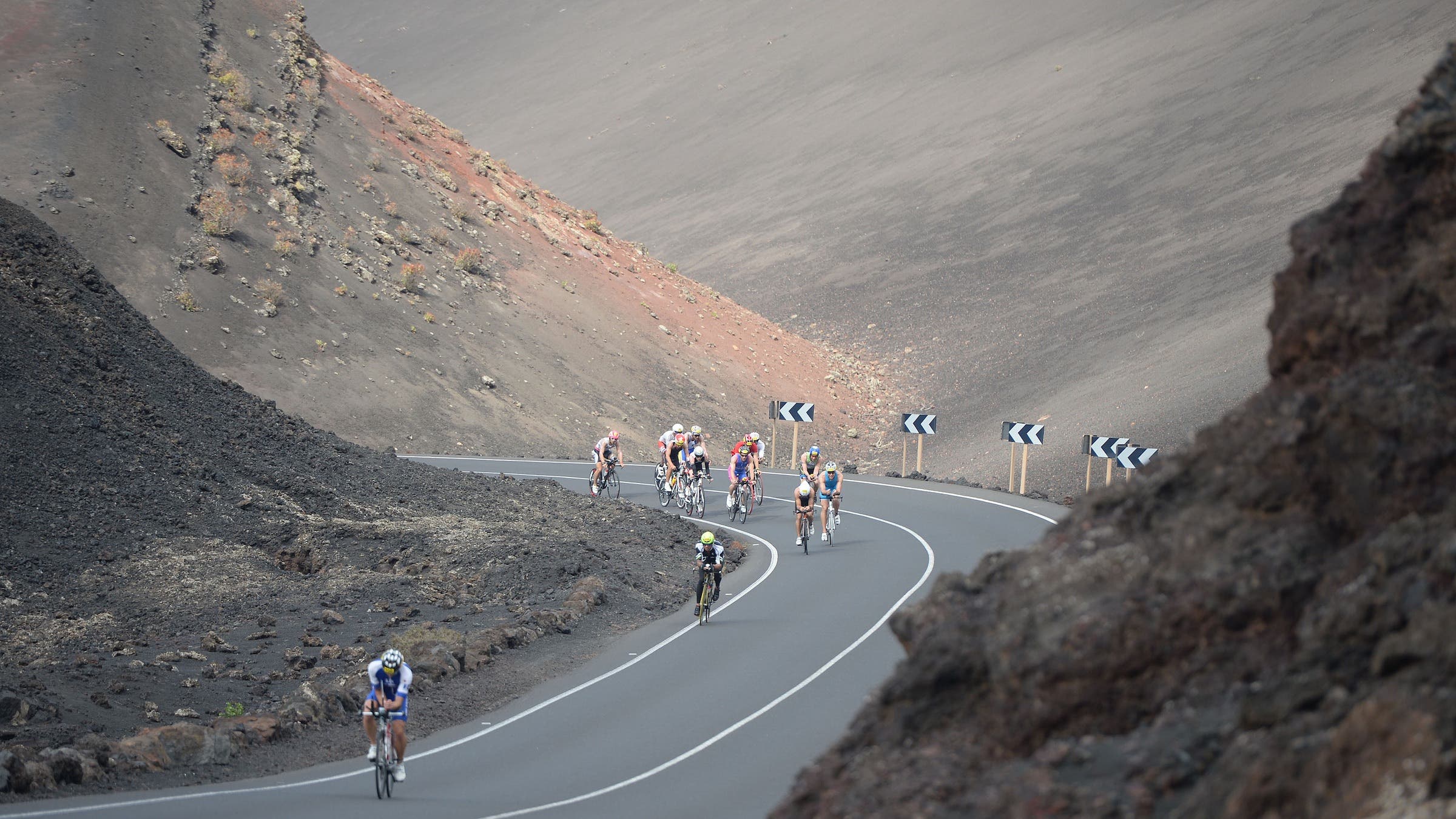
Ironman Lanzarote is one of the most long-standing races in Europe, running since 1992. While the course is beautiful, set on an island in the Canary archipelago about 80 miles off the coast of Africa, the otherworldly landscape is brutal. The terrain is diverse with volcanic rock, barren black lava fields, and continuous climbs. But it’s the relentless wind that makes this one of the hardest bike courses, and Ironman races, on the circuit.
Imagine climbing 8,366 feet with 25-30 mph gusts of head wind and crosswind. But that’s not all! The course is also extremely technical with twisty, turny switchbacks and fast descents.
“Cycling at Ironman Lanzarote has been the biggest challenge I’ve faced in a race so far,” says Julia Skala, who placed fourth at the 2025 Ironman Lanzarote. “Strong crosswinds made it very difficult at times to stay on my bike. The wind also changed direction quickly. The landscape, the wind, and the route make this race challenging but very impressive!”
Ironman France
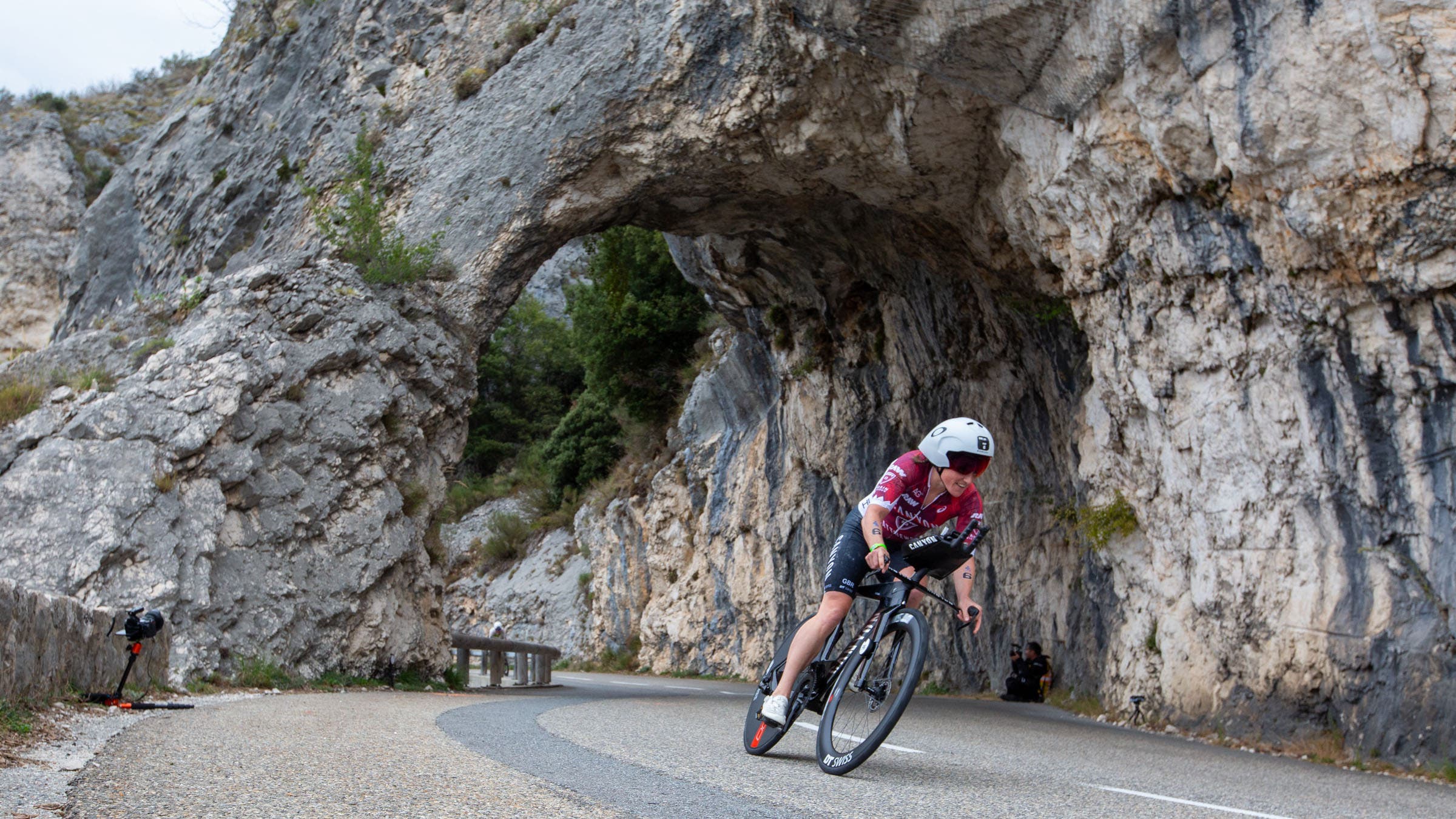
Commonly known as Ironman Nice, this one-loop bike course is among the most challenging on the Ironman circuit. The setting is spectacular as it winds through the hinterland and villages in the Parc Naturel Regíonal des PréAlpes d’Azur.
After 6 miles along the coast, you reach the first climb – Les Pugets to Saint-Jeannet. This 5.5-mile climb has an average gradient of 3.3% and three sections ranging from 10-15% grade. Around the 25-mile mark, you begin the 11-mile ascent of the Col de l’Écre.
There are twists and turns, stunning views of the bay below, and fast descents, including the Clues de Gréolières, which has been featured in many movies. With 7,478 feet of elevation gain, this course is so challenging that it has a swim/T1/bike cut-off of 10 hours and 45 minutes, as well as five intermediary bike course cut-offs.
It’s often said that Ironman Nice is one of the most difficult bike courses on the Ironman circuit. Pro triathlete Barbora Besperát, who placed second at the race in 2024, confirms this claim. She’s experienced only one harder bike course, and it’s also on this list – Ironman Lanzarote. What makes Ironman Nice so challenging?
“It’s a combination of the length, elevation, and warm weather – 180K with more than 2,500 meters elevation gain and almost 30 degrees Celsius,” Besperát says. “Also, it’s not a typical hilly course profile that changes up and down constantly. … This is really a mental and strength test. The rest of the course is basically one long downhill, but a very technical one with lots of turns and narrow streets as well. I have to say that the landscape and the views are breathtaking. Even though it was definitely not an easy ride, I really enjoyed it!”
Ironman Wales
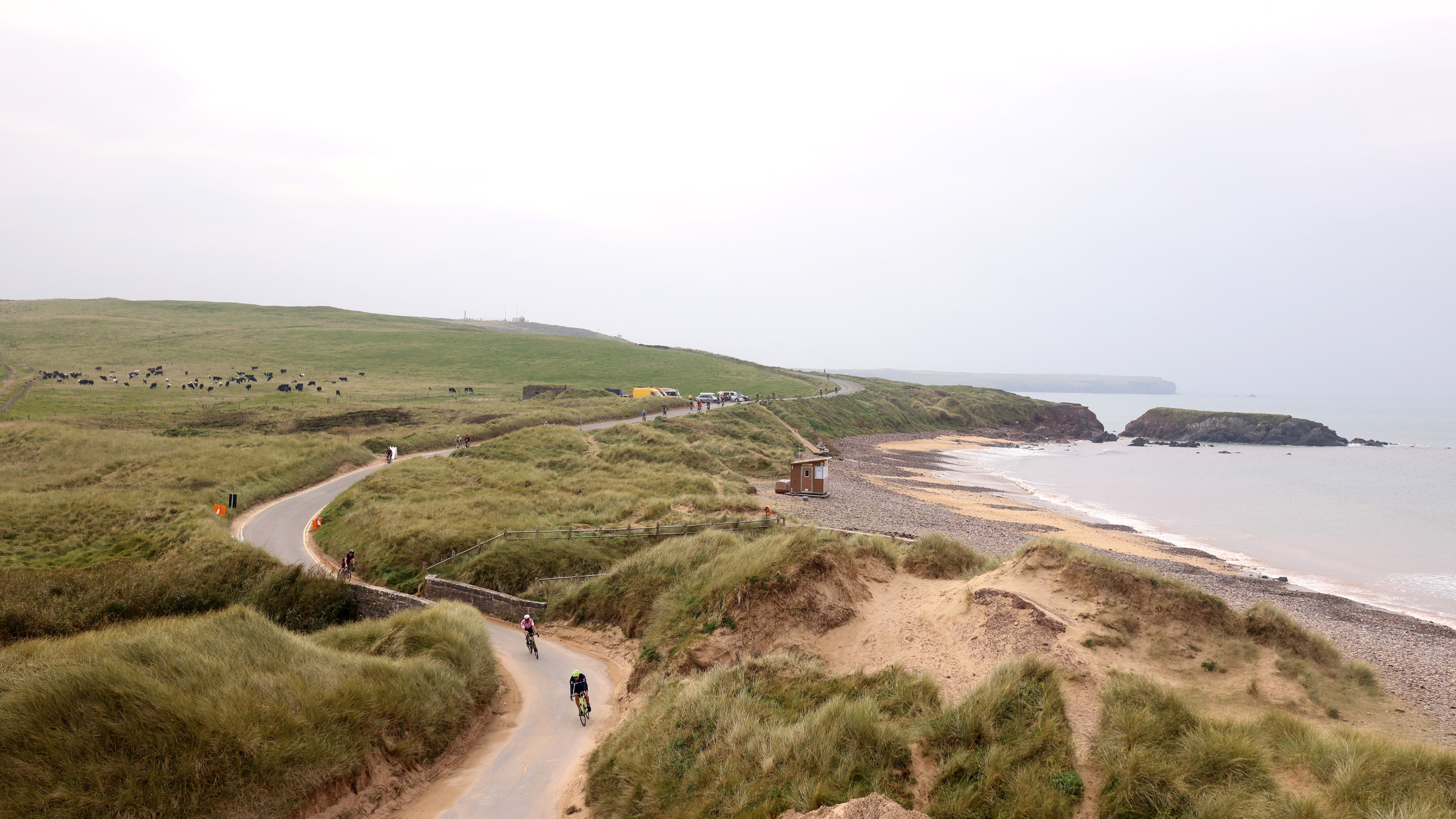
This race set in Pembrokeshire in the United Kingdom has a beast of a bike course with roughly 9,800 feet of elevation gain. The two-lap course is scenic as it travels through the Pembroke Coast National Park passing by castles and one of the beaches that appears in Harry Potter and the Deathly Hallows (Freshwater West Beach, the site of “Shell Cottage”).
At 2025 Ironman Wales, newly minted pro triathlete Rosie Wild placed second and set a new bike course record of 5:23:59.
“At Ironman Wales, you’re never ‘climbing,’ but you can never settle,” she says. “There’s 3,000 meters of ascent, but you will never be up and grinding for more than five minutes. It’s just relentless, short and sharp efforts which attrit your mind as much as your legs,” she says. “No rewards of sweeping descents; be prepared to focus for 180K. But the views you’ll get and the experience on Heartbreak Hill will make you forget all of this!”
Ironman Florida
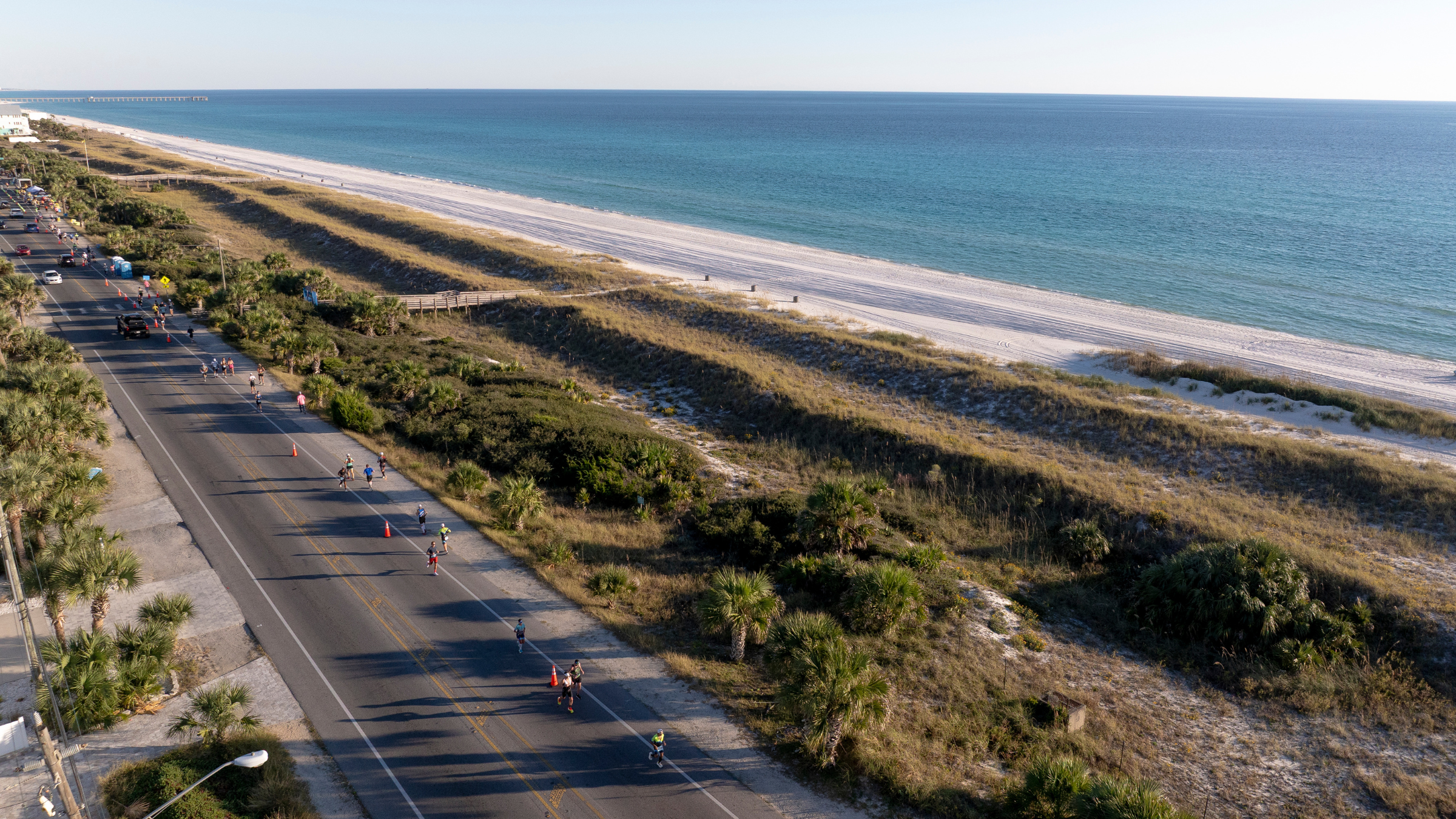
We had to add a flatter course to this list because while they don’t have epic climbs and significant elevation gain, they can be challenging in their own way. Flatter courses in hot climates can be hard because of the need to stay in aero for extended periods of time, the fact that you’re constantly pedaling under your own power (no assistance from descents), and the exposed terrain in unrelenting sun and wind.
“Any Ironman bike will be tough, just because it’s 180K at the fastest possible speed,” says Rudy Von Berg, winner of 2023 Ironman Florida. “Staying in aero for so long is definitely something that makes it a bit harder. But then again, with most courses outside of Nice and a couple others that are hillier, you have to stay in aero as much as you can.”
“[Ironman] Texas is also quite tough with these long out and backs on the tollway with practically no respite from aero,” he add, “and also it can be quite windy and warm.”
Ironman Leeds
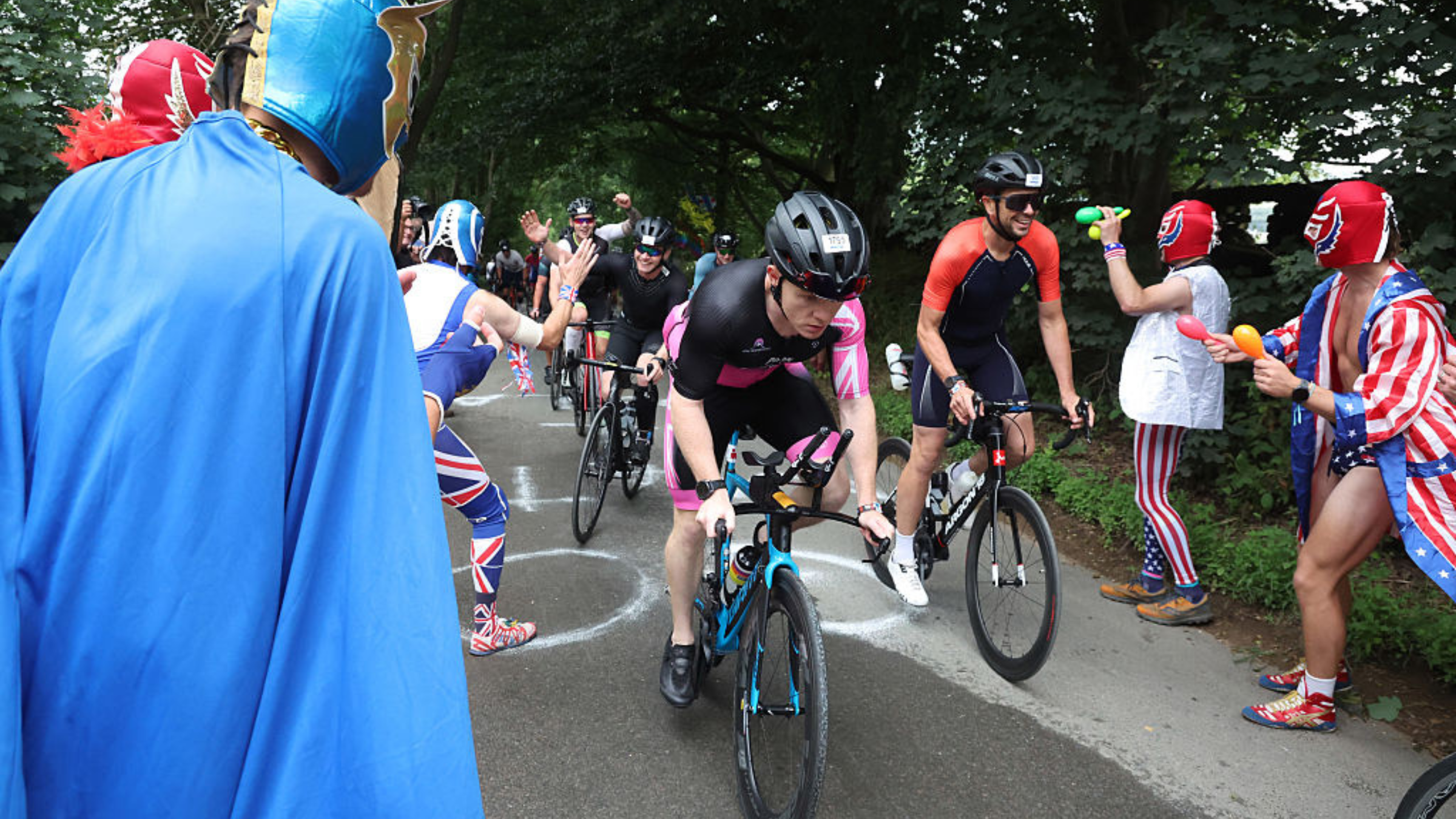
This brand-new race has a course that provides some of the best Yorkshire has to offer in a city that’s completely mad about triathlon. Pro triathlete Sam Laidlow won the inaugural event in 2025 and describes the bike course as “quite brutal.” With the cold, wind, and steepest climb on the Ironman circuit to do three times, you’re in for a treat, Laidlow says.
The three-loop course includes sections from former Tour de Yorkshire races, including the infamous climb on Black Hill Road to the tune of 8,202 feet of elevation gain.
“The Ironman Leeds bike course is genuinely tough and very technical. The road surface can be pretty rough, and there are some great English potholes, which force you to stay switched on the whole time and makes it hard to settle into a smooth rhythm,” he says. “Because it’s a two-lap course, there’s a lot of age-group athletes on the road. So, as a pro, you’re overtaking constantly, sometimes in sections that can feel tight or a bit sketchy, which adds a real element of risk.”
“But this is also what makes Leeds unique: It’s a proper test of handling and decision-making, and it creates a really great atmosphere for spectators (and even out there on the bike course) because the race stays close and visible for much of the day.”
Ironman World Championship
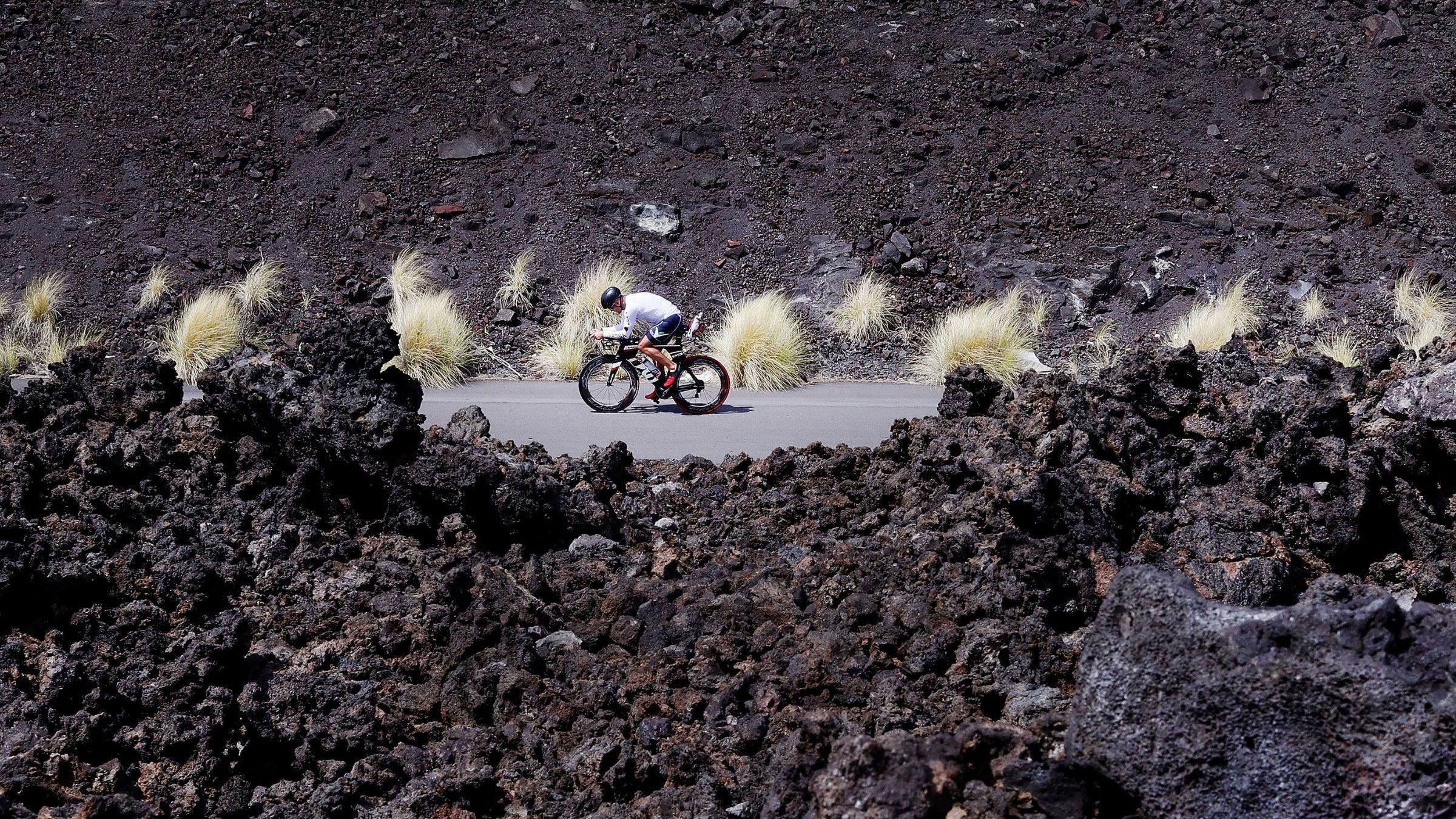
On paper, the Big Island bike course may look like a fairly manageable route with 5,814 feet of elevation gain over 112 miles. But the ever-changing weather conditions, exposed terrain, and strong crosswinds make this one of the more challenging bike courses on the Ironman circuit. The out-and-back route from Kailua-Kona to the turnaround at Hawi has broken even some of the strongest cyclists who neglect their pacing and underestimate the Queen K.
“Kona is hard for the heat, hills, and it’s just a long way home on the Queen K in the elements after going very hard to Hawi,” says Von Berg, who placed third at the Ironman World Championship in 2024 with a 4:05:49 bike split.