Published December 19, 2023 06:00AM
Originally posted onVelo
Will Continuous Lactate Monitors Revolutionize Endurance Sports?
CLM could end up bridging the gap between "the Norwegian Training Method" that requires multiple blood samples per workout and something far less invasive for triathletes—and it's already causing ripples in pro cycling.
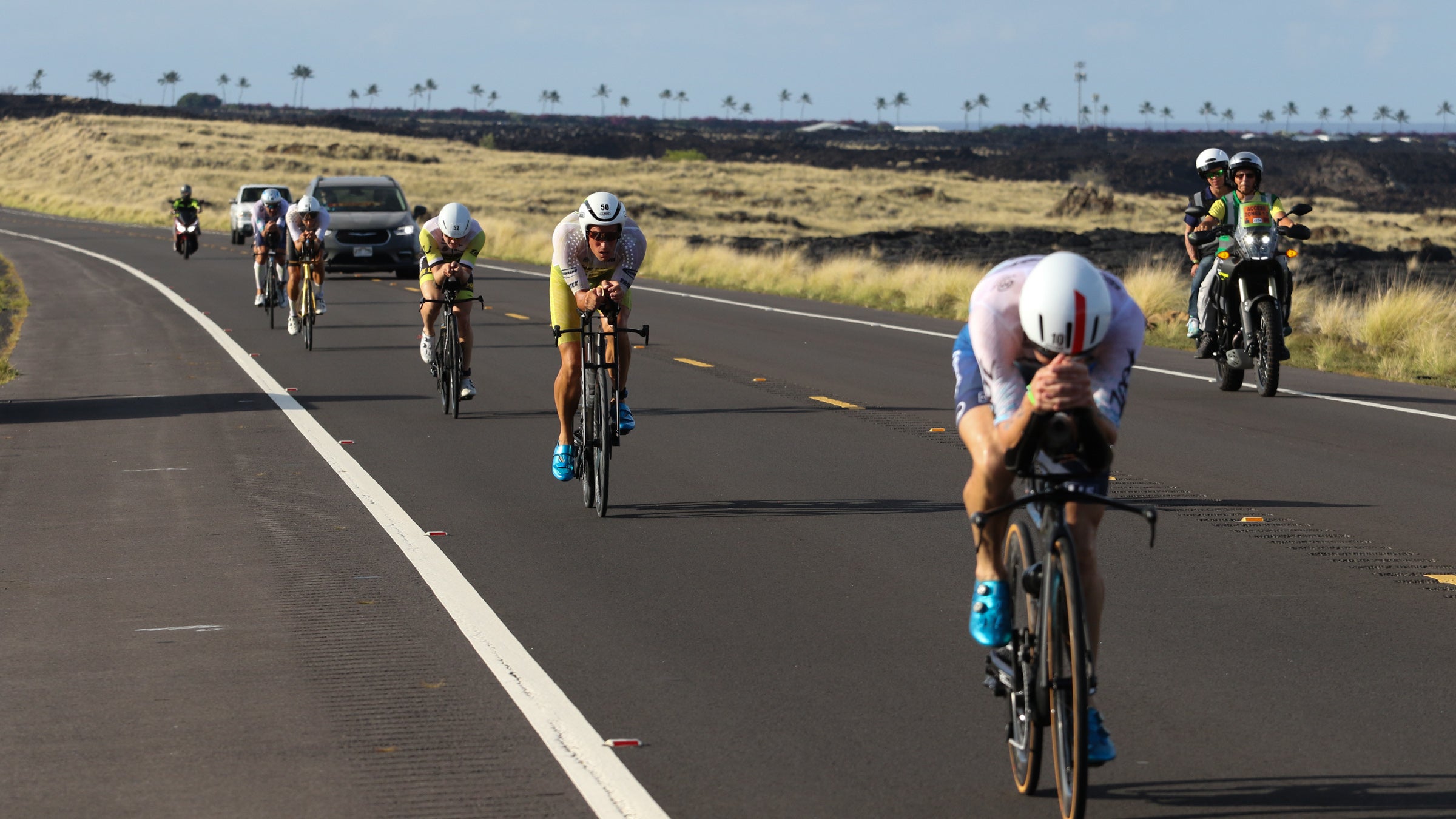
Continuous lactate monitors are causing a stir in the world of pro cycling. Is triathlon next? (Photo: Brad Kaminski/Triathlete)
The pro cycling peloton is buzzing for the arrival of continuous lactate monitors.
The Union Cycliste Internationale (UCI), the world governing body for cycling, has an in-competition ban on these hotly hyped tracker devices, but there’s no regulation on use in training, and many insiders are pumped for the possibilities.
“It would be a huge step,” Astana Qazaqstan‘s director of performance Vasilis Anastopoulos told our sister publication Velo of the much-anticipated monitors. “It would be an evolution in training.”
But some experts caution that slapping on a continuous lactate monitor [CLM] won’t guarantee stellar sessions, Tour de France success, or Kona wins.
Some say the in-training application could be limited. Others warn that the numbers will only make sense after years of context.
And heck, is yet another datapoint all a bit much?
So will the launch of the first reliable CLM devices truly revolutionize endurance sports, or will these wearables be nothing more than minimal marginal gains for the elite?
ADVERTISEMENT
A level up from power: The possibilities of lactate
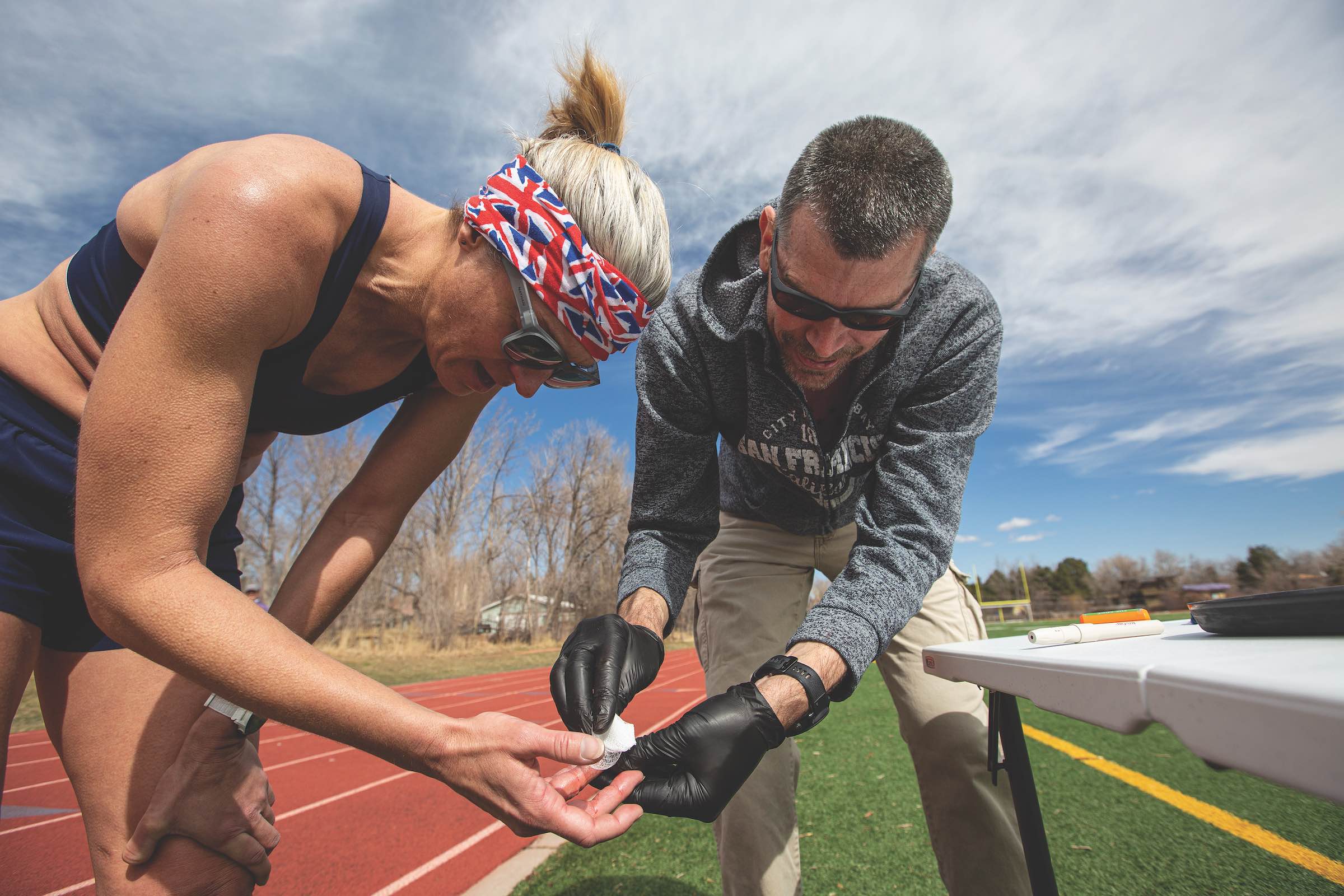
“Lactate testing is probably the best way to assess muscle metabolic stress and performance, especially in endurance athletes,” said Iñigo San Millán, celebrated physiologist and head of performance at professional cycling team UAE Team Emirates.
“It’s also probably the best method that we have to predict performance in endurance events, and an excellent parameter to prescribe individual exercise training zones for athletes.”
ADVERTISEMENT
Typically conducted in a lab, this indoor trainer torture device maps blood lactate levels onto power numbers. It helps define an athlete’s all-day power, their red line readings, and everything in between.
But now, the lab isn’t enough.
Endurance athletes are now carrying palm-size lactate analyzers in their jersey pockets and testing their readings with earlobe or fingertip blood samples mid-session.
“I take my lactate a lot now in training to check I’m in the right zones,” pro cyclist Larry Warbasse said. “If you’re good at doing it, it takes less than a minute, but it takes some practice. And still, you have to stop at the end of the effort.”
Norwegian triathletes and runners are topping the world off the back of workouts guided by regular lactate tests that ensure inch-perfect intensity control.
The numbers help the likes of Kristian Blummenfelt, Gustav Iden, and Jakob Ingebrigtsen ensure intervals are hard enough to illicit the required response, but not so tough they’re left in a box for the rest of their block.
ADVERTISEMENT
It seems the pro cycling peloton has taken note of the Norwegian champions.
“The ‘Norwegian method’ idea of intensity control and regular lactate testing every day, and in every session, is really coming into cycling,” Warbasse said.
So why the big buzz with training by lactate?
Lactate concentration is less impacted by variables like hydration or altitude than heart rate and power, and provides the truest indicator of internal stress available to the modern athlete.
The drawback? Lactate numbers aren’t just beamed to a screen like watts or heartbeats. The need for riders to stop and fiddle with lancets and medical strips means mid-training lactate measurement is for the few. A CLM that shows lactate on a headunit or watch would totally change that.
ADVERTISEMENT
“Until now, lactate testing has been a little slow and impractical. If it can be measured ‘live’ – and if it’s accurate and reliable, which could take time to develop – it would be a massive step,” Anastopoulos said.
“Real measurements, live, would be so beneficial for us trainers. It would change how we train so much.”
Zone two training, medical screening, and more

While the lactate testing of Norwegian athletes is used to regulate higher intensity intervals, some believe continuous lactate monitors would deliver most value to endurance athletes during zone two “base” training sessions.
They’re the slow ‘n’ steady sessions that make up endless hours of any endurance athlete’s training program—the foundation of the athletic engine.
Real-time lactate readings would eliminate the element of guesswork that jeopardizes riding at zone two.
The lactate profiles that correlate blood values to power outputs can be rendered “out of date” within weeks of a lab test, leaving base training a best-guess.
“Our riders at UAE Emirates use zone-two training a lot as a significant training stimulus, and having really accurate lactate numbers could be valuable,” said pro cycling team UAE Emirates performance coordinator Jeroen Swart.
ADVERTISEMENT
“Your zones change over time as you get fitter but you can only truly measure that in a controlled way [i.e., a lab]. A continuous lactate analyzer would allow you to instantaneously figure that out when you’re training.”
Lactate tracking is crucial in medicine, too.
Measurements can be essential to the triage and escalation of care for conditions ranging from sepsis and shock to congestive heart failure and beyond.
The medical world is equally invested in the arrival of CLM as is the endurance community.
“The field of biosensing is the future of diagnosis. Stakes are quite high,” medical professor and performance expert San Millán said, referring to his work in helping develop one such sensor.
ADVERTISEMENT
Context, context, context

The hype is real for the first reliable continuous lactate monitor, but some insiders are keen to lightly pump the brakes.
Dr David Lipman works as director of applied science at glucose monitor giant Supersapiens.
The U.S.-based brand might on-board lactate measurement some time soon and so Lipman has got skin in the game. But he warns the gains from a CLM won’t come quick.
ADVERTISEMENT
“I think what will happen [with CLM] is what happened with continuous glucose monitors. People are going to lose their minds when they launch, everyone’s going to use them, but then they’re going to realize the data can be difficult to interpret,” Lipman told Velo. “And then they’re going to have to spend some time learning it, understanding it.”
RELATED: Continuous Glucose Monitoring: Is It Worth It For Triathletes?
Both Lipman and UAE Emirates’ performance guru Swart caution that it could take some time to get to grips with readings from a CLM.
There will likely be discrepancies between the values from a wearable and from a pinprick test that require unraveling.
Likewise, learning what “normal” looks like in a live, 24/7 lactate profile will be another huge hurdle.
“There’s going to be a lot of time where we’re learning what ‘normal’ is, and the assumption will have to be that what you see is both a true measure and that you’re ‘normal’. And maybe that’s going to be found untrue in 20 years,” Lipman said.
“People won’t have the context to understand the numbers, and it could take a few years for us to understand the readings and use them well.”
ADVERTISEMENT
And just like heart rate numbers (but to a lesser extent), lactate concentration could be impacted by an athlete’s training status or glucose levels.
The comparison to heart rate continues in that lactate measurements will not provide the best representation of short, fast-twitch efforts.
Combine all those complexities with the myriad of other performance indicators available to riders and “data overload” could also be a consideration.
“There are always some side effects with performance tracking. Sometimes the riders just gets too obsessed with the readings. We have to be careful with these devices,” pro cycling team Astana performance chief Anastopoulos said.
“For example, I’d like to have the continuous lactate data but not necessarily pass it to the riders. They have power meters, fat values, heart rate … and now lactate? It can overcomplicate things.”
ADVERTISEMENT
Only ‘incremental’?
“The smart people will get these and have a period of time where they do absolutely nothing with the data. Just collect it, look at it, and start to understand where that sits in what you understand normal is, then go from there,” Lipman said.
“It could take us probably six months to two years to really understand how to use these well.”
ADVERTISEMENT
So it seems the potential for CLM could be massive. But the endurance sports world might have to wait for those gains to come.
‘They [CLM] would be an incremental improvement, but they’re not going to be a game-changer in terms of revolutionising the sport any time really soon,” Swart said.
“For now at least, they’ll makes our lives a little easier, but maybe not ‘change the game’.”