Published January 9, 2026 06:00AM
What We’d Like to See More (and Less) of in Triathlon in 2026
From championing sprint races and improving race broadcasts to reducing reliance on new gear and swapping social media for real-world connections, our editors have compiled their collective wish list for a healthier, more sustainable, and exciting future for triathlon.
Triathlete's editors share what they'd like to see more and less of in the sport in 2026. (Photo: Travis Mundell/T100/Challenge Family)
Every January, our editors dream big – not only for our personal New Year’s resolutions, but for the sport as a whole. Triathlon is evolving rapidly, from the professional level down to the local super-sprint race, and 2026 presents ample opportunity for growth and change.
As we look toward an exciting future for the sport, we’ve compiled our collective wish list: what we’re crossing our fingers to see more of, plus what trends and behaviors we sincerely hope to see less of in the year to come.
More of this in triathlon, please
Dark horse upsets
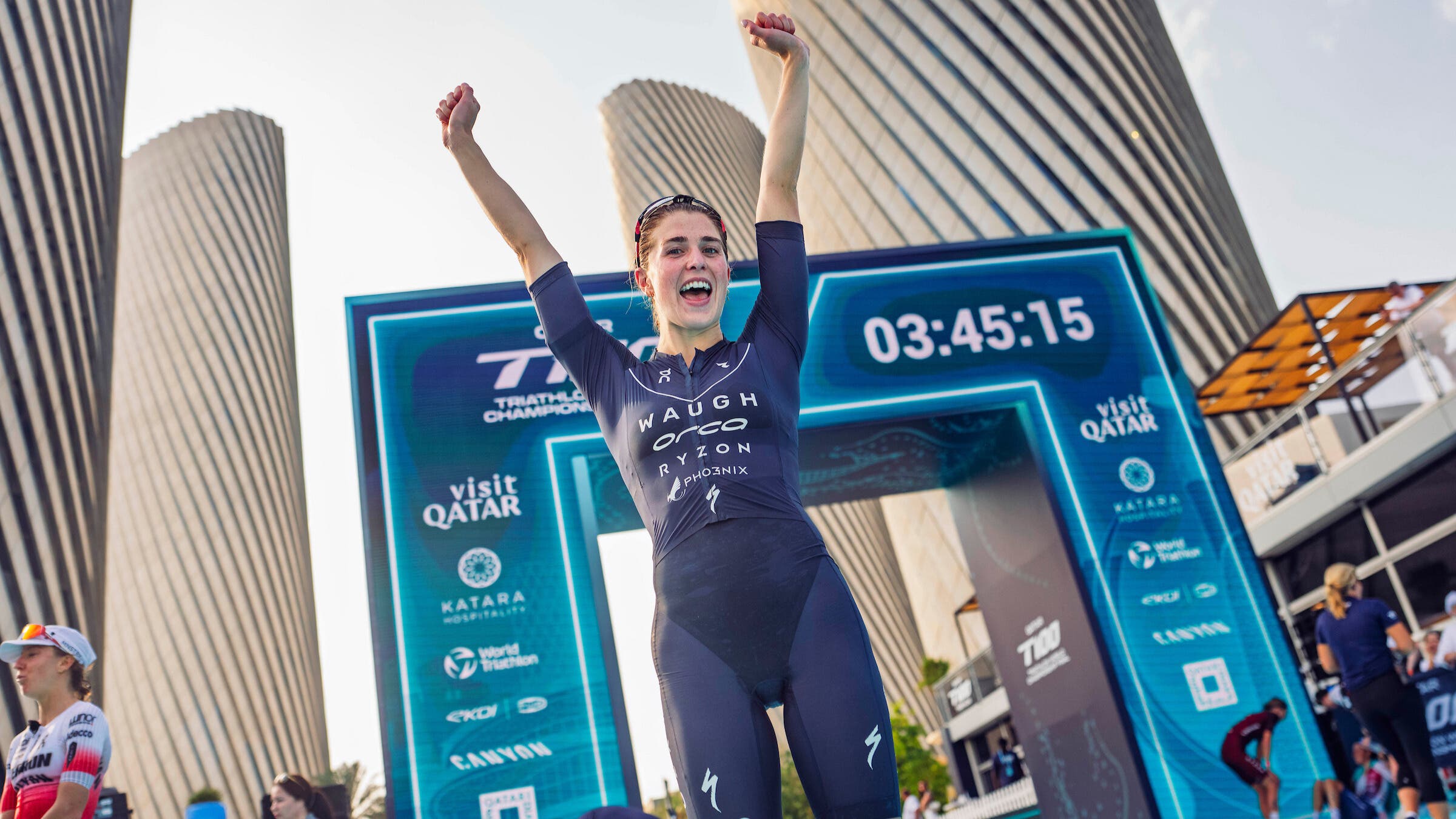
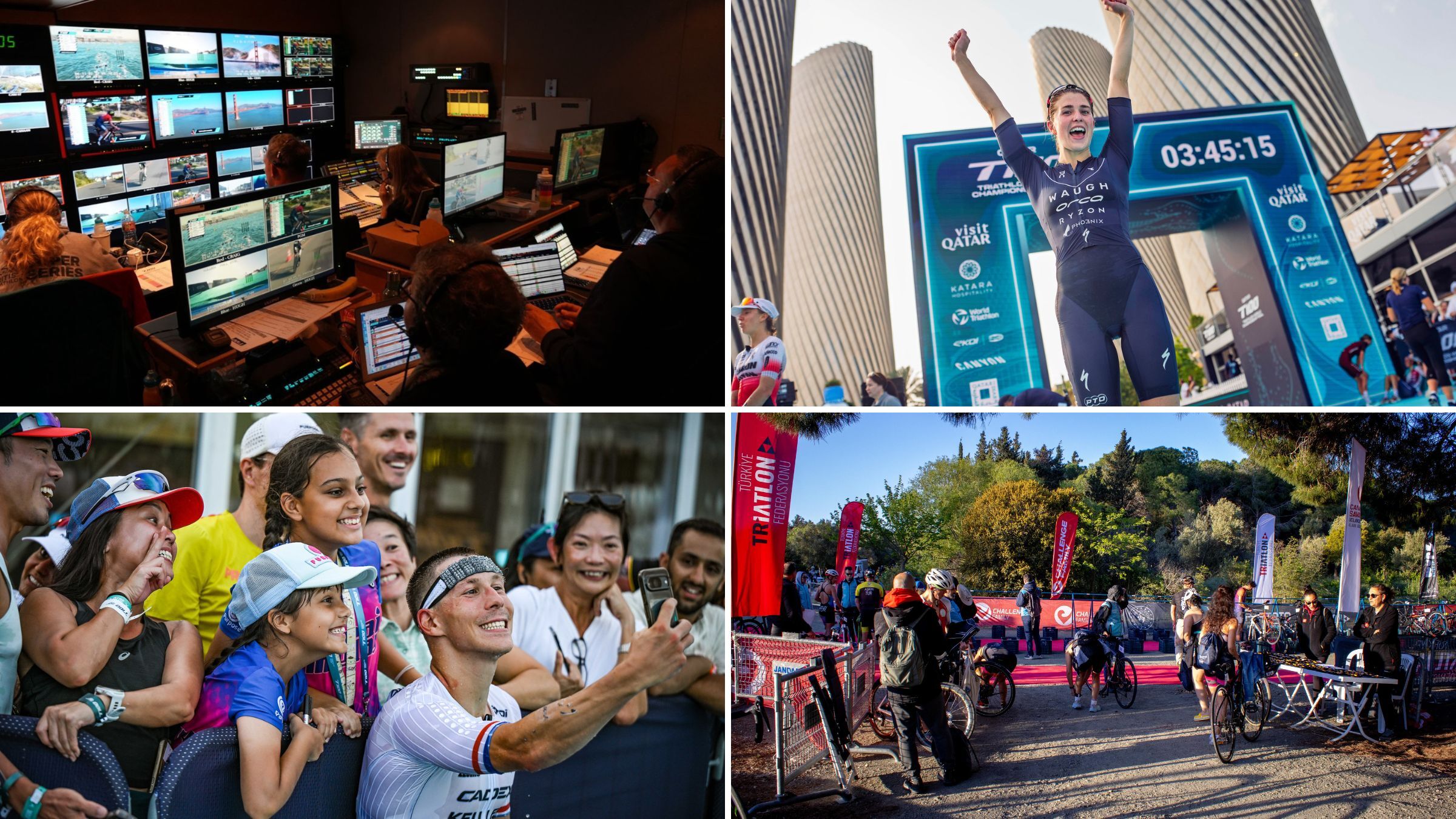
If you were to zip back in time to last January and tell me we’d be crowning two Norwegian world champions and a female British T100 Tour winner in 2025, I’d roll my eyes and simply say, “Well, of course Kristian Blummenfelt, Gustav Iden, and Lucy Charles-Barclay are going to have amazing years. Business as usual.” But if, back then, you gave me the names Casper Stornes, Solveig Løvseth, and Kate Waugh, I’d probably have to do some Googling – and I’d probably not turn up much (no offense, early 2025 versions of those three).
But that’s what made 2025 so exciting for pro racing: names you didn’t recognize toppling lots (and lots) of names you do. I wouldn’t have guessed that the third Norwegian to finish the Ironman World Championship in Nice would be Gustav Iden; I wouldn’t have guessed that both Lucy Charles-Barclay and Taylor Knibb would lead, then drop out of the Ironman World Championship in Kona; I wouldn’t have guessed that a short-course specialist would effectively dominate an all-star middle-distance cast of T100 Tour women.
It’s with all that in mind that I hope 2026 sees more new names and fresh faces at the front of pro racing. If nothing else, these dark-horse upsets of 2025 should serve as inspiration to young pros (and, well, the rest of us) that nothing is decided until the race is over, and that we shouldn’t put limits on what we think we can do.
-Chris Foster, editor-in-chief
Championing the sprint and Olympic distances
Four weekends a year, I get to be the smiling face behind the registration table as triathletes arrive to race. As I get them checked in as the sun just begins to rise, I love asking the question, “What distance are you doing today?” And all too often, I hear the words “just the sprint” like there’s some sort of shame in that or that they won’t be accomplishing something great when they cross the finish line.
As a busy parent and someone who is starting to face the reality that I don’t have the same youthful joints and tendons I showed up to my first triathlon with, I’ve come to love the sprint distance and how much balance it still allows for in life. And the reality is, you can do so much work and have so much fun working on your sprint skills and racing all over the country in some of the friendliest, most down-to-earth races.
At sprint and Olympic races, you’re often racing local, alongside your peers, perhaps alongside first-timers who you get to welcome to the sport. The stress levels are low, entry fees are reasonable, and you get to just enjoy the sport (as much as you possibly can when pushing yourself to your limits, of course).
Yes, longer races are impressive and worth taking on. But you’re a triathlete no matter how far you swim, bike, and run.
– Rebekah Brately, associate editor
Improvements to race broadcasts
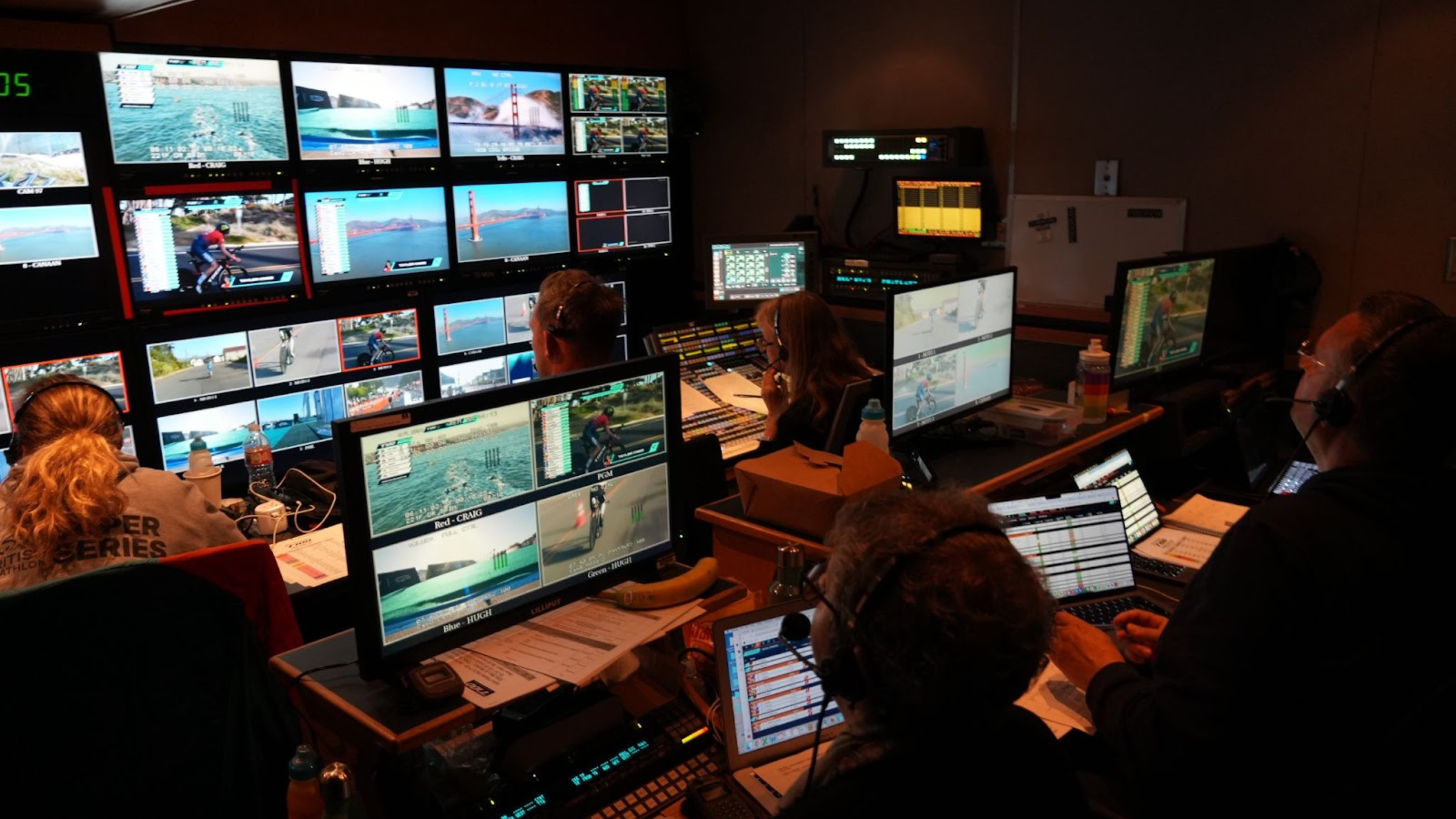
From the time I started watching triathlon 15 years ago to now, broadcast coverage has changed dramatically. Back then, far fewer races were streamed, camera angles were limited, on-screen data was sparse, and overall video coverage was minimal. Fast forward to today, and the level has risen significantly. Organizations like the PTO and T100 have taken real ownership of long-course racing, investing heavily in production, large broadcast teams, in-depth graphics, and second-screen data that add real context to the racing.
Ironman, too, has stepped up its broadcast in recent years. Coverage of the Pro Series now includes more graphics, stronger pre-race buildup, and more insightful color commentary from former athletes like Craig Alexander and Daniela Ryf. In 2025, Ironman also began working with Starlink GPS tracking “to help eliminate dark zones and ensure that viewers don’t miss a second of the action.” Looking ahead to 2026, the organization has promised a bigger and better broadcast around the return to a one-day Kona, addressing concerns that women could lose visibility racing alongside the men. As Ironman has stated, “Innovations in the one-day event format will include enhanced and equal broadcast coverage for women and men…”
On the short-course side, World Triathlon has also leveled up dramatically, with even more progress expected following its “merger” with T100 beginning in 2027. Supertri, meanwhile, continues to push boundaries with short, made-for-broadcast formats, FPV drones, and static camera setups that capture the action more like a Formula 1 race.
Beyond live coverage, there is now a constant build-up on YouTube and social media in the lead-up to events, along with supporting interviews, explainers, and broadcast graphics that help paint a much bigger picture than the race alone.
That said, this can’t be where progress stops. Triathlon is still a challenging sport for the average viewer to digest, and the moment we settle is the moment we fall behind. The benchmark isn’t where triathlon was 15 years ago – it’s the other sports competing for the same attention. Those sports, despite being far ahead in resources and capabilities, continue to evolve in how they tell stories and showcase competition. For our sport, that means we need to continue to invest in more cameras, more drones, better tracking, and a continued focus on making the swim – the very start of our sport – far more compelling and understandable for viewers.
-Travis Mundell, social media manager
Reducing, re-using, recycling
I am the type of person who refuses to replace gear until I absolutely have to, and I’ve got the 15-year-old bike shoes to prove it. As such, I bristle at the belief so many triathletes have about “newer is better.” At Triathlete, we test plenty of new triathlon gear every year, and though there are certainly some impressive developments worth noting. The biggest takeaway is this: most of your gear from last year, three years ago, and even 10 years ago, so long as it still fits and functions properly, is worth keeping.
The reality is that the difference from one model year to the next is often negligible for the majority of age-group athletes. Your fitness, training consistency, race-day preparation, and execution will almost always matter more than the single watt saved by a shiny new thing. It’s far more sustainable to prioritize maintenance of the gear you have over never-ending upgrades.
When it finally does come time to replace something that is genuinely failing, like a smartwatch that no longer holds a charge, remember that new gear doesn’t have to be brand-new. I’ve saved a lot of money over the years buying used bikes, wetsuits, and clothing online from triathletes who bought brand-new gear with good intentions but not-so-good follow-through. This approach allows a smart, budget-conscious triathlete to access premium quality without paying a premium price.
Speaking of which: If you’ve got good gear collecting dust in your closet or garage, why not help your fellow triathletes out? List it on resale marketplaces so someone can put it to use, or better yet, donate to a group like TriThrift or Gear Up, Give Back, where your used gear could help new athletes get into the sport. If the gear is truly at the end of its life, find a recycling program that can give it a new use; options include Soles4Souls for running shoes or RipCurl for wetsuits.
-Susan Lacke, senior editor
Less
Barriers to entry for small events
There’s a lot of seemingly good news around the health of the sport of triathlon: participation in series like Ironman, Challenge Family, and Supertri are up by quite a bit, and the sentiment among industry insiders is that triathlon’s slow decline since the beginning of the COVID pandemic is ending. However, there is mounting evidence that small, local races are withering on the vine far faster than new ones are sprouting up.
In the short term, losing smaller races here and there won’t impact overall triathlon participation numbers, but very few new triathletes do an Ironman or Challenge Family event (many, however, will do a “by Supertri” event like Chicago or Austin), and if you don’t have new triathletes now, you won’t have veteran triathletes later.
While many may instinctively point to consolidation as the biggest threat to small, independent races, it’s not that simple: Most race directors don’t necessarily fear behemoth, monopolistic competition putting them under; most fear fickle communities (and their governance) and rising costs around insurance, public works, services, and cost of goods. Big events can weather these things, because…well, they’re bigger. Many race directors also fear the inevitable march of time, as we see many organizers retiring from the role with no one to hand the reins to.
In previous years, we’ve asked the question: Why aren’t you doing more local races? And while we still think that’s crucial (so crucial that we just published our favorite local tris for 2026), it’s also worth figuring out what it’ll take to help existing races stay alive, how to hand off events when race directors retire, and how the sport can possibly “till the ground” to make a fertile environment for new events to grow.
– Chris Foster, editor-in-chief
Triathletes on social media
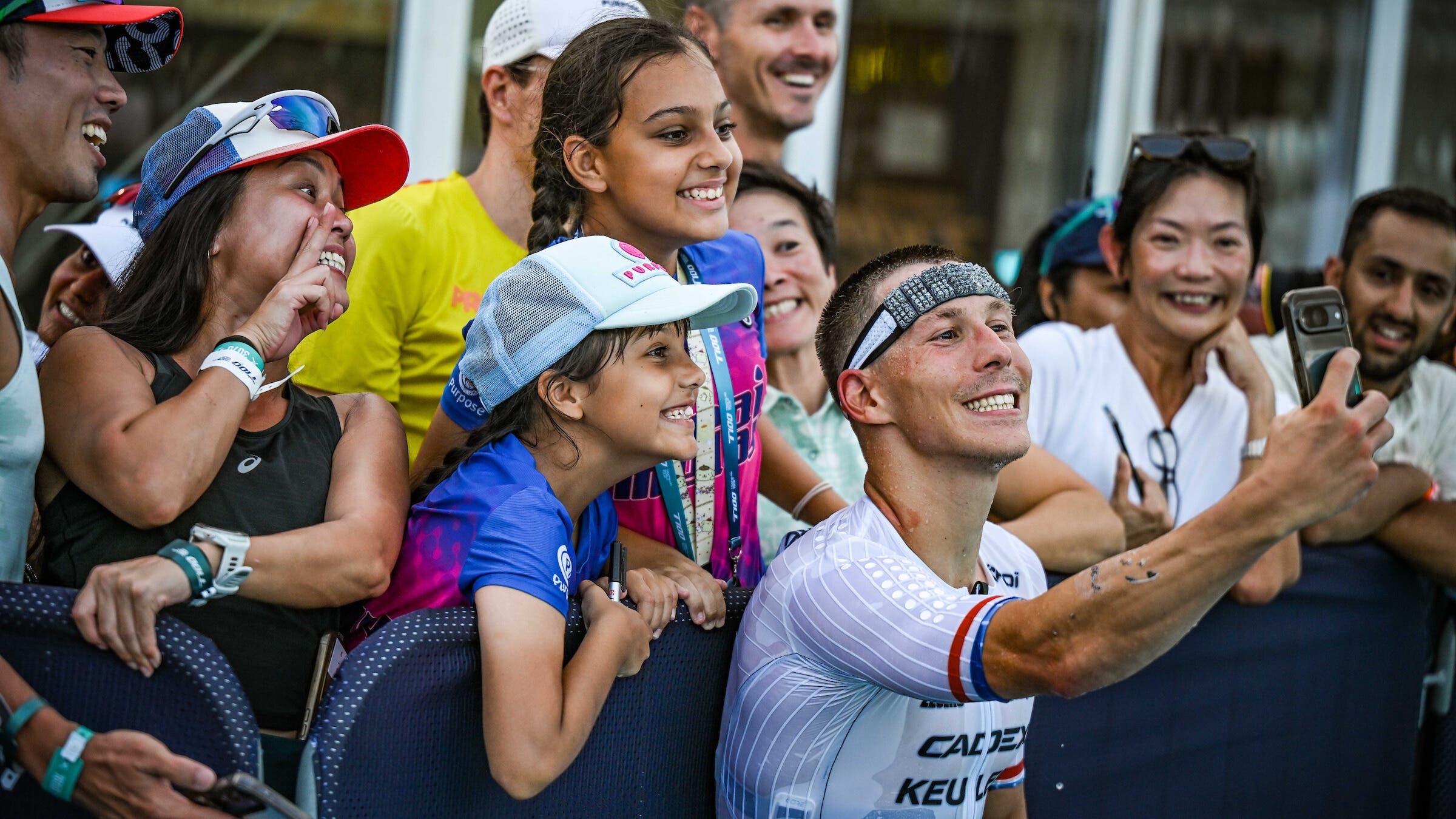
Over the past few years, I’ve phased out my use of social media, and let me tell you: it’s lovely on the other side. My training is better, my focus is sharper, my sleep is more restful, and I feel genuinely liberated from the expectations of others. Triathlon became fun again when I got off the apps.
I’m not going to go on an old-person rant about how all social media is bad – certainly, some influencers are doing really cool things to bring more people into triathlon. But the average person spends about two hours a day on social media, and frankly, I’ve got better things to do than trudge through overly-curated feeds and an ever-increasing amount of bad advice from self-proclaimed “experts.”
Because let’s be real: training for a triathlon requires a lot of physical and mental effort, and that’s on top of the physical and mental effort of working, caring for friends and family, and generally existing as a human in 2026. I don’t need to drain myself even more by doom-scrolling or falling into a comparison trap of my competitors’ six-minute miles on Strava and perfectly plated post-workout meals on Instagram.
Instead, I choose to reclaim my time in ways that actually benefit me: getting an extra stretching session in, grabbing a post-ride coffee with my favorite training buddies, trying a new Masters swim group, reading a book, volunteering at a race, or simply going to bed earlier. These are the things that make us better triathletes and humans, not the number of likes on a post.
Delete your accounts. By this time next year, you’ll be so glad you did.
-Susan Lacke, senior editor
Flying solo
I get it. We’re not all at the same point in our triathlon journeys. In fact, it’s rare that we’re even remotely aligned in fitness in one sport, let alone all three. I also understand that fitting training into a week is hard enough, and lining up schedules can feel like trying to split an atom.
Still, there’s a trend I’m seeing – and struggling to watch – where people have settled into training alone, all the time.
Even at the professional level, where athletes may differ by less than 1% in at least two of the three disciplines, training together seems to happen less and less. And yes, training solo is easier. It’s simpler, more controllable, and probably keeps you right in that LT1 space you’re chasing to mimic your favorite pro. Trust me, I’m guilty of it too. But in my opinion, turning training into a purely solo pursuit carries real long-term downsides.
Organizing a group ride, a track workout, or a swim session takes effort. It’s hard work. But the payoff – in motivation, accountability, and genuine connection – is massive. Not to mention how much easier it is to get through a tough session with others (as long as no one’s forcing the pace). We all know the saying: shared pain is half the pain.
You might not have a big tri club nearby. You might not know anyone who does triathlon – or anyone you actually want to train with. But there are still options. Ride online with others if you have a smart trainer and the right app like Rouvy. Join an indoor coached session on Velocity. Find a local Master’s swim, cycling, or running group. Get involved in online communities through Strava or INTVL, or even just share the experience through something like the TTL app. And who knows – maybe you’re the tri-club founder in your area that you’ve been waiting for.
-Travis Mundell, social media manager
Excessive gear
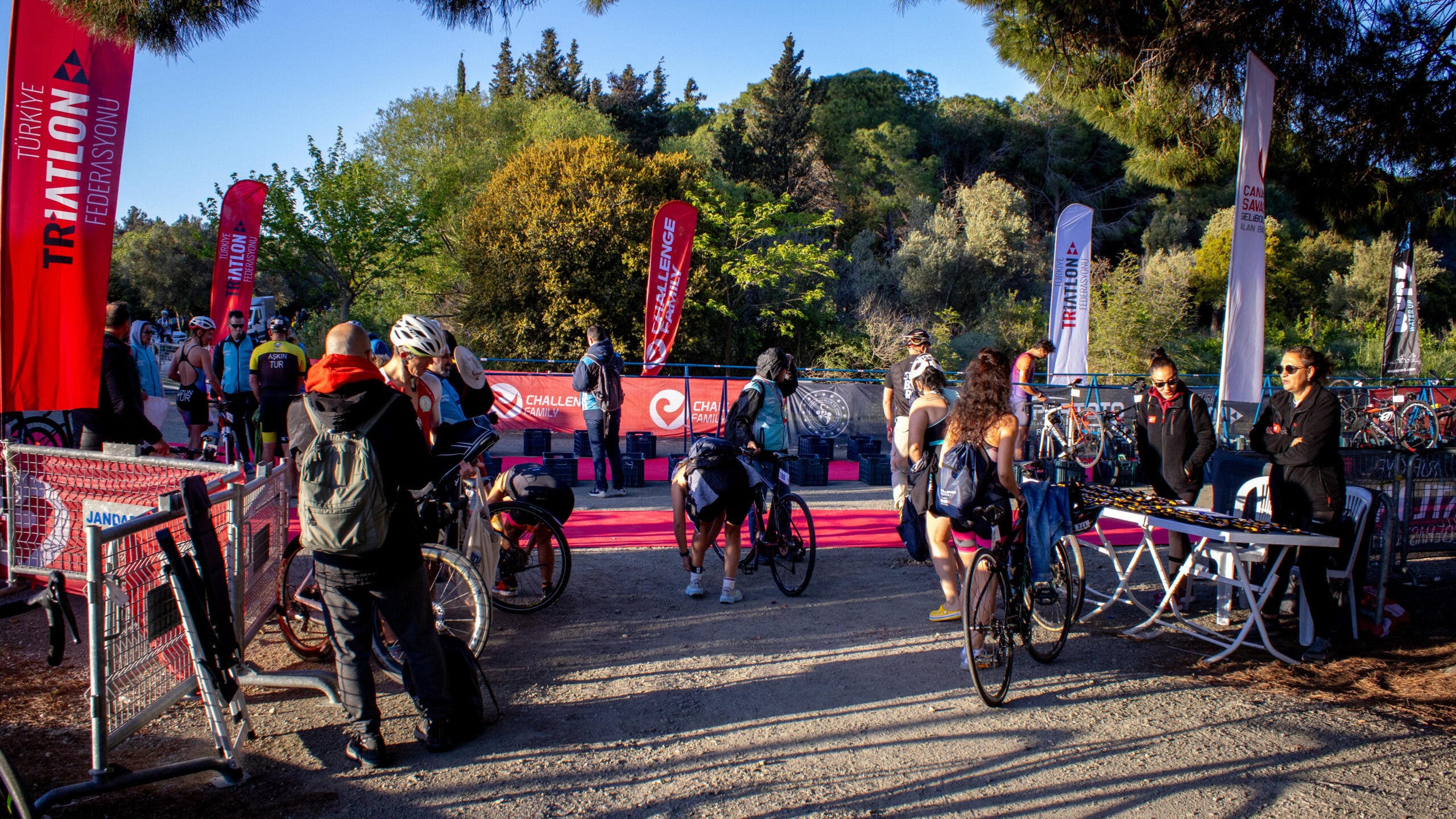
We could make our sport so much more approachable if we put less emphasis on gear and more on having fun in a very community-focused sport.
Don’t get me wrong, the gear is fun, and I think my family loves that there are so many gear options out there because there’s always something new to buy me for the holidays or another cheesy tee that talks about this crazy sport I love.
But when we act like one needs a $10,000 bike, a $500 tri kit, or smart goggles to get started in the sport, it makes triathlon seem elite.
I proudly did my first several races in a swimsuit (I actually had no idea until I showed up for the race that tri suits were a thing). You can get surprisingly fast on an old bike with the right training, as opposed to stretching yourself for the really expensive bike and investing less in training.
So yeah, keep having fun with gear. But don’t make it the center of triathlon. Let’s remember this is supposed to be a hobby, not a monthly mortgage payment.
– Rebekah Brately, associate editor
Single-use plastic at races
Using disposable plastic items is obviously not unique to triathlon – it’s part of American culture. But the amount of waste generated at races from things like disposable cups, plastic transition bags, water bottles and caps, and sports nutrition packaging is certainly not turning the tide on plastic use. (Not to mention, the cheaper and thinner the plastic and the more it degrades from things like heat, the more likely we are consuming microplastics at aid stations.)
On top of that, athletes are handed bags, tech T-shirts, marketing flyers/leaflets, towels, race bibs, and more when they check in – much of which is headed for the trash. The “stuff” has become a central part of endurance sports culture.
ADVERTISEMENT
And while I know some athletes treasure every finisher tee and drawstring bag they receive, some plop it straight in the donation box when they get home. Could races be more intentional about limiting the number of shirts printed? Could athletes “opt out” of the stuff for a discount on their registration fee? Could more races work with organizations (like this) that allow athletes to drink out of reusable vessels but then reclaim and sanitize them for other races to use? The planet would thank us.
—Bethany Mavis, contributing editor
