Updated October 10, 2025 11:44PM
Steph Clutterbuck’s OnlyFans Announcement is Kind of Brilliant, Actually
The sponsorship announcement, made on the eve of the Ironman World Championship, is controversial - but in triathlon’s current landscape, it’s also a smart business decision.
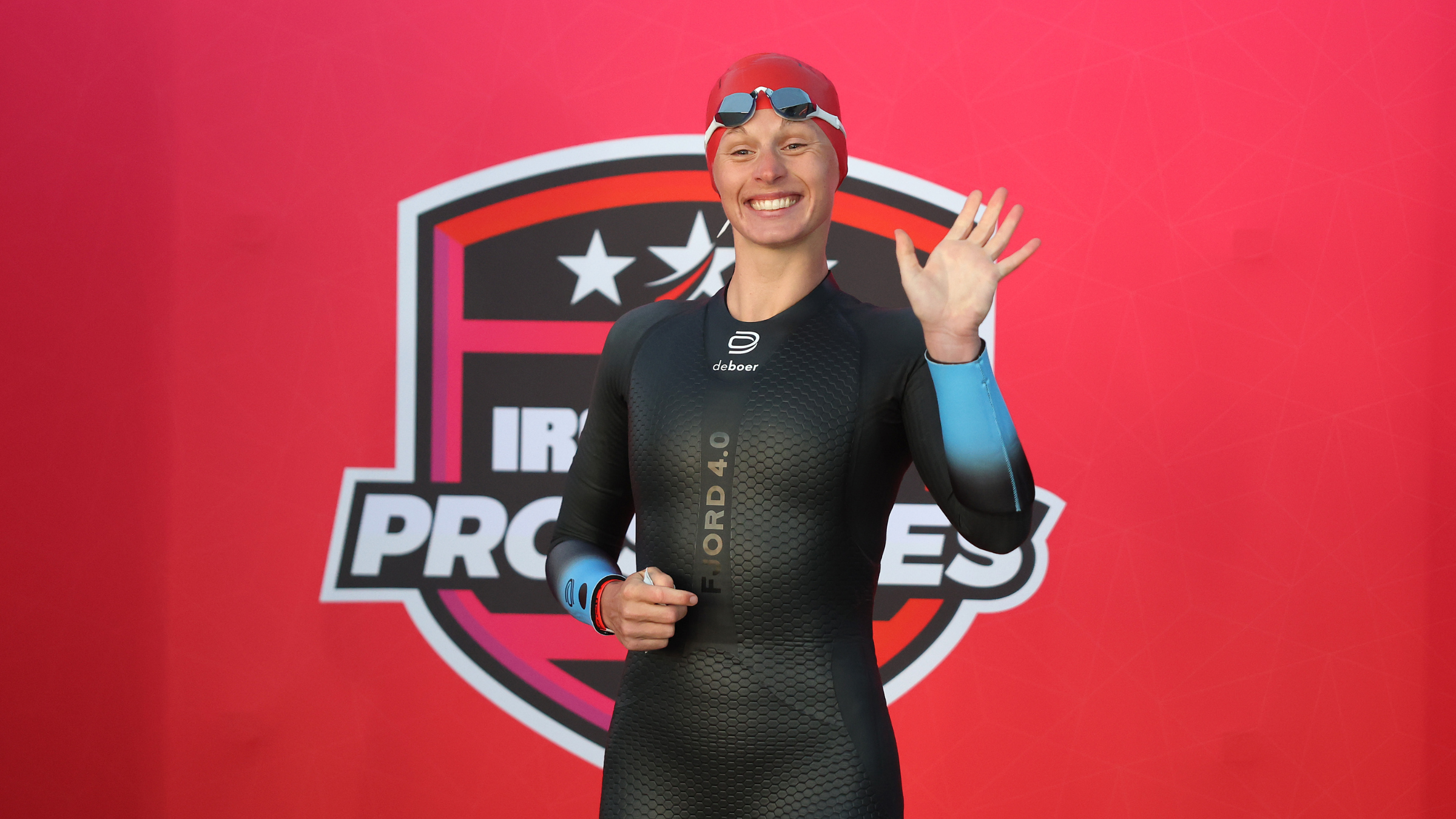
British pro triathlete Steph Clutterbuck announced a sponsorship deal with OnlyFans ahead of the 2025 Ironman World Championship. (Photo: Sean M. Haffey/Ironman)
In an Ironman World Championship week that has been all about the strength of women, today’s race-eve Instagram post by British pro triathlete Steph Clutterbuck, announcing a new sponsor in OnlyFans, may have felt in bad taste.
I’d argue the opposite: Clutterbuck made a smart choice, for more reasons than one.
For the uninitiated, OnlyFans is a site that allows content creators to post content that is only available to people who pay to see it. Think: Instagram, but with a subscription model. People use this subscription model to offer exclusive content to their subscribers; sometimes, that exclusive content is sexual in nature.
It’s important to note that as of this publishing, Clutterbuck has not said what kind of content she will post.
In her announcement, she simply said, “I am as committed as ever to lifting the veil on the life of being a pro athlete; the highs, lows and everything in between. I want it to be a place where I can connect with you to share the stories, challenges, and real-life moments that don’t always make it to social media.”
ADVERTISEMENT
But the specter of sex surrounds OnlyFans, and the announcement may cause some raised eyebrows. Why would someone want to be associated with such a brand? Isn’t it in poor taste to announce this kind of thing during Ironman World Championship week, which is supposed to be about women’s empowerment?
But think past your knee-jerk reaction, and you might see Clutterbuck’s announcement is actually quite empowering.
ADVERTISEMENT
The cost of doing business
It’s not a secret that triathlon is an expensive sport. Unless one is at the very pointy end of the field, a pro triathlete typically doesn’t get paid enough to cover their gear, much less the expenses associated with traveling around the world to race. Clutterbuck, who is currently ranked 89th in the Professional Triathletes Organization rankings, has raced three times this year, but only finished in the money once: eighth place at Texas, which netted her a whopping $3,000. Given the cost of a flight from her home in Great Britain, it’s likely she spent more traveling to Texas than she won.
Even though triathlon is notable for offering equal prize purses for men and women, the gender pay gap that exists throughout the United States (and many other countries) permeates triathlon sponsorship models. Getting a sponsor is hard, but anecdotally, it’s harder for women. Ask Jackie Hering, who holds the American record in Ironman racing and yet does not have a bike sponsor for this weekend’s race. (Her male American record-holding counterpart, Rudy von Berg, signed with Factor last year before finishing on the podium at the Ironman World Championship; he was previously with Trek).
Over the years, pro triathletes who are married to or in a relationship with other pros have shared with me that the man tends to have an easier time finding sponsors – even when the woman is the faster, more successful one.
ADVERTISEMENT
Psychology research might help to explain why. Women often encounter an “authority gap,” where they are underestimated and not taken as seriously as men, even when their competence is equal. The historical and societal assumption that men are more credible and authoritative plays out in many ways in our sport, including a built-in head start on obtaining sponsorship. There are substantially more men than women in long-course triathlon, and historically, race broadcasts have focused on men’s stories. For those reasons, brands may feel more inclined to use male pros as the billboard for their products.
It’s no surprise, then, that Clutterbuck is taking an opportunity for sponsorship through OnlyFans. She gets a platform to share what she wants to share, with those who want to pay for it. This isn’t completely without precedent – OnlyFans also sponsors ultrarunner Sabrina Stanley, as Jordan Blanco reported for Triathlete’s sister publication, Outside Run.
“A partnership with a company like OnlyFans is part of a broader trend – athletes taking control of their income and brand narrative when traditional companies and sponsors might not offer enough stability or dollars,” Blanco told me when I requested comment on the Clutterbuck news. “In Sabrina’s case, I feel her decision came from a place of empowerment, not provocation.”
ADVERTISEMENT
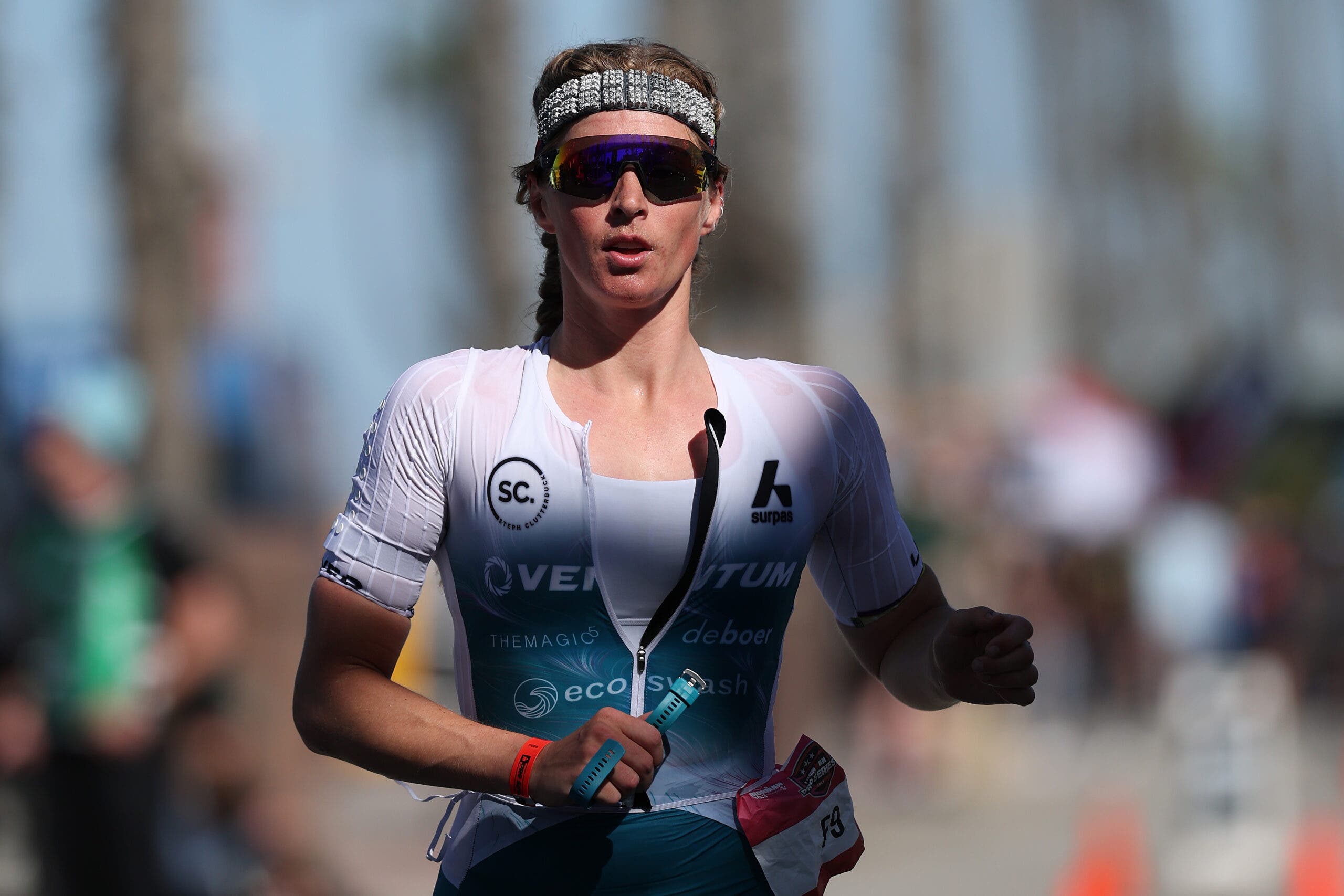
The fact that Clutterbuck chose the night before she raced the Ironman World Championship is also not without precedent – pro triathletes have unveiled new sponsors before big races plenty of times before. Announcing any one of the other sponsors on her kit, which include Ventum, Deboer, and TheMagic5, would likely be ignored.
In fact, the timing of Clutterbuck’s announcement is likely a shrewd business decision. In her announcement, she notes that before she was a pro triathlete, she was a content creator, so she knows that brands pay influencers based on their reach. More followers means more money. Courting a little bit of controversy the night before the race will likely mean her follower count will go up significantly while she’s on the Queen K. Those eyeballs might mean even more sponsors get on board.
One could argue that by aligning with OnlyFans, Clutterbuck is shutting out other sponsor opportunities. But if those opportunities actually existed in the first place, we wouldn’t be having this conversation right now.
Sex sells
Of course, there’s a chance of backlash for Clutterbuck. Aligning oneself with a site associated with sexual content is going to ruffle some feathers. If she decides to share sexual photos – and again, she has not described the nature of her OnlyFans content – there will be people who make disparaging comments.
ADVERTISEMENT
But what’s wrong with what she’s doing?
This is the part where I disclose that by day, I am an editor at Triathlete. But by night, I’m an academic. I have a doctorate in health education, and for the past 19 years, I’ve taught courses in health promotion and human development at colleges and universities around the country. My area of specialty is human sexuality. In other words: I talk about sex a lot.
But don’t we all? Just look around. Sex is everywhere, from the advertisements we see to the “that’s-what-she-said” style innuendos that make us laugh to the intimate moments that happen in private. Sexuality is a part of the human experience.
ADVERTISEMENT
The sex industry is controversial, and some people and organizations argue pornography is harmful. This is true in some respects: certain sites have profited from filming rape, sexual abuse, and child sex trafficking. The United Nations says the most common form of human trafficking is for purposes of sexual exploitation. The extreme nature of some pornography can reinforce unrealistic displays of intimacy.
But it’s also something that many people consciously seek out. A 2023 study found the top three pornography sites had more traffic than Amazon, Netflix, and Yahoo. Pornography is used for arousal. It is a way to escape reality and live out one’s fantasies. It invites conversations between partners about what they’re seeing, what they like and don’t like, which – if all goes well – leads to more fulfilling sex and even more fulfilling relationships. As a professor, I get a lot of questions about whether or not pornography is “bad.” My answer: Not always.
Clutterbuck has the choice of turning down OnlyFans if she wishes. She could very well take a traditional job in telemarketing or real estate to make ends meet. But her background is in content creation, so why not, you know, make content? At the end of the day, this is simply a business transaction; an exchange of time and talent for money. OnlyFans is worth a reported $8 billion – significantly higher than Ironman’s value, which was $730 million at the time of its sale to Advance Publications in 2020. Why not get a small piece of that pie?
Additionally, as Blanco pointed out in our conversation, the advantage of a platform like OnlyFans is that athletes can define their own boundaries – sexual or otherwise: “[Athletes] are using it for behind-the-scenes training content or fan engagement, in much the same way as they would do with Patreon or Substack.”
ADVERTISEMENT
Certainly, one must consider the fact that pro athletes are role models for others in the sport. Some may feel Clutterbuck’s example is not appropriate to follow. That’s OK – no one is saying you must follow them. You do not have to give OnlyFans your money if you don’t want to. You don’t even have to like Clutterbuck. There are probably plenty of pros you don’t particularly care for, personally, for various reasons. I encourage you to focus on the ones who do align with your values.
The art of the deal
In this, a week that is centered on celebrating women in triathlon, we must celebrate all women in triathlon. Clutterbuck should not be denigrated for her choice to align with OnlyFans. Rather, she should be proud of what she’s accomplished – getting paid for her unique skill set. She’s good enough at triathlon to become a professional, savvy enough at content creation to get paid for it, and smart enough to know how to maximize the opportunity.
Frankly, that’s good business.