Updated December 15, 2025 08:01AM
PTO CEO Sam Renouf on 2025 “Growing Pains,” Rebranding WTCS to T50, and a Triathlon Every Weekend
Despite the "growing pains" and event fiascos of 2025, the Professional Triathletes Organization is strengthening its partnership with a financially struggling World Triathlon to launch an all-encompassing Triathlon World Tour in 2027 and increase mass participation.
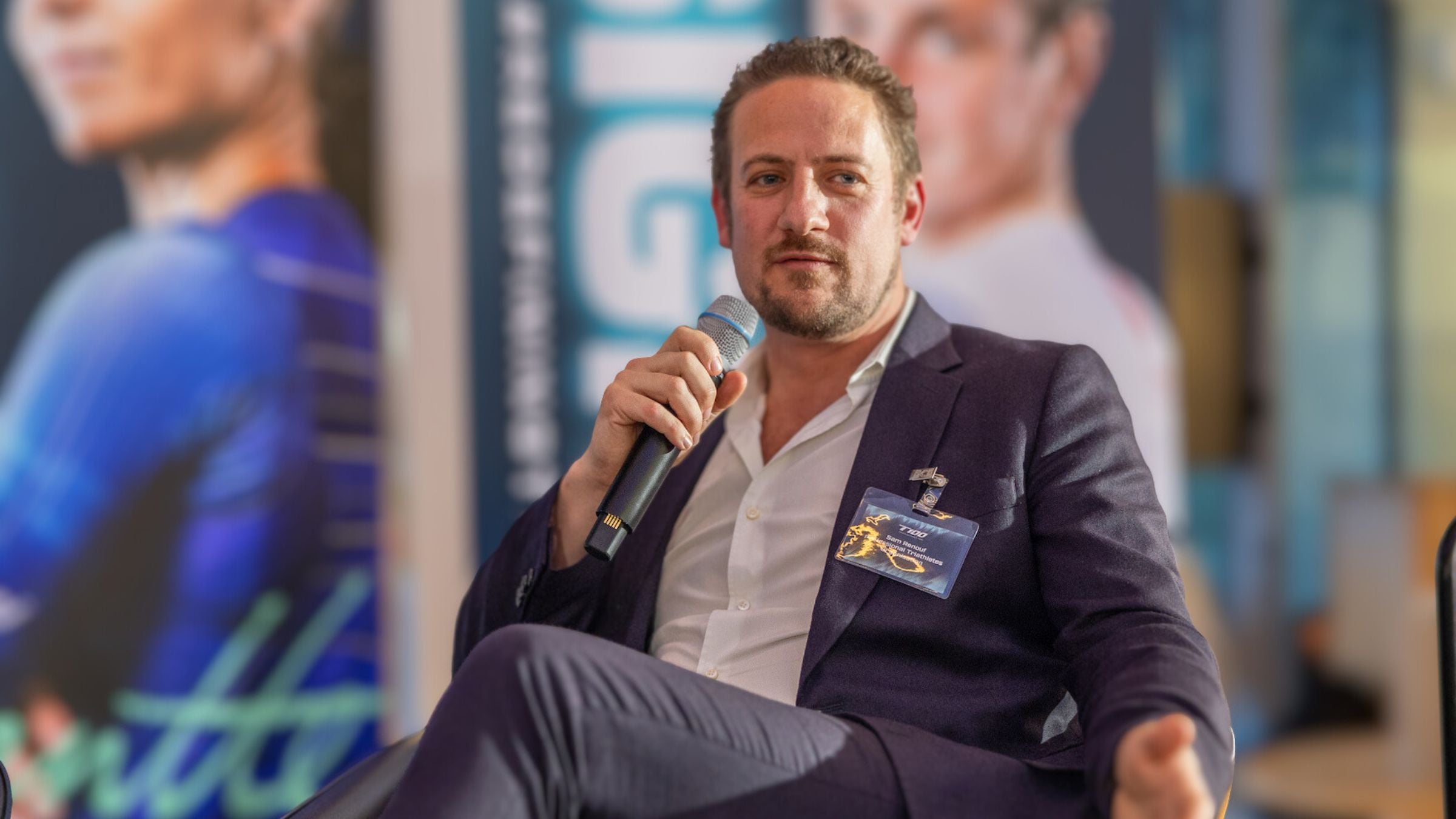
Sam Renouf, CEO of the Professional Triathletes Organization and T100 Tour, plans to rebound from a challenging 2025 with big plans for 2026 and beyond. (Photo: T100)
As chief executive of the Professional Triathletes Organization (PTO), Sam Renouf is always busy, but the past few weeks have been particularly hectic—even after nearly six years with the company.
Dealing with the fallout from the debacle of Dubai was closely followed by the T100 climax in Qatar, itself sandwiched between two major announcements: the finalized 2026 T100 calendar and a new all-encompassing Triathlon World Tour for 2027 that will strengthen ties with World Triathlon, deliver 100 events, and see traditional Olympic-distance racing renamed T50.
As we said: busy. When Renouf sat down with Triathlete for an end-of-year recap, there was a long list of discussion topics, from the mistakes that plagued the organization in 2025 to the requirement for more funding to deliver its most ambitious plans to date. The CEO was game to discuss it all, starting with a look at next year’s ambitious schedule of nine T100 events, including new additions like Saudi Arabia and a return to locations such as the French Riviera and San Francisco.
New races, new faces for T100 in 2026
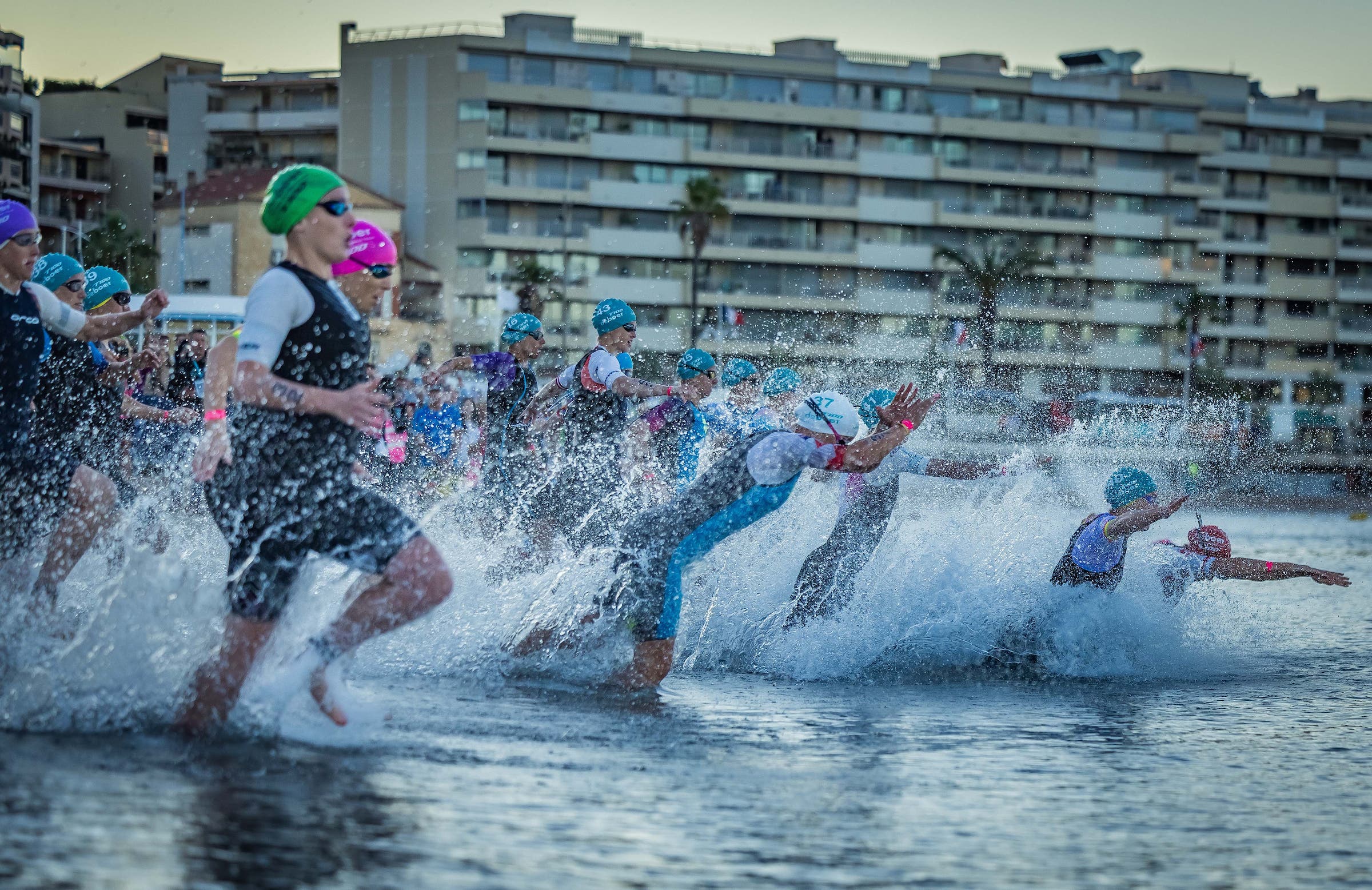
New for 2026 is the discontinuation of professional contracts and a new scheduling format, where races will alternate between men’s and women’s pro fields at each event ahead of the final round in Qatar.
ADVERTISEMENT
“The primary reason is we think it’s the right product,” Renouf explains of the scheduling change. Because each T100 race broadcast lasts around four hours, and because Ironman broadcasts were deemed, as he puts it, “too long to make an engaging TV product,” the middle-distance series decided to break their races down into easily-digested segments.
“Unfortunately, what we found over the last two years is that having men’s and women’s races back-to-back, we were ending up with a six- or seven-hour product, which isn’t the format that we think works for broadcasters, for fans on site, and ultimately to grow the sport,” he says.
As for the races themselves, the 2026 schedule is mostly in place, with final details on just one race to be confirmed.
“It’s still not as early as we’d like,” Renouf says, talking about the timing of releasing the full 2026 schedule. “But one positive thing is that the vast majority of events are multi-year deals, so we will be even earlier announcing ’27.”
ADVERTISEMENT
The T100 roster required a significant boost in confidence after the 2025 season was marked by a confusing series of date and location changes. Some original venues—Ibiza, Las Vegas, and Valencia—were pulled, with Wollongong and Oropesa del Mar stepping in. This instability negatively impacted not just fan engagement and ticket sales, but also professional athlete sentiment: 2024 T100 world champion Marten Van Riel expressed feeling that the commitment he and others made to the year’s schedule was undermined when races were canceled or rescheduled.
“It’s an outdoor sport, so there are a lot of factors that are outside our control,” Renouf adds. “So you can’t say with 100% certainty that something won’t happen that will impact an event. But we’ve got the structure and relationships in place to feel very confident that we’ll be able to deliver.”
In 2026, the tour will return to some locations familiar to triathlon fans: San Francisco or the French Riviera, namely. But there’s also a new race location that is both fresh and incredibly strategic for the T100 series.
The role of Saudi Arabia in T100’s growth (and finances)
Saudi Arabia is slated for a November race, but without a specific date or location named. Renouf says they are a few details away from making it public, but given there is a short-course World Cup on the final weekend in Jeddah, the Red Sea port city to the west of the country looks a strong favorite. Although it is intended to be a men-only pro race, Renouf says this doesn’t reflect the conservative culture of the region and is just a factor of scheduling. It will be women-only in Saudi in 2027.
ADVERTISEMENT
The location shouldn’t be surprising given that SURJ Sports Investments, the sports investment arm of Saudi Arabia’s Public Investment Fund (PIF), led the latest round of PTO funding with an estimated $40m investment in July. However, it does land against a backdrop of reports that PIF may be pulling back on sports spending.
“It’s not a concern because we’ve completed the investment already,” Renouf says. “If people are looking to raise funds, maybe it’s a different situation, but most of the high-profile reductions are on very large projects [LIV Golf; Saudi Pro League soccer], where we’re talking billions of dollars. Whereas, because we are a much smaller sport and we don’t have large capital infrastructure needs — we don’t need to go and build a stadium, for example — it benefits us.”
The cash demands aren’t slowing down, but more than anyone else in triathlon, Renouf has proved exceptional at convincing investors to part with their money, so how long before the next round of funding is required? “With the expansion of the extra races, we’ll look at another capital raise next year,” he adds. “That would mainly be from our existing investors, but it’s not to say we’ll turn away new investors.”
ADVERTISEMENT
Having gone through several rounds of investment, the company structure has changed since Silicon Valley billionaire Michael Moritz rescued the cash-strapped project on the eve of the pandemic, but not in its entirety.
“The majority of the shares are still held by Sir Michael Moritz, because he’s participated in every round since we started,” Renouf says. “SURJ led our C round, so they are a larger minority stakeholder, and it’s a real mixture of institutional capital and high-net-worth individuals.” Other investors include Cordillera Investment Partners, Verance Capital and Divergence Investment.
He argues the Saudi investment wasn’t just financial. “One of the main reasons for their investment is to increase mass participation across the kingdom, and we’re obviously a great way to do that. Hence, having Saudi Arabian events and our recently announced MOU (memorandum of understanding) with the triathlon federation to support the growth.” As for Renouf’s own shareholding, he declares he doesn’t know but says PTO runs “a normal management equity program, just like other venture-capital-backed businesses.”
ADVERTISEMENT
The PTO certainly doesn’t want the investment pipeline to stop, because by 2027, it will be supercharged beyond anything they’ve committed to thus far.
T100, World Triathlon take partnership to next step with WTCS rebranding
The strengthened partnership with World Triathlon sees its flagship World Triathlon Championship Series (WTCS) rebranded as T50 and, along with the second-tier World Cups, joins T100 to be reshaped as the Triathlon World Tour.
Part of this reworking is around Olympic pathways and ambition. The WTCS is the primary competition for athletes to qualify for Los Angeles 2028, and if T100 is to join them from 2032 in Brisbane (at the earliest), it needs to provide a similar opportunity rather than being a closed shop for contracted athletes. As such, the current T100 field size, capped at 20, is likely to rise.
One notable omission from the current WTCS calendar is the longstanding lack of any Olympic-distance racing in the USA ahead of LA 2028. Renouf says it is something they’ll be looking to correct and has not ruled out a partnership with an organization such as Supertri, who now own some of the biggest short-course racing events in North America, in Austin and Chicago.
ADVERTISEMENT
For amateur triathletes, the focus is on expanding racing opportunities, including more locations and varied distances. Starting in 2027, competitive age-groupers who previously might have represented their nation at the standard distance (such as in Pontevedra in 2026) will instead target the T50 World Championships in Hamburg. While each event will feature multiple distances for amateurs, it will be named after the single professional race, for example, T50 Yokohama or T100 Gold Coast.
The move to mass participation and media
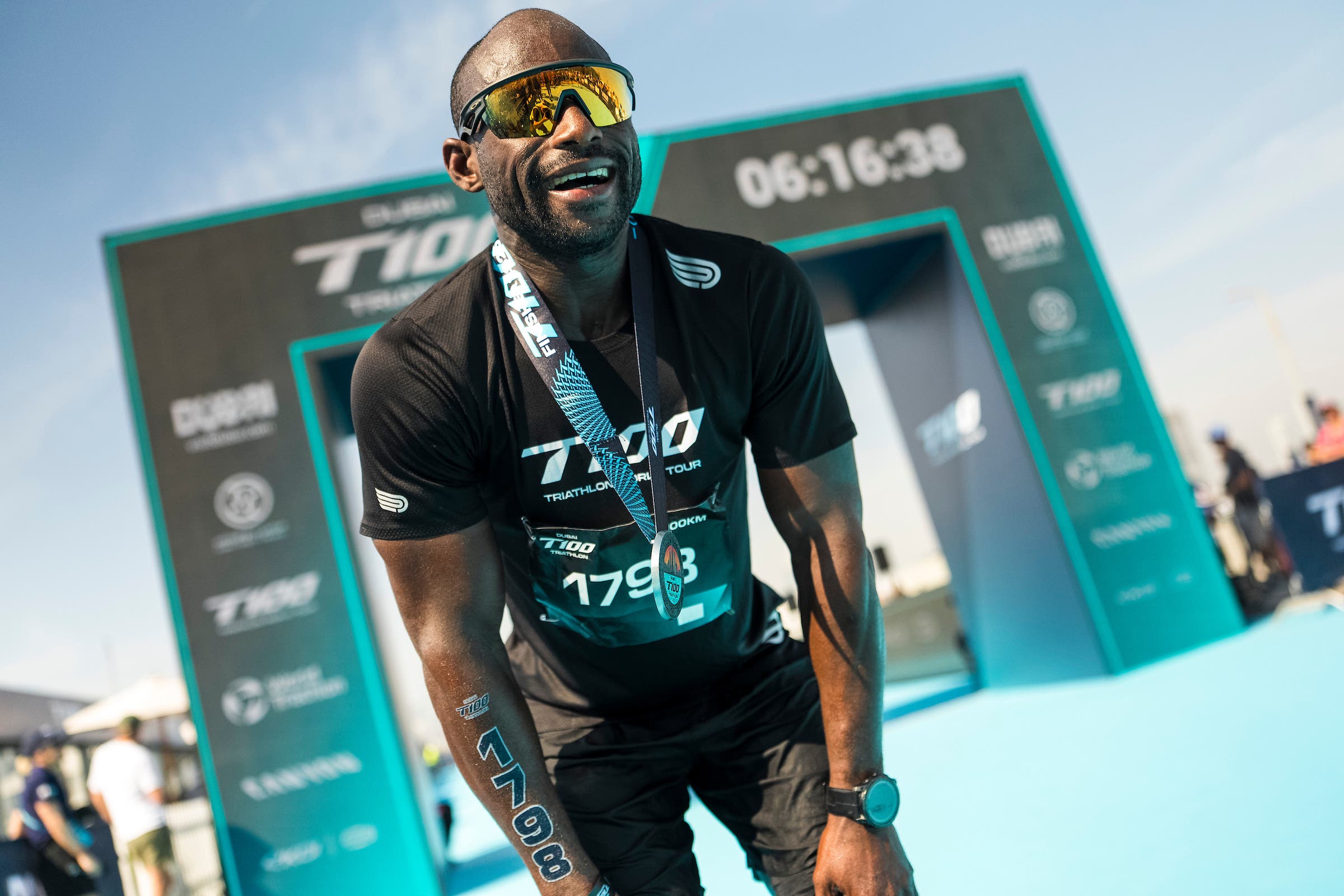
Mass-participation events are now a cornerstone of PTO’s business model, but while Renouf is adamant that it was always the case, it’s been heightened by the reduced revenue potential of media rights.
“One difference, if we go back to the genesis of PTO around 10 years ago, is that media rights were at an all-time high and continuing to grow,” he says. “Fast-forward to now, and everyone knows media rights are a huge challenge outside the very top-tier sports.
“The impact is to shut up shop or pivot to where there are opportunities to make money. Broadcast is still an important model to consolidate the audience, but it’s monetized indirectly through sponsorship, hosting fees, and age-group participation.”
Not that PTO is turning off the cameras. If the World Triathlon Tour proceeds as planned, fans could have the opportunity to watch a live triathlon almost every weekend come 2027.
ADVERTISEMENT
“It’s not perfect, but we’re beginning to get a strong broadcast product that’s getting good ratings, and it’s well-received by our partners,” Renouf adds. “Part of the strategy is to increase the volume. If triathlon is ready to go mainstream, you can’t do it on nine broadcasts a year. You need to be repetitive again and again, and so we will be scaling up. We might not manage all 100 events in 2027, but it’s our goal to create broadcastable content at every event.”
All of this is an early festive gift for World Triathlon, whose latest audited accounts show its precarious financial position — a loss of $683,603 once the success of underlying investments is omitted — and a need, as outlined by its recently commissioned Future of Triathlon study from Deloitte, for “transformative change” to attract the next generation of fans and participants.
The PTO claims the partnership helps legitimize its own offerings, and Renouf wasn’t fazed by recent corruption allegations at the governing body. “We’ve developed a close relationship with World Triathlon and continue to do so,” he adds. “We, and our investors, do not have concerns with [World Triathlon president] Antonio Arimany and his integrity, and we wouldn’t be doing a partnership if we did have concerns.
“But we do have concerns as a sport on the negativity this drives, and the headlines around all the things that have happened. I think that holds the sport back, so we want to move past that narrative to focus on growth and positive things. We are aligned with World Triathlon and the direction they want to go.”
ADVERTISEMENT
Growing pains for PTO and T100
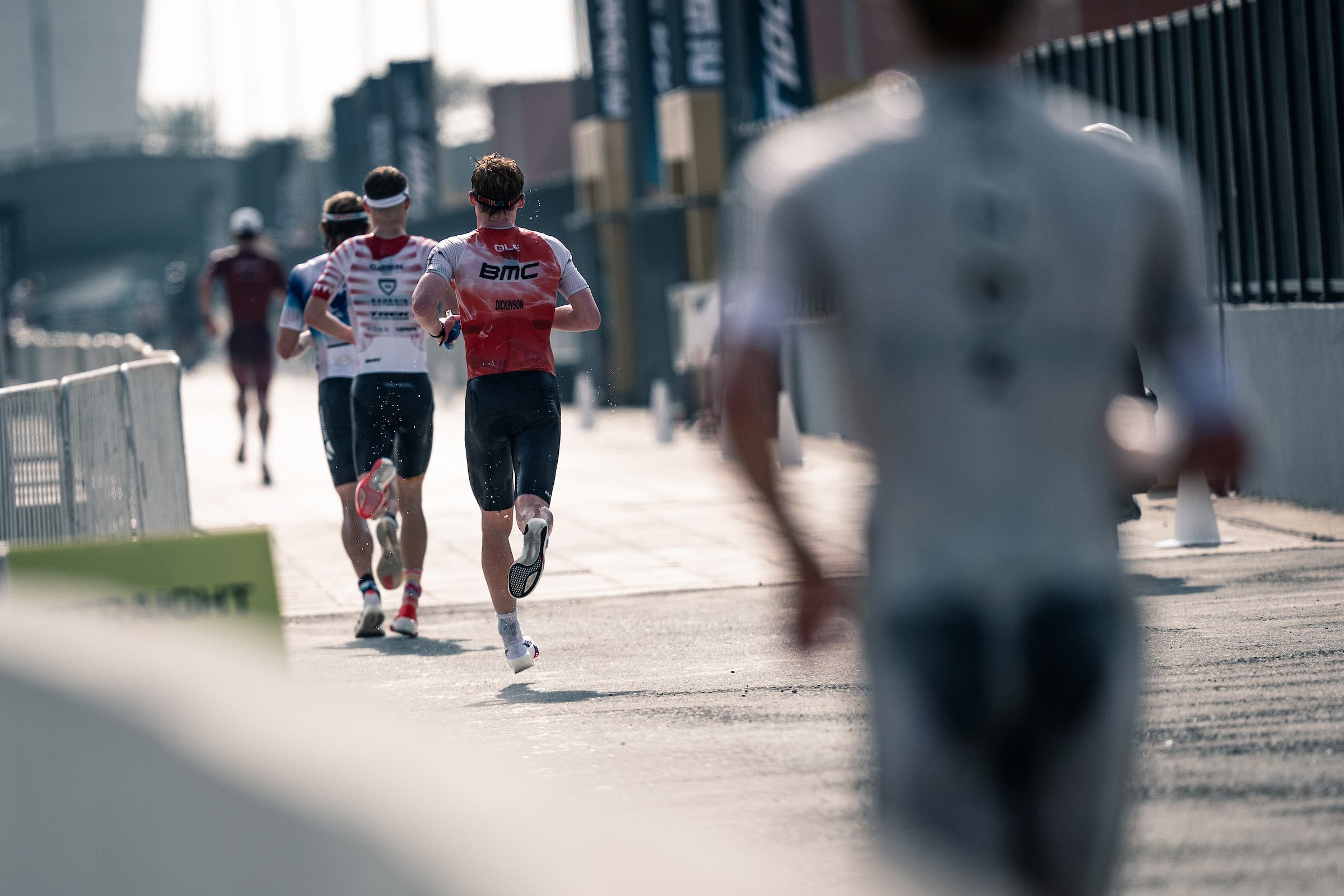
The PTO has faced no little criticism itself this year. From event cancellations to a furor over whether Hayden Wilde should have been disqualified for wearing non-approved running shoes, to challenges with the course at the French Riviera, and the biggest of the shambles in Dubai, where almost the whole field completed either too many or too few laps on the bike and run, and most of the blame was shouldered by the organizers.
“I won’t shy away from it. It has been a very challenging year, and we had a lot of growing pains,” Renouf says. “We had the investment round we went through and were happy with the outcome, but it took us longer to do it [than planned], and put a lot of strain on the events and the delivery. That had a knock-on effect to a couple of ‘unforced errors’ around scheduling that we were disappointed with, and certainly not how we want to operate at all. But moving forward, we’re happy to have gotten through the year and delivered great racing.”
ADVERTISEMENT
Following Dubai, operational changes were made for the final race of the season in Qatar, which Renouf described as “technology and manual failsafes,” and included the use of a bell for the final lap on both the bike and run. But given the high-profile mistakes in the penultimate event, should he have taken accountability and resigned?
“Although there were issues, I didn’t think it was worthy of me stepping down from the role,” he continues. “There is so much we’re doing to grow the sport, I think in the totality this will be an unfortunate blip, but a blip nonetheless. It’s not a particularly articulate way of apologizing, but I don’t think it’s of the gravity of needing a head to roll, mine or anybody else’s.
“We didn’t fire anybody on the operations team, and we did not change the suppliers, even though it was impacted by a technology problem, because it was an unfortunate accident or occurrence that we’ve put in measures to not repeat again.”
ADVERTISEMENT
But is that a position the investors are happy with? “All of the investors were very aware of it and wanted to understand [what happened], including our hosts in Dubai, as it obviously reflects on them. Once we went through the root cause and what we’ve changed, everyone has been satisfied.”
He adds that one of his biggest frustrations was that it detracted from a hugely successful 8,000-strong amateur event, and with registration opening almost immediately for 2026, giving some validation for the organizers’ ongoing faith in the PTO.
Moving forward, however embarrassing Dubai proved, it will become just a footnote if the partnership with World Triathlon can deliver on its promise. “Our investors are very positive about the change we can have,” he says. “There aren’t many sports that can go this way, and we’re excited to see it as a case study – not just in endurance sport, but in general, of a federation working with a private operator like us to take it forward.”
It will mean millions more dollars are needed before the PTO and World Triathlon can eventually deliver a profitable business model, but Renouf remains convinced it is the right way to proceed.
ADVERTISEMENT
“Federations are not set up to make those investments themselves, so it doesn’t mean we’re handing over a bunch of money to World Triathlon, but we’re investing in their events. And it’s going to take significant investment to take the events to the level we need to get to.”
T100 Triathlon World Tour 2026 schedule
| Date | Location | Field |
| March 21-22 | T100 Gold Coast | WPRO |
| April 25-26 | T100 Singapore | MPRO |
| May 23-24 | T100 Spain | WPRO |
| June 6-7 | T100 San Francisco | MPRO |
| August 15-16 | T100 Vancouver | WPRO |
| September 19-20 | T100 French Riviera | MPRO |
| November 12-15 | T100 Dubai | WPRO |
| November (TBD) | T100 Saudia Arabia | MPRO |
| December 11-12 | T100 Qatar | WPRO and MPRO |
