Updated January 27, 2026 09:50AM
Ironman Increases Pro Drafting Distance From 12 Meters to 20 Meters
The Ironman Pro Series ups the ante with a new draft zone and an increase in RaceRanger technology. Get the details, plus what this means (and doesn’t mean) for age-groupers.
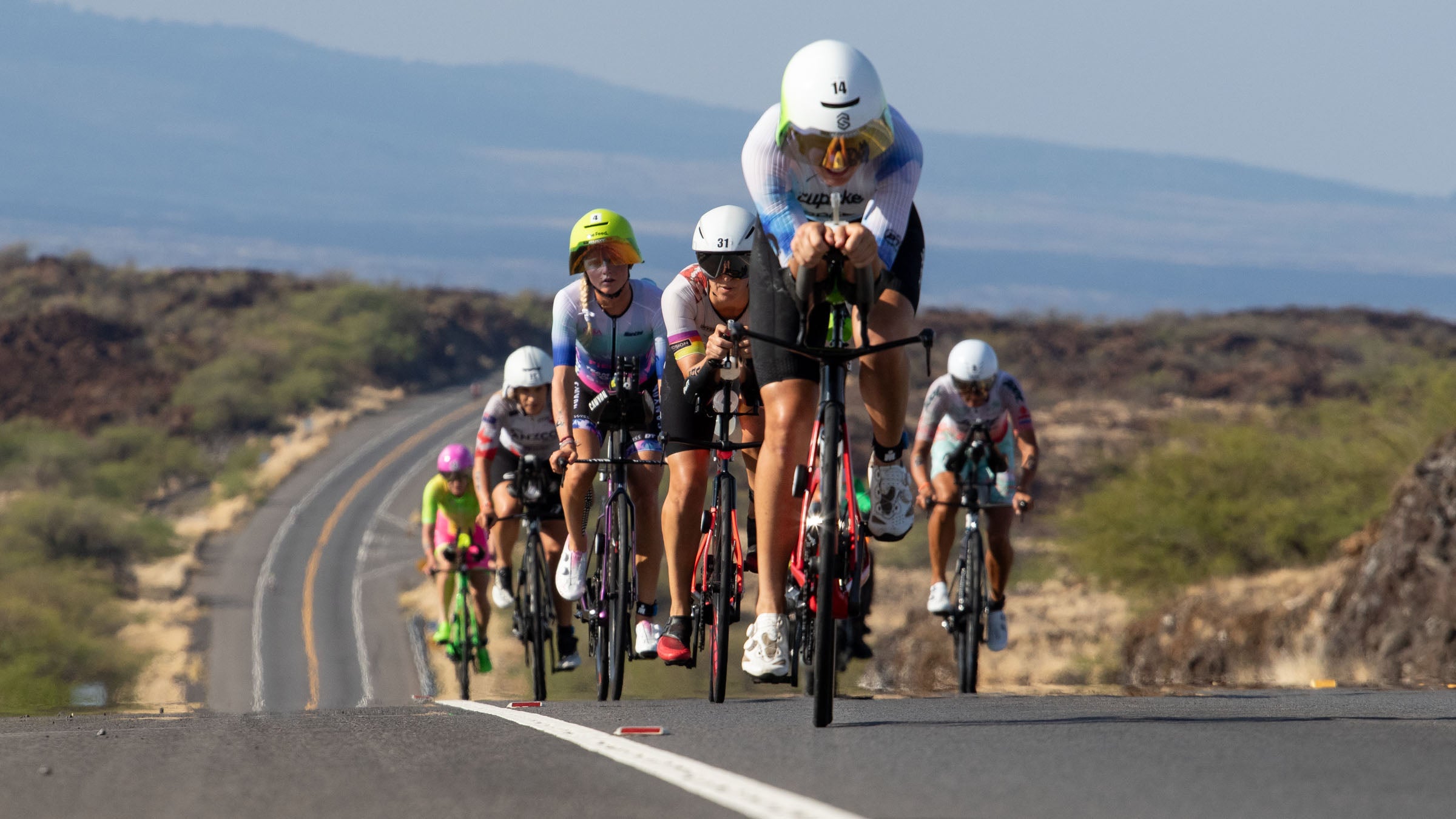
Ironman has increased its drafting zone for professional triathletes from 12 meters to 20 meters, the series announced today. (Photo: Brad Kaminski/Triathlete)
Starting in 2026, pro triathletes racing Ironman will have to keep their distance when racing – 20 meters, to be exact. The race series’ new rule, announced this morning and taking effect March 1, increases the Ironman and 70.3 professional athlete draft-zone distance from 12 meters to 20 meters, finally joining other pro long-course series like the T100 Tour and Challenge Family. Ironman and 70.3 age-group draft zones will remain unchanged.
The change comes after six months of what Ironman calls “scientific testing and research applied to race dynamics,” led by aerodynamics expert (and Triathlete contributor) Marc Graveline. The testing, which used professional athletes riding at 70.3 race speeds on bikes outfitted with RaceRanger technology, was designed to objectively measure the impact of various draft-zone distances on race dynamics, athlete performances, and course density.
Ironman’s testing revealed that increasing the draft zone from 12 meters to 16 meters did not result in any material change; however, the jump from 12 meters to 20 meters “significantly reduced aerodynamic benefits.”
ADVERTISEMENT
“When we began our research in mid-2025, our goal was to move beyond opinion and invest in principled and rigorous testing that could provide us with the objective insights needed to make a sound decision for the future of the sport,” Ironman CEO Scott DeRue said in a press release. “The data produced through this process delivered clear insights that a 20-meter draft zone meaningfully impacts race dynamics in the ways that uphold the integrity of our sport. Based on those findings, we are confident this change represents the right next step for the evolution of fair and competitive racing at the professional level.”
To effectively implement the new 20-meter draft zone, Ironman will expand its use of RaceRanger technology across more of its professional races. The brand began utilizing the anti-drafting technology at its Pro Series races in 2024 after a successful test event at Ironman Florida in 2023.
Additional details on the new rule, including the time allowed for passing, will be communicated at a later date.
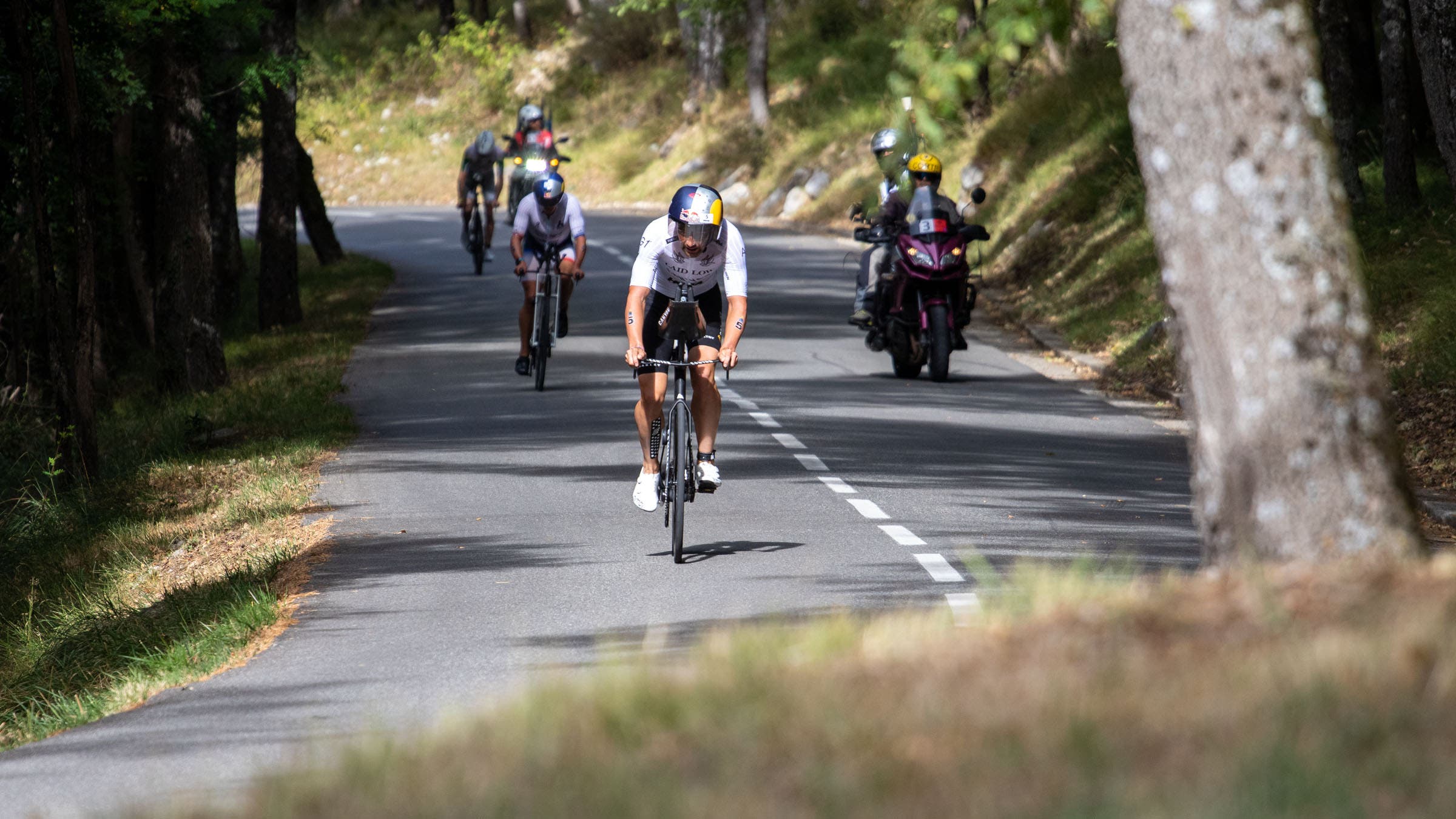
How does Ironman’s new draft zone rule stack up with other race series?
Ironman is the last of the professional long-course series to adopt a 20-meter draft zone. Other races have utilized 20-meter zones in pro racing for several years as a way of emphasizing individual effort. Challenge Family was the first, adopting the expanded zone in 2014 to “promote safe and fair racing,” while T100 has used the 20-meter rule in its pro series since 2023.
Triathlete’s 2025 analysis of draft zone violations in Ironman vs. T100 found a stark difference in drafting the two series, with Ironman’s 2025 12-meter draft zone seeing an average draft time of 1:09 for women, and 2:20 for men, compared to 25 and 53 seconds for T100 women and men, respectively. Though multiple factors come into play when comparing the two races, including field size and enforcement, a larger draft zone coupled with RaceRanger data has proven effective in reducing drafting penalties.
ADVERTISEMENT
2025 Ironman Pro Series and T100 Tour data: Average draft time
| 2025 T100 Average Draft Time | 2025 Ironman Pro Series Average Draft Time | Percent Difference | |
| Women | 0:25 | 1:09 | 176% |
| Men | 0:53 | 2:20 | 164% |
What does Ironman’s new draft zone rule mean for age-groupers?
Though the professionals must adhere to a new 20-meter draft zone at Ironman races – for both the full Ironman and 70.3 distances – age-grouper draft zones will remain at 12 meters. According to DeRue, this decision is based on “a very different set of factors, including racing speeds and course density,” for age-group competition.
This is in line with other series, including Challenge Family and T100, both of which follow World Triathlon standards for age-group long-course non-drafting events. Challenge Family has tested an expanded draft zone for age-groupers at select races, including St. Pölten, as well as a test of RaceRanger use in age-group fields at its race in Wanaka, but no widespread implementation has occurred at the amateur level.
The drafting zone remains at 12 meters long (approximately six bike lengths) and three meters wide, and age-group athletes have 25 seconds to complete a passing maneuver. The penalty for failing to complete this pass (or staying in the draft zone) is three minutes for iron-distance races and two minutes for half-iron distance events.
ADVERTISEMENT
What is RaceRanger?
As covered in previous stories by Triathlete, RaceRanger is an electronic system that uses a combination of technologies, including Bluetooth and GPS, to enforce drafting rules. Two devices are attached to the bike: one on the front fork, and one on the seat post. These devices “speak” to each other by detecting when one athlete nears the drafting zone of another, alerting the athlete and race officials to impending or completed violations. Devices also record data on the time spent in the draft zone, which race officials use post-event for rule enforcement. Ironman also provides personalized reports to every professional athlete at a race as a means of education and accountability.
After using RaceRanger at its Pro Series races in 2025, Ironman released a report stating the devices reduced the average illegal drafting time by more than 25% over the prior year.
ADVERTISEMENT
2025 Ironman Pro Series drafting data vs 2024
| 2025 Average Illegal Time | 2024 Average Illegal Time | Percent Change | |
| Women | 1:09 | 1:37 | -28.8% |
| Men | 2:20 | 3:08 | -25.5% |