Updated March 16, 2026 03:36PM
5 Most Epic Triathlon Swim Courses
Swirling currents, freezing fjords, and even occasional marine life—we asked the pros to rank the toughest swims in triathlon.

Photo: Getty Images / Al Bello
Most Epic Swim Courses in Triathlon
Of the three legs of a triathlon, the swim is the one that’s most likely to be affected by the weather. Take a glassy body of water and add strong wind or fast current, and it can feel like swimming in a washing machine. Choppy waves, chilly temperatures, and foggy conditions can turn a mellow swim into an adventure. We asked a handful of pros to name the most difficult swim courses, and these five rose to the top.
Escape From Alcatraz
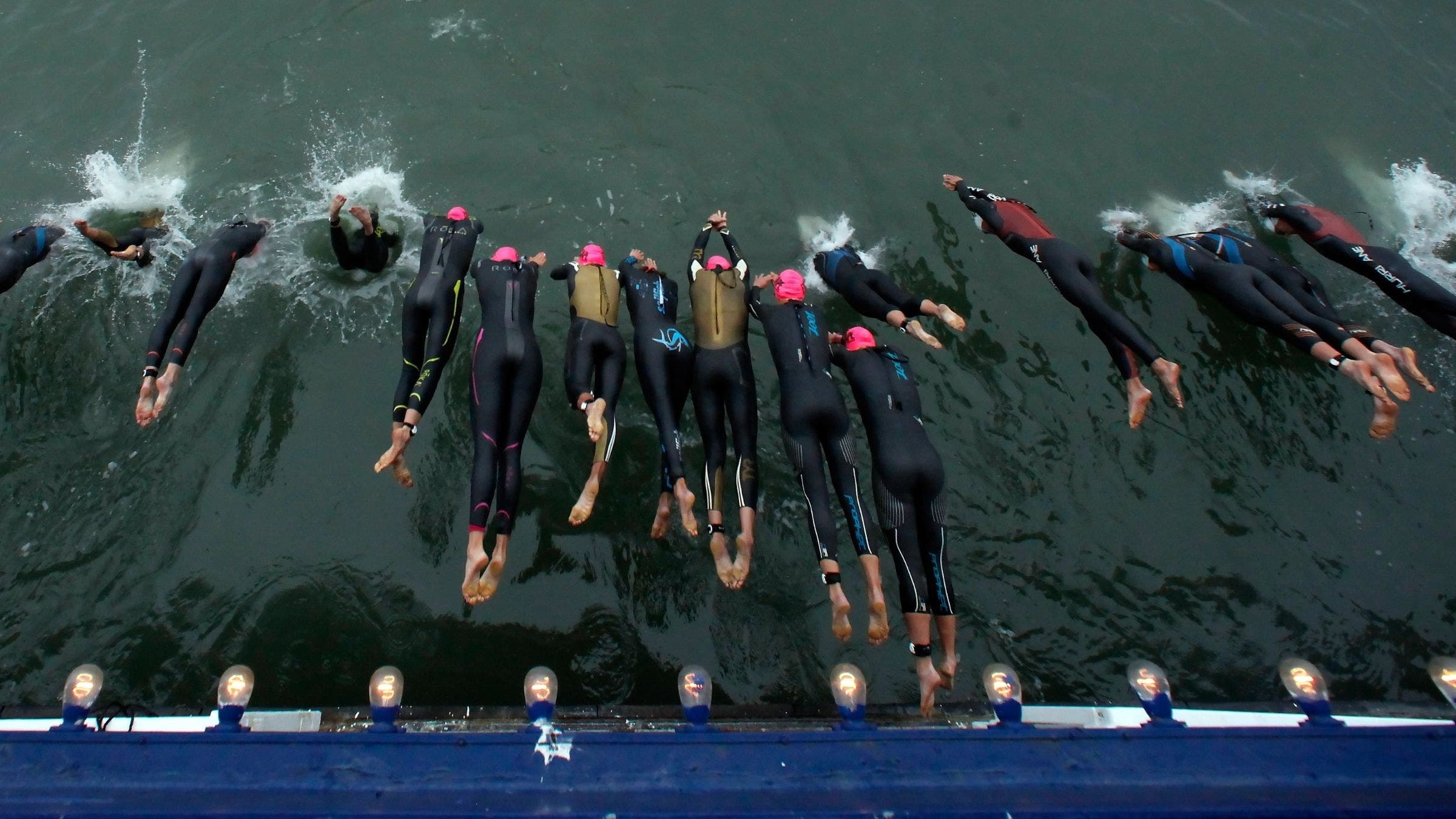
From 1934–1963, San Francisco’s Alcatraz Island housed more than 1,500 prisoners in its federal penitentiary, including Al Capone and George “Machine Gun” Kelly. Frank Lee Morris famously escaped from Alcatraz and was never found, and the infamy of the rough San Francisco Bay waters live on in this challenging 1.5-mile swim course.
The swim from Alcatraz Island to San Francisco’s Aquatic Park starts in an unconventional way. You jump straight off a ferry into freezing cold, rough water. The water temperature is typically 55 degrees F, and it can be hard to see thanks to the trademark San Francisco fog. Even the 2025 winner, Dylan Sorensen, was caught a bit off guard by the navigational challenges.
“To start, this swim is so intimidating because you spend 1-2 hours waiting on the boat in the dark, often in heavy fog where you can’t even see the bridge, which is a key reference point,” he says. “Then, you have just a moment to jump off the rocking boat into churning, freezing water. Most people don’t realize there’s only about a 10-foot-wide entry point for all 2,000 participants, so you’re getting pushed from behind as everyone tries to get in. Once you’re in the cold water, you’re battling wind-driven chop and a current that pulls you toward shore. I ended up on the rocks about a half mile before the exit because I couldn’t see landmarks and made the mistake of following the swimmer in front of me.”
Norseman Xtreme Triathlon
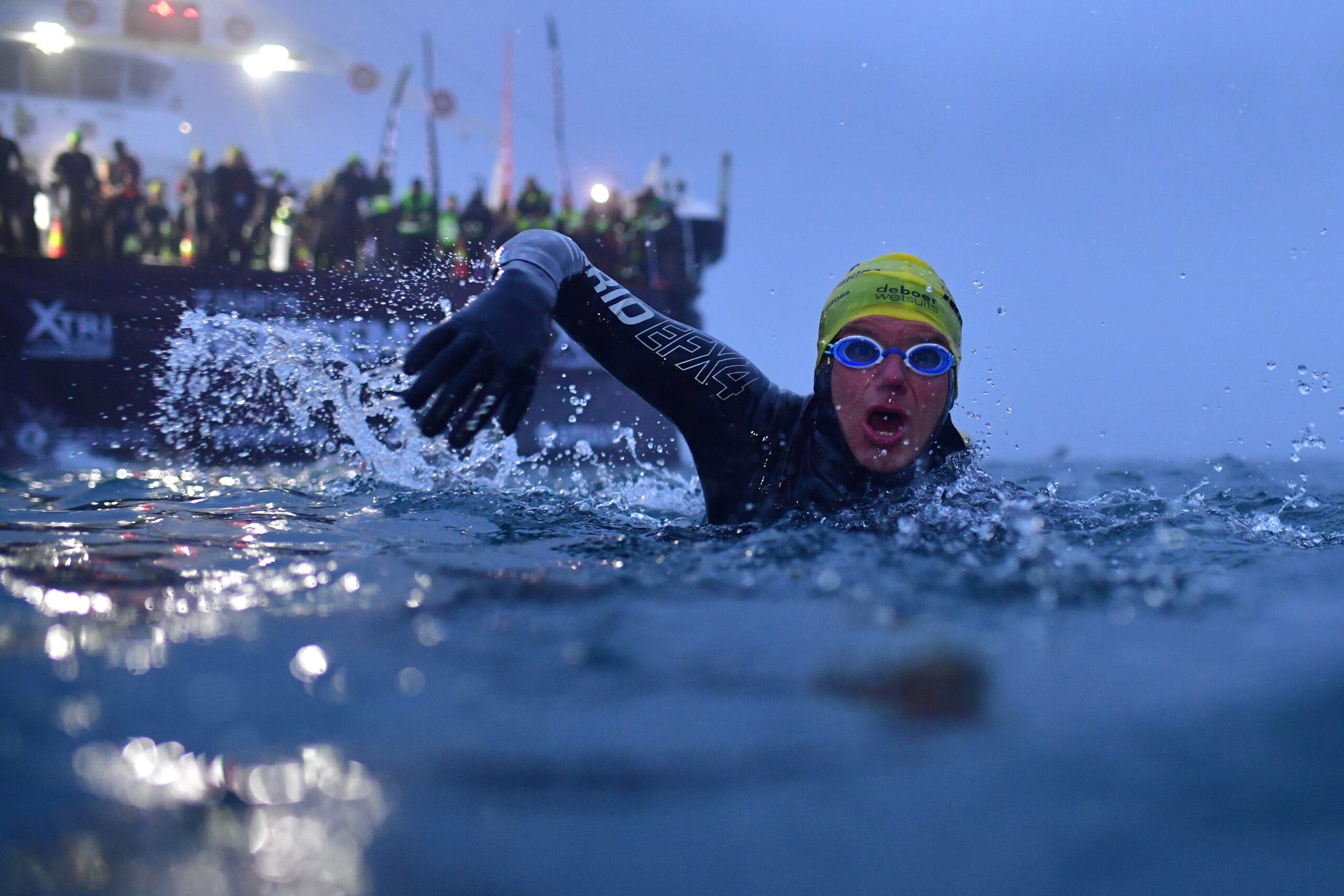
This race in Eidfjord, Norway, is renowned for having one of the hardest swim courses in all of triathlon. The race begins in pitch black as athletes jump off a ferry into the dark, frigid waters of the fjord with temperatures around 55–59 degrees. Norseman weather is somewhat of a paradox: Because Eidfjord is surrounded by snowy mountains, if the air temperature is warmer, the swim will be colder due to the snow melt run-off.
Athletes often wear thermal wetsuits, caps, gloves, and even booties for this truly epic swim. Not only is it cold, but you’re also jumping off the ferry in the dark, so it’s almost impossible to see where you’re going.
“Swimming in the fjord at Norseman is of course challenging due to the cold water temperature,” says 2025 Norseman winner Julia Skala, who set a new women’s course record of 11:00:23. “But the atmosphere on the ferry before the start, the low-lying fog on the water, and simply the mood before the starting signal make the whole thing something special. I’ve never experienced anything like it before.”
Ironman Florida
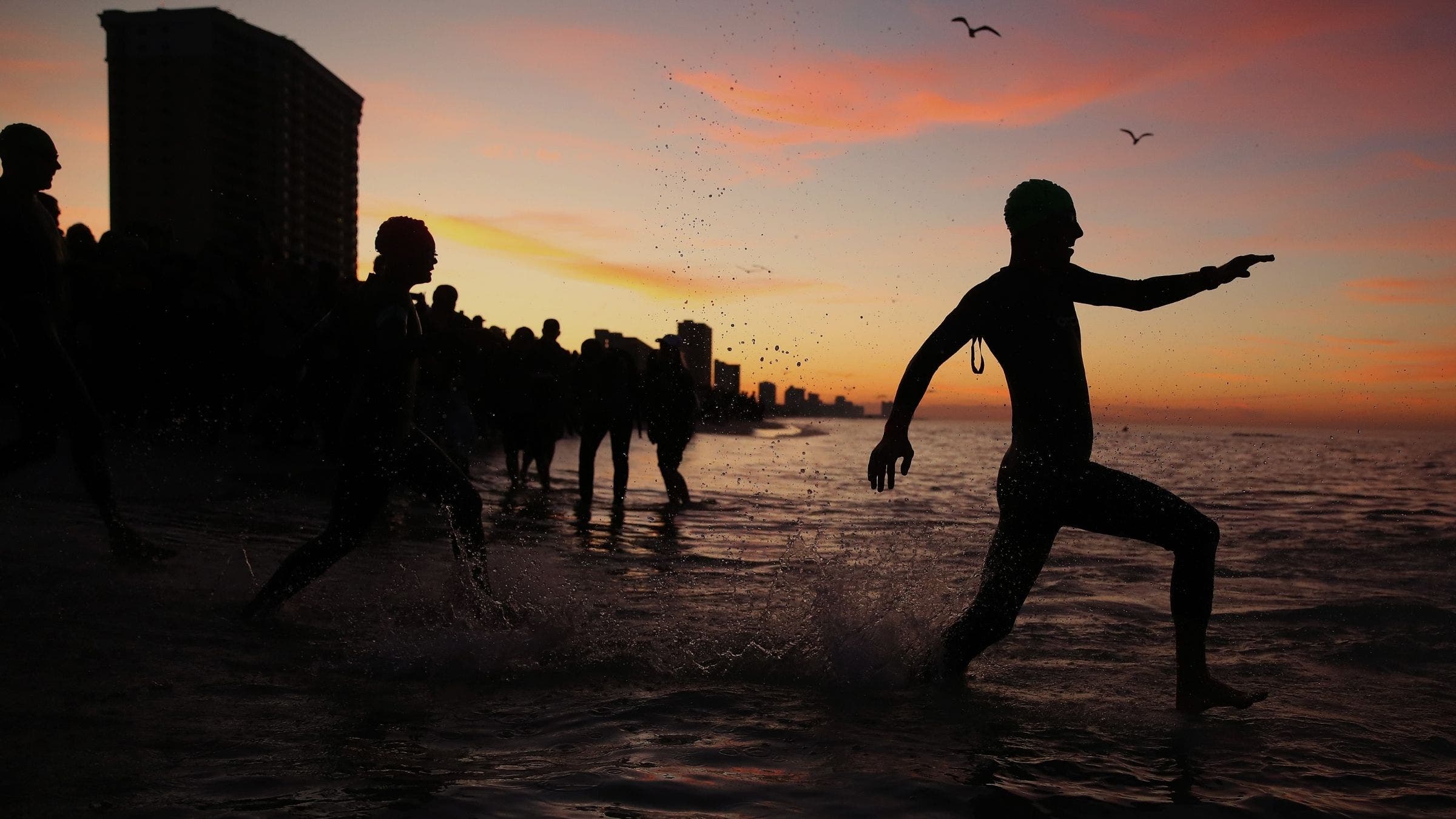
When the waters are calm during this November race in Panama City Beach, the swim can be a two-lap pleasure cruise. But if the wind whips the Gulf of Mexico into a frenzy, big waves can make sighting a challenge, and intense current can push even the strongest swimmers around the Russell-Fields Pier. Even the course description mentions “strong currents, riptides, and occasional marine life” at this often-unpredictable ocean swim.
Robert Kallin placed third at this race in 2021, which was his Ironman debut. That year, the swim was particularly challenging with rough surf, strong current, and waves that made sighting difficult.
“Ironman Florida was my first full distance, so I didn’t know what to expect,” Kallin says. “Actually, I didn’t reflect on the slow swim time until the start of the run. Then, I tried to calculate what running time I needed to break the eight-hour barrier. After a low four-hour bike, I was surprised that the total race time was so long. I realized that the swim must have been very slow. I also remember that there were a lot of age-groupers on the second lap of the swim, and that I made a good line choice in the end, which made me come up from the water in first place.”
For reference, Kallin’s swim time was 57:59, and several pros that day went over an hour.
Ironman Wales
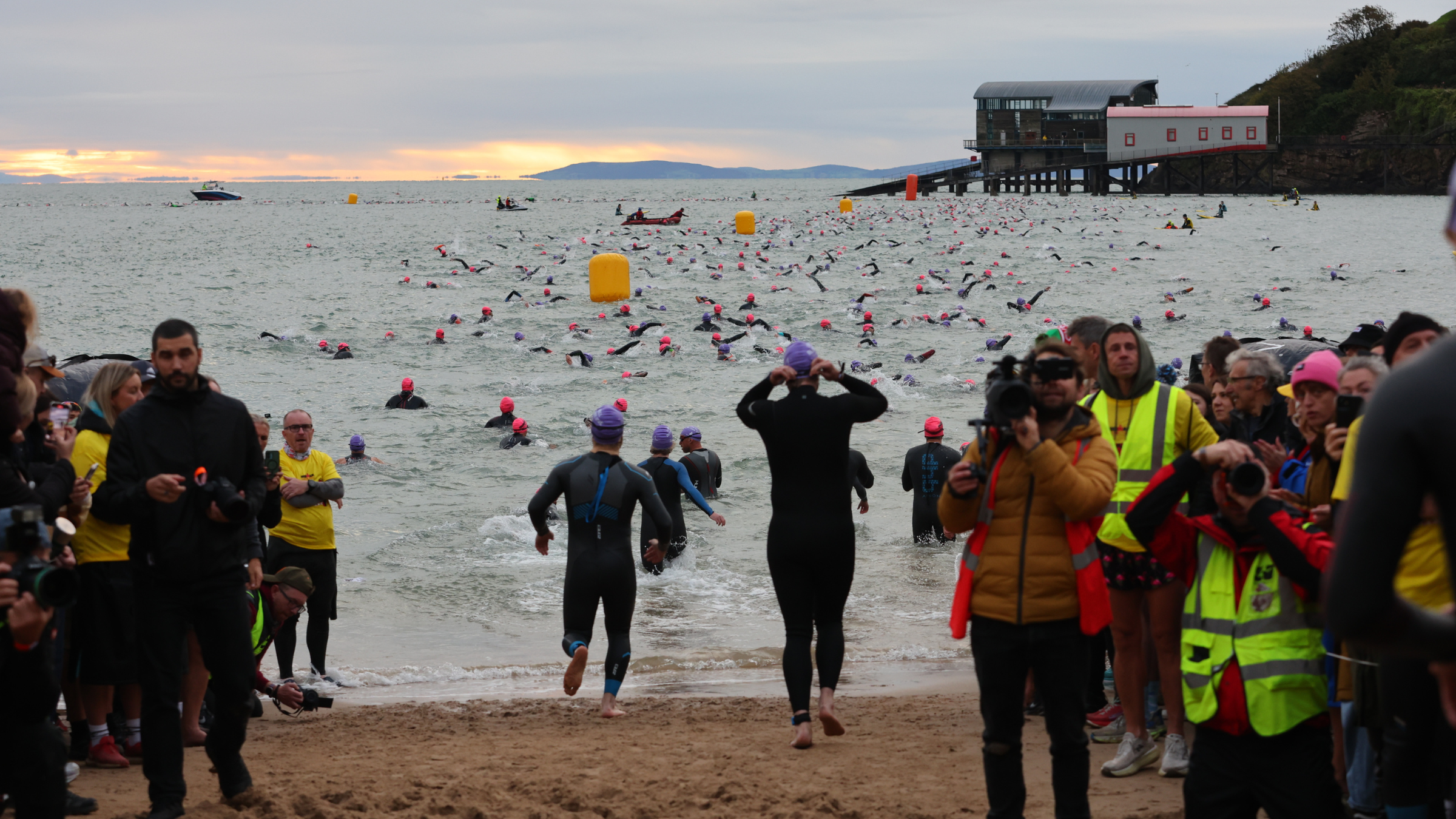
Athletes come to this sell-out race from around the world in an attempt to “slay the dragon.” That description alone should be enough to convince you that this race isn’t for the faint of heart. The Tenby bike course with steep hills and Welsh weather with driving rain and howling wind certainly doesn’t make things easy. But it’s the swim at North Beach that’s sneaky hard at Ironman Wales in Pembrokeshire.
The two-loop swim is choppy with strong swells that will test your sighting skills. There’s also an Aussie exit around Goscar Rock that will zap your legs. And we haven’t even mentioned the jellyfish! If you make it out of the swim, the next step is to climb a steep hill to transition that’s known as the “Dragon’s Fang.”
“Having completed over 10 Ironman races, the swim at Ironman Wales stands apart,” says 2025 champion Lewis Eccleston. “It didn’t just test me physically; it pushed me to my mental limits. It’s not only the cold water, choppy waves, strong current, sting of the salt, or the ever-present jellyfish. It’s the knowledge that if you don’t make the first lap in the right time, the tide turns, and the second lap becomes a battle straight into the current.”
World Triathlon Championship Series Hamburg
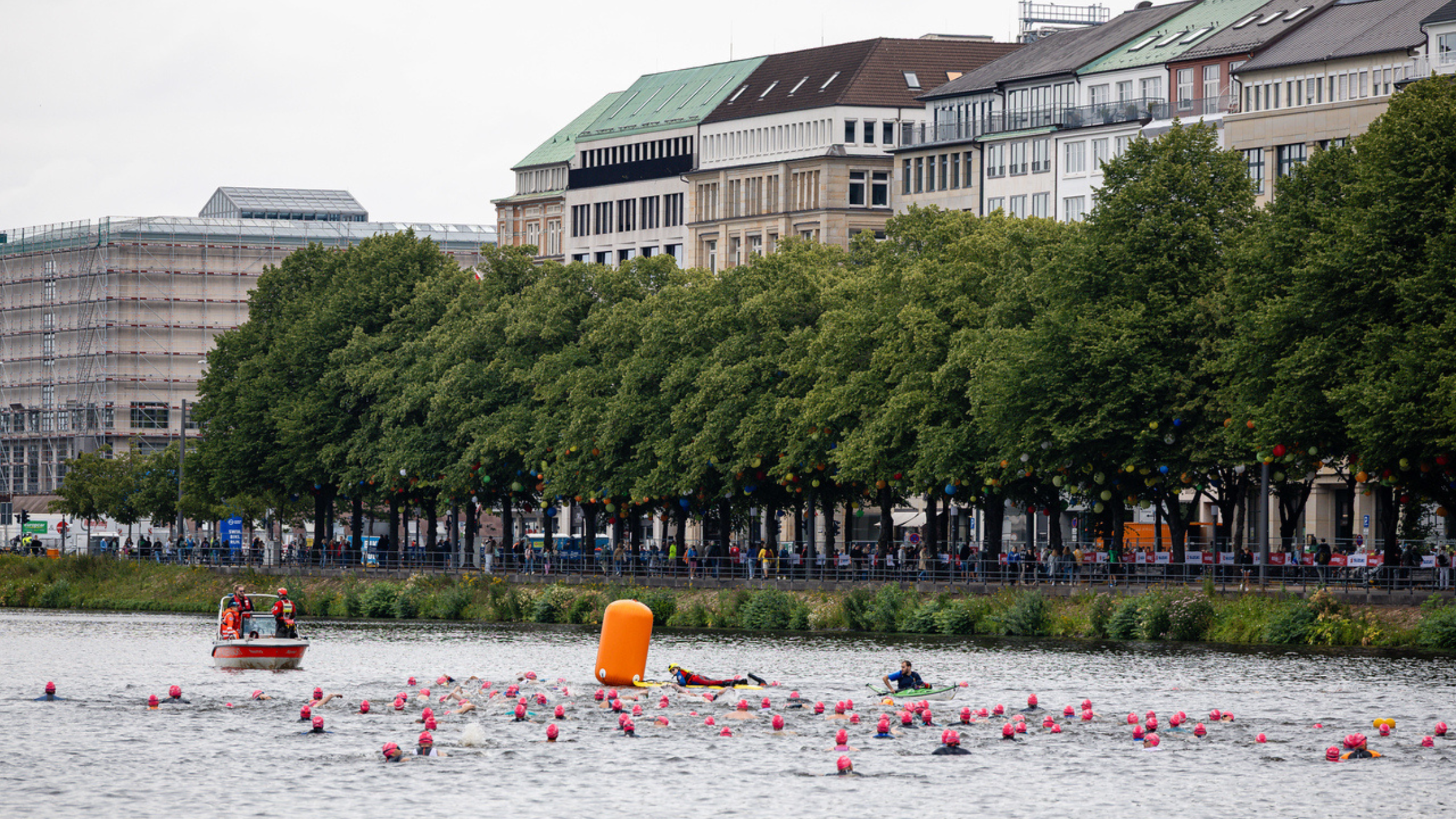
Closing out this list is WTCS Hamburg. While pro triathlete Marc “The Shark” Dubrick, who knows his way around a swim course, couldn’t pick just one (he also echoed the challenge of the Escape from Alcatraz, which is already on this list), he harkens back to his short-course days. The 750-meter sprint-distance swim in Hamburg takes place in the Binnenalster Lake and includes an infamous tunnel exit.
“Every one of these [WTCS] swims is aggressive, especially around the buoys,” Dubrick says. “It’s typically a full sprint to the first turn and then a fight to get around it alive. If you’re in the thick of it, you’re moving slower for more energy, so being able to wrap your head around a 200-meter all-out sprint to start a one-hour race is important. They are dive start, non-wetsuit, which I love, and in the famous tunnel before the final 150 meters, you’re swimming inches from a screaming crowd on the water’s edge.”